
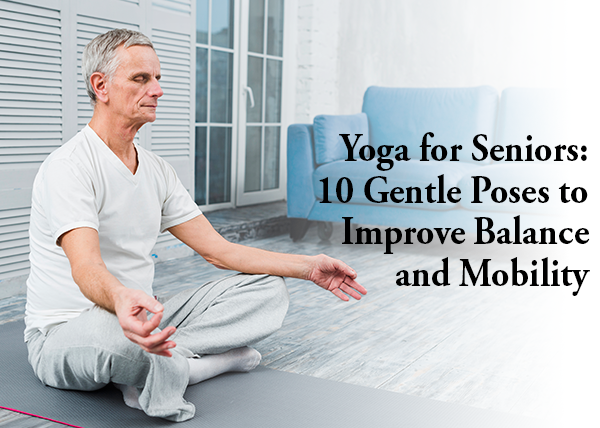
Yoga for Seniors: 10 Gentle Poses to Improve Balance and Mobility
Why Yoga for Seniors Is Worth Your Time
Getting older comes with its own set of challenges. Your joints may not feel as flexible as they used to. Your balance might feel a little off some days. You may find that climbing stairs, reaching for something on a shelf, or even getting up from a chair takes a bit more effort than it did ten years ago. These are completely normal changes, and the good news is that yoga for seniors is one of the most practical and gentle ways to address them.
Yoga is not about twisting yourself into complicated shapes or standing on your head. For older adults, yoga is really about moving your body in thoughtful, controlled ways that help you feel stronger, more balanced, and more comfortable in your day-to-day life. Research published by the National Institutes of Health has shown that regular yoga practice among older adults can lead to measurable improvements in balance, flexibility, strength, and even mental well-being.
Whether you are 60, 70, or 80 years old, yoga can be adjusted to suit your body and your current fitness level. The poses we are going to walk through in this post are specifically chosen for their gentleness, accessibility, and direct benefits for balance and mobility two areas that make a big difference in how confidently you move through life.
What to Keep in Mind Before You Start
Before diving into the poses, here are a few things that will help you practice safely and comfortably:
- Talk to your doctor first. If you have any existing health conditions like osteoporosis, arthritis, recent surgery, or heart disease, check in with your healthcare provider before starting yoga.
- Use props whenever needed. Yoga blocks, straps, blankets, and chairs are not signs of weakness they are tools that make poses more accessible and safer.
- Listen to your body. There is a difference between a gentle stretch and pain. If something hurts, ease out of it immediately.
- Wear comfortable clothing. Loose, breathable clothing that does not restrict your movement works best.
- Practice on a non-slip mat. A good yoga mat with grip will help prevent slipping, especially in standing poses.
- Go at your own pace. These poses are not a competition. Move slowly and give yourself time to settle into each position.
- Consider joining a guided class. Practicing with a qualified instructor who understands senior bodies makes a significant difference, especially when you are just starting out.
At Canada Yoga Studio, instructors are trained to guide students of all ages and physical abilities. Classes are held in a supportive, welcoming environment that never feels intimidating.
The 10 Gentle Yoga Poses for Seniors
Pose 1: Mountain Pose (Tadasana)
What it does: Builds body awareness, improves posture, and helps train your sense of balance.
How to do it:
- Stand with your feet hip-width apart, toes pointing forward.
- Press all four corners of your feet firmly into the ground.
- Gently engage your thigh muscles without locking your knees.
- Let your arms rest at your sides with your palms facing forward.
- Lengthen through the top of your head and breathe steadily.
- Hold for 5 to 10 slow breaths.
Why it matters for seniors: Mountain Pose looks simple, but it actively works on your posture and your connection with the ground beneath you. Good posture reduces the risk of falls and takes stress off your lower back.
Modification: Stand near a wall or hold the back of a sturdy chair for extra support.
Pose 2: Chair Pose (Utkatasana)
What it does: Strengthens the thighs, glutes, and lower back all critical muscles for getting up and sitting down.
How to do it:
- Stand with your feet hip-width apart.
- Inhale and raise your arms overhead, palms facing each other.
- Exhale and bend your knees as if you are sitting down into a chair.
- Keep your chest lifted and your weight in your heels.
- Hold for 3 to 5 breaths, then slowly stand back up.
Why it matters for seniors: The muscles worked in Chair Pose are the exact same ones you use every time you sit down or stand up from a chair. Strengthening them makes daily movement easier and safer.
Modification: Do not bend your knees as deeply. You can also practice this pose while actually sitting on and standing up from a chair to build the movement pattern.
Pose 3: Tree Pose (Vrikshasana)
What it does: A classic single-leg balance pose that directly trains your stability and coordination.
How to do it:
- Stand tall in Mountain Pose.
- Shift your weight onto your left foot.
- Place the sole of your right foot on your left ankle, calf, or inner thigh anywhere except directly on the knee.
- Bring your hands together at your chest or raise them overhead.
- Fix your gaze on a still point in front of you to help with balance.
- Hold for 5 breaths, then switch sides.
Why it matters for seniors: This pose directly improves single-leg balance, which is what you rely on every time you take a step, climb a stair, or step over a threshold.
Modification: Keep your toes of the lifted foot on the ground for support, or practice standing next to a wall or chair.
Pose 4: Seated Forward Bend (Paschimottanasana)
What it does: Gently stretches the hamstrings, lower back, and spine.
How to do it:
- Sit on your mat with your legs extended in front of you.
- Sit up tall and inhale to lengthen your spine.
- Exhale and slowly hinge forward from your hips (not your waist).
- Reach toward your feet as far as is comfortable a yoga strap around your feet can help.
- Hold for 5 to 8 breaths, keeping your spine as long as possible.
Why it matters for seniors: Tight hamstrings and a stiff lower back contribute to poor posture and difficulty walking. This stretch gently works on both areas without putting strain on the joints.
Modification: Bend your knees slightly, or place a rolled-up blanket under your knees for comfort. Use a strap if you cannot reach your feet.
Pose 5: Cat-Cow Stretch (Marjaryasana-Bitilasana)
What it does: Gently mobilizes the entire spine, reducing stiffness and improving flexibility in the back.
How to do it:
- Start on your hands and knees with your wrists under your shoulders and your knees under your hips.
- Inhale and let your belly drop toward the floor, lift your head and tailbone this is Cow Pose.
- Exhale and round your back up toward the ceiling, tucking your chin and tailbone this is Cat Pose.
- Continue moving between these two positions slowly, following your breath.
- Repeat 8 to 10 times.
Why it matters for seniors: Back stiffness is one of the most common complaints among older adults. Cat-Cow is one of the most effective and gentle ways to work through that stiffness. It also helps keep the discs between your vertebrae hydrated and healthy.
Modification: If being on all fours is uncomfortable, you can do this seated in a chair. Place your hands on your knees and alternate between rounding and arching your back.
Pose 6: Warrior I (Virabhadrasana I)
What it does: Builds strength in the legs, opens the hips, and improves overall stability.
How to do it:
- Stand at the top of your mat and step your left foot back about three to four feet.
- Turn your left foot out at about a 45-degree angle.
- Bend your right knee directly over your right ankle.
- Raise both arms overhead, palms facing each other.
- Keep your hips squared forward as much as possible.
- Hold for 5 breaths, then switch sides.
Why it matters for seniors: Warrior I builds the leg and hip strength that is essential for walking with confidence and stability. It also opens the chest, which supports better breathing.
Modification: Take a smaller step back so the stance is shorter and easier to manage. Hold onto a chair or wall for support while getting comfortable with the position.
Pose 7: Bridge Pose (Setu Bandhasana)
What it does: Strengthens the glutes, hamstrings, and lower back. Also gently opens the chest and hips.
How to do it:
- Lie on your back with your knees bent and your feet flat on the floor, hip-width apart.
- Place your arms flat along your sides, palms facing down.
- Press your feet into the floor and slowly lift your hips toward the ceiling.
- Hold at the top for 3 to 5 breaths.
- Slowly lower your hips back down, one vertebra at a time.
- Repeat 3 to 5 times.
Why it matters for seniors: A strong backside (glutes and hamstrings) is directly connected to how well you walk, how stable your pelvis is, and how well you can prevent falls. Bridge Pose is one of the safest ways to build this strength.
Modification: Do not lift your hips very high. A small lift is perfectly fine and still beneficial. Place a yoga block under your sacrum if you want to hold the position passively without muscular effort.
Pose 8: Seated Spinal Twist (Ardha Matsyendrasana)
What it does: Improves spinal rotation, aids digestion, and relieves tension in the back and shoulders.
How to do it:
- Sit on your mat with your legs extended in front of you.
- Bend your right knee and cross your right foot over your left leg, placing it on the floor outside your left knee.
- Inhale to sit up tall.
- Exhale and twist to the right, placing your right hand on the floor behind you and your left elbow against the outside of your right knee.
- Hold for 5 breaths, then repeat on the other side.
Why it matters for seniors: Being able to rotate your spine is important for everyday movements like looking over your shoulder while driving, reaching for something behind you, or turning to talk to someone. This pose keeps that rotation available.
Modification: Do this seated in a chair. Sit upright and simply turn your torso to the right, placing your hands on the back of the chair for leverage. Repeat on both sides.
Pose 9: Legs-Up-the-Wall Pose (Viparita Karani)
What it does: Reduces swelling in the legs and feet, calms the nervous system, and promotes circulation.
How to do it:
- Sit sideways next to a clear wall.
- Slowly swing your legs up the wall as you lower your back to the floor.
- Your body should form an L-shape, with your legs resting against the wall and your back on the floor.
- Rest your arms at your sides and close your eyes.
- Stay here for 5 to 15 minutes, breathing slowly and comfortably.
Why it matters for seniors: Many older adults deal with swollen ankles and feet, especially after long periods of sitting or standing. This pose uses gravity to encourage fluid back toward the torso, which reduces that swelling. It also has a wonderfully calming effect on the mind.
Modification: Place a folded blanket under your hips for extra comfort. If getting to the floor is difficult, you can do a version of this pose lying on your back with your legs elevated on the seat of a chair.
Pose 10: Corpse Pose (Savasana)
What it does: Allows full-body relaxation, helps integrate the benefits of your practice, and calms the mind.
How to do it:
- Lie flat on your back with your legs extended and slightly apart.
- Let your arms rest at your sides with your palms facing up.
- Close your eyes and let your whole body relax completely into the floor.
- Focus on slow, natural breathing.
- Stay here for 5 to 10 minutes.
Why it matters for seniors: Rest is not passive it is where your body does a lot of its healing and restoration. Savasana signals your nervous system that it is safe to relax, which lowers stress hormones and encourages recovery.
Modification: If lying flat is uncomfortable, place a rolled blanket under your knees or under your head. You can also practice this pose in a reclining chair if getting to the floor is not accessible.
How Often Should Seniors Practice Yoga?
Consistency is more important than intensity when it comes to yoga for older adults. Here is a general guide:
| Frequency | Benefit Level |
| Once a week | Noticeable improvement in mood and light flexibility |
| Two to three times a week | Significant improvement in balance, strength, and mobility |
| Four or more times a week | Steady, ongoing progress across all physical and mental areas |
Even 20 to 30 minutes of gentle practice a few times a week can produce meaningful results over time. The key is to keep showing up. Short, regular sessions are far more effective than occasional long ones.
Tips for Practicing Yoga Safely as a Senior
Here are some practical safety tips to keep in mind throughout your yoga journey:
- Always warm up first. Start with a few minutes of gentle movement before moving into deeper poses.
- Avoid poses that cause pain. Mild discomfort from stretching is normal; sharp or shooting pain is not.
- Do not rush transitions. Moving slowly between poses gives your body time to adjust and reduces the risk of falls.
- Stay hydrated. Drink water before and after your practice.
- Avoid inverted poses (like shoulder stands) without proper guidance, as they can raise blood pressure.
- Practice with a qualified instructor when possible, especially in the beginning stages.
- Let your instructor know about any injuries or health conditions. A good teacher will offer modifications that suit your needs.
How Canada Yoga Studio Supports Senior Wellness
At Canada Yoga Studio, the approach to yoga is rooted in inclusivity and mindfulness. The studio offers a range of programs that are thoughtfully designed to support people at different stages of life and with different wellness goals.
For seniors who are curious about getting started or who want to deepen their practice in a safe environment, the studio’s Hatha Yoga Classes in Calgary are a wonderful starting point. Hatha yoga is one of the most gentle and foundational styles of yoga, focusing on basic postures and breathing techniques that are well-suited to older adults.
If you are interested in exploring yoga on a deeper level looking beyond the physical into the mental and energetic dimensions of the practice the Multi-Dimensional Yoga program offers a broader, more integrative approach to well-being.
The studio also understands that wellness is not just about the poses you do on the mat. That is why they offer Nutrition and Wellness Coaching, which can complement your yoga practice by helping you make food choices and lifestyle habits that support your overall health.
For those dealing with stress, chronic tension, or sleep difficulties common challenges for many seniors the Sound Healing sessions in Calgary offer a deeply restorative experience using sound vibrations to promote relaxation and healing.
Additionally, if you are interested in energy-based wellness practices, the studio offers Pranic Aura Cleansing, a gentle, non-invasive practice that focuses on cleansing and balancing the body’s energy field.
Other Wellness Programs You Might Enjoy
Canada Yoga Studio is not just for seniors. It is a full-service wellness centre offering programs that support people across all stages of life. Here is a quick look at some of the other offerings that might interest you or someone in your family:
- Kids Yoga Sessions: Fun, age-appropriate yoga classes designed to help children build focus, coordination, and emotional regulation from a young age.
- Prenatal Yoga in Canada: Specially designed classes for expecting mothers that support comfort during pregnancy, build strength for labour, and encourage relaxation.
- Postpartum Yoga: Gentle recovery-focused classes for new mothers that help the body heal and rebuild strength after childbirth.
Whether you are coming in for yourself or bringing your family along, Canada Yoga Studio has something meaningful to offer everyone.
Final Thoughts
Yoga for seniors is one of the most accessible and well-rounded tools available for improving balance, mobility, strength, and mental clarity as you get older. The ten poses outlined in this post are designed to be gentle enough for beginners and older adults while still being genuinely effective.
Here is a quick recap of the ten poses covered:
- Mountain Pose Builds posture and body awareness
- Chair Pose Strengthens legs and supports daily movement
- Tree Pose Trains single-leg balance and coordination
- Seated Forward Bend Stretches hamstrings and lower back
- Cat-Cow Stretch Mobilizes and relieves stiffness in the spine
- Warrior I Builds leg strength and stability
- Bridge Pose Strengthens glutes and lower back
- Seated Spinal Twist Improves spinal rotation and flexibility
- Legs-Up-the-Wall Reduces swelling and calms the nervous system
- Corpse Pose Promotes full-body rest and recovery
The most important thing to remember is that starting is enough. You do not need to be flexible, fit, or experienced to begin yoga. All you need is a willingness to move gently and consistently. Over time, the improvements you feel in your balance, your mobility, your strength, and even your mood will speak for themselves.
If you are ready to take that first step and want guidance from qualified, caring instructors, we warmly invite you to explore what Canada Yoga Studio has to offer. From gentle Hatha yoga to sound healing, nutrition coaching, and beyond, the studio is here to support your wellness journey at every step.
📩 Ready to get started? Visit Canada Yoga Studio today to explore class schedules, programs, and how to book your first session. Your body will thank you.
For more information on the health benefits of yoga for older adults, visit the Harvard Health Publishing resource on yoga and the American Osteopathic Association’s overview of yoga benefits.