
Yoga for Digestion and Bloating: Best Poses to Support Gut Health

Introduction
If you have been searching for yoga for digestion and bloating, you are not alone. Many people turn to gentle movement and breathing practices when they feel physically uncomfortable, sluggish or bloated. While yoga is not a medical treatment, some people find that a calm and consistent yoga practice helps them feel more at ease in their body, breathe more freely and build a wellness routine that supports their overall comfort.
It is important to be clear from the beginning: bloating can have many different causes. These include eating habits, constipation, food intolerances, stress, hormonal changes linked to the menstrual cycle, long periods of sitting and, in some cases, diagnosed digestive conditions such as irritable bowel syndrome. Because the cause matters, yoga cannot address every type of bloating in the same way, and it is not a substitute for proper medical diagnosis or treatment.
That said, gentle and mindful movement has a place in a balanced wellness routine, and many people find it a useful tool alongside other healthy habits.
At Canada Yoga Studio, a Calgary-based yoga and wellness studio, classes are designed to be accessible and beginner-friendly, whether you attend in studio or join through live online sessions from anywhere in Canada.
Quick Answer: Can Yoga Help with Digestion and Bloating?
Gentle yoga may help some people feel more physically comfortable when they experience mild, occasional bloating. Movement and calm breathing can encourage relaxation and reduce unnecessary tension in the body. However, yoga does not treat every cause of bloating, and individual responses vary. Avoid intense or inverted poses immediately after eating. If bloating is persistent, severe or accompanied by other symptoms, speak with a healthcare professional before beginning any new exercise routine.
What Causes Bloating and Digestive Discomfort?
Bloating feels different for different people. For some, it is a general feeling of fullness or pressure. For others, it comes with visible swelling, trapped gas or mild cramping. Before considering how yoga might help, it is useful to understand some of the common reasons why bloating occurs.
Common causes of occasional bloating include:
- Eating too quickly or not chewing food thoroughly
- Swallowing excess air while eating or drinking
- Constipation or slow bowel movements
- Large or rich meals
- Certain foods, including beans, lentils, cruciferous vegetables, carbonated drinks and dairy products
- Food intolerances or sensitivities, such as lactose or gluten intolerance
- Stress and anxiety
- Hormonal changes during the menstrual cycle
- Long periods of physical inactivity or sitting
- Digestive conditions such as IBS, inflammatory bowel disease or acid reflux
This information is general in nature and is not a diagnosis. Every individual is different, and the same food or habit may affect two people in completely different ways.
Regular, unexplained or painful bloating always warrants proper medical assessment. A general practitioner or gastroenterologist is the right person to help you identify the cause and recommend appropriate care.
How Yoga May Support Digestion
Yoga is not a digestive therapy. However, several aspects of a gentle yoga practice may support physical comfort and general wellbeing for people who experience occasional digestive discomfort.
Reducing physical tension
Many people carry tension in the abdomen, especially when they are stressed, sedentary or anxious. Gentle movement and stretching may help reduce that unnecessary muscular tension, which some people find uncomfortable.
Breaking up long periods of sitting
For people who spend most of their day at a desk, physical inactivity can contribute to sluggishness and bloating. Gentle movement, including yoga, walking and other low-intensity activity, can be a practical way to break up long sitting periods.
Breathing and relaxation
Focused breathing exercises, commonly used in yoga, may encourage the body to shift from a more tense, active state toward a calmer and more relaxed one. Some people find this supports comfort, particularly when stress appears to contribute to their digestive discomfort.
Posture and body awareness
Poor posture can create unnecessary compression in the abdominal area. Yoga encourages attention to alignment and body position, which may help some people feel less restricted.
Building a consistent wellness routine
A regular and gentle yoga practice may support the kinds of consistent daily habits, including movement, rest, hydration and mindful eating, that contribute to general health. This is not the same as treating a digestive condition, but it can be a meaningful part of an overall healthy lifestyle.
It is worth noting that the strength of the evidence linking yoga specifically to improved digestion varies. Most benefits discussed here are based on the general principles of movement, breathing and relaxation. Speak with your healthcare provider if you have questions about exercise and your specific digestive health.
Best Yoga Poses for Digestion and Bloating
The following poses are beginner-friendly and low intensity. None of these poses are a treatment for any digestive condition. They are gentle positions that some people find soothing when they experience mild physical discomfort. Always move at your own pace, keep breathing naturally and stop if any position causes pain, nausea or increased discomfort.
Cat Cow Pose (Marjaryasana-Bitilasana)
What it is: A gentle flowing movement between two spinal positions, performed on hands and knees.
How it may support comfort: The rhythmic movement of the spine and abdomen may feel soothing and help reduce tension in the torso. Some people find it helpful as a way to gently warm up the body.
How to do it:
- Come onto your hands and knees with wrists below shoulders and knees below hips.
- On an inhale, let the belly drop toward the floor, lift the tailbone and gently look forward (Cow).
- On an exhale, round the spine upward, tuck the chin and draw the belly in (Cat).
- Move slowly between these two positions for 6 to 10 breaths.
Modifications: Place a folded blanket under the knees if they feel sensitive. If wrists are uncomfortable, rest on fists or use yoga blocks.
Avoid this pose immediately after a large meal. Stop if you feel any sharp pain or increased abdominal discomfort.
Knees to Chest Pose (Apanasana)
What it is: A simple supine position where one or both knees are drawn toward the chest.
How it may support comfort: Gentle compression and release around the lower abdomen may feel soothing for some people, particularly those experiencing lower abdominal tightness or trapped gas. Individual responses differ.
How to do it:
- Lie on your back on a comfortable mat or blanket.
- Draw both knees gently toward your chest.
- Wrap your arms around your shins or hold behind the thighs.
- Hold for 30 to 60 seconds, breathing naturally.
- You may gently rock side to side if that feels comfortable.
Modifications: Draw one knee at a time if both together feels too much. Place a cushion beneath the lower back for extra support.
Do not force compression into the abdomen. Stop if you feel discomfort, pressure or nausea.
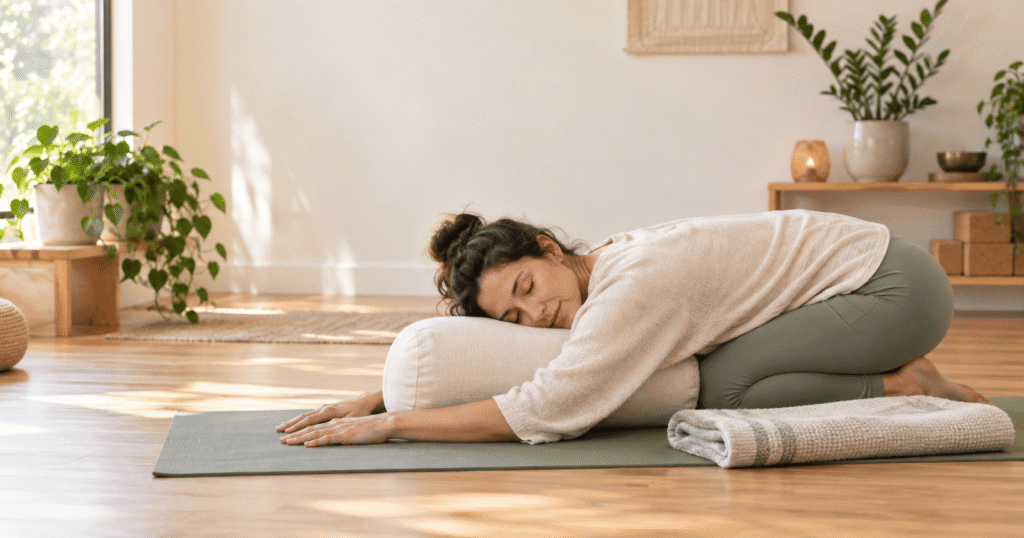
Supported Child’s Pose (Balasana)
What it is: A restful forward fold from a kneeling position, supported by a bolster or folded blanket.
How it may support comfort: Many people find Child’s Pose deeply relaxing. The position encourages slower breathing and a sense of physical ease. It is not a therapeutic treatment but may feel soothing during mild discomfort.
How to do it:
- Kneel on your mat with big toes touching and knees wide.
- Place a bolster or folded blankets between your thighs.
- Fold forward and rest your torso on the support.
- Rest your forehead on your hands or the bolster.
- Stay for 1 to 3 minutes, breathing naturally and softly.
Modifications: If knees are sensitive, place a rolled blanket behind them. If hips do not reach heels, place a blanket between thighs and calves.
Avoid deep forward folding after a heavy meal. If your abdomen feels very full or tender, wait until you feel more comfortable.
Supine Spinal Twist (Supta Matsyendrasana)
What it is: A gentle lying-down twist that rotates the spine and stretches the outer hips and back.
How it may support comfort: Spinal twists are often described as relaxing for the lower back. Some people find them helpful for releasing tension around the sides of the torso. This is not a proven treatment for bloating, but many people find it a comfortable part of a relaxation routine.
How to do it:
- Lie on your back and draw your right knee toward your chest.
- Gently guide the right knee across the body toward the left side of the floor.
- Extend the right arm out to the side, palm facing up.
- Keep both shoulders as relaxed as possible.
- Stay for 30 to 60 seconds, then repeat on the other side.
Modifications: Place a folded blanket or block under the knee if it does not reach the floor comfortably.
Avoid deep or forced twisting if the abdomen feels tender or full. Keep the movement gentle and well within your comfortable range.
Seated Forward Fold, Gentle Variation (Paschimottanasana)
What it is: A seated stretch in which you fold gently forward over your legs.
How it may support comfort: The gentle fold may encourage a slow, steady breath and a relaxed lower body. Some people find it calming.
How to do it:
- Sit on a folded blanket with legs extended in front of you.
- Inhale to sit tall.
- On an exhale, hinge gently from the hips, reaching forward toward the shins, ankles or feet.
- Use a yoga strap around the feet if you cannot reach comfortably.
- Hold for 30 to 60 seconds, breathing steadily.
Modifications: Bend the knees slightly. Sit on a higher support if the lower back rounds excessively.
Do not force the fold. This pose may not feel comfortable if the abdomen is very full or sensitive.
Supported Malasana (Squat Pose)
What it is: A low squat position, often supported by blocks or a folded blanket under the heels.
How it may support comfort: This position opens the hips and lower body and may feel comfortable for people with tension in the lower abdomen or pelvis. Some people find squatting positions helpful for constipation discomfort, though evidence varies.
How to do it:
- Stand with feet slightly wider than hip-width, toes turned out.
- Slowly lower into a squat. Use blocks under the heels or sit on a low support if needed.
- Bring palms together at the chest and gently press elbows against the inner thighs.
- Hold for 30 to 60 seconds.
Modifications: Sit on the edge of a sturdy chair if a full squat is not accessible. Do not force the position.
Stop if you feel any knee, hip or pelvic pain.
Vajrasana (Comfortable Kneeling Position)
What it is: A simple kneeling seated pose, traditionally used after meals in some traditions.
How it may support comfort: Some people find sitting in a quiet, upright kneeling position after eating more comfortable than lying down. There is some traditional support for this, but scientific evidence is limited. It may simply encourage a period of stillness and calm breathing.
How to do it:
- Kneel on a mat with a folded blanket between your thighs and calves.
- Sit upright with a relaxed spine.
- Place hands on thighs.
- Breathe gently for 2 to 5 minutes.
Modifications: Place a bolster or block between the thighs and calves if the position feels uncomfortable. Use a chair if kneeling is not appropriate for your knees.
Avoid if you have knee injuries without professional guidance.
Legs Up the Wall (Viparita Karani)
What it is: A gentle, restorative inversion where the legs rest against a wall while you lie on your back.
How it may support comfort: This is a deeply restful position that many people find calming. It reduces pressure in the lower body and encourages slow breathing.
How to do it:
- Sit sideways next to a wall.
- Gently swing your legs up as you lower your back to the floor.
- Rest your legs against the wall, arms relaxed by your sides.
- Stay for 3 to 5 minutes, breathing softly.
Modifications: Place a folded blanket under the hips for additional comfort.
This pose may not be suitable for everyone, including people with glaucoma, certain circulatory conditions or late pregnancy. Speak with a healthcare professional if you are unsure.
A Gentle 10-Minute Yoga Routine for Bloating
This sequence is designed for general wellness and mild, occasional discomfort. It is not a personalised treatment plan. Stop at any time if symptoms worsen.
| Time | Practice |
| 0:00 to 1:00 | Comfortable seated or lying breathing. Inhale slowly for 4 counts, exhale for 6. |
| 1:00 to 2:00 | Gentle Cat Cow on hands and knees, 6 to 8 rounds. |
| 2:00 to 4:00 | Knees to Chest Pose, both knees, with gentle rocking if comfortable. |
| 4:00 to 6:00 | Supported Child’s Pose with bolster or blankets. |
| 6:00 to 8:00 | Supine Spinal Twist, one minute each side. |
| 8:00 to 9:00 | Comfortable Vajrasana or seated breathing at the wall. |
| 9:00 to 10:00 | Relaxation in a comfortable position. Allow the body to settle. |
This routine may be practised in the morning or at a calm time of day. Do not practise immediately after a large meal. Use props to support yourself throughout.
Yoga for Constipation and Gas
Gentle physical movement is often mentioned alongside hydration, fibre intake and regular daily habits as part of a general approach to digestive comfort. Yoga, walking and other low-intensity activities can all be useful ways to avoid long periods of inactivity, which may contribute to sluggishness.
Yoga for constipation and bloating may include gentle poses such as Knees to Chest, Supported Malasana and Supine Spinal Twist, which some people find comfortable during periods of sluggish digestion. Yoga for trapped gas may involve slow, rhythmic movements that encourage overall relaxation of the abdomen.
However, it is important to be honest: no specific yoga pose guarantees a bowel movement or gas relief. The effect of gentle stretches for constipation varies between individuals, and the cause of constipation matters greatly.
If constipation is persistent, painful, associated with blood in the stool, or accompanied by significant changes in bowel habits, please seek professional medical advice. Do not rely on yoga for gas relief alone if symptoms are ongoing or worrying.
Yoga and Stress-Related Digestive Discomfort
Many people notice that their digestion feels different during stressful periods. Tension in the body can affect how the muscles of the abdomen and digestive tract behave, and shallow, rapid breathing is a common response to stress that some people associate with increased physical discomfort.
Yoga’s focus on slow breathing, deliberate movement and relaxation may be particularly useful for people whose digestive discomfort appears to be connected to stress. Restorative positions such as Supported Child’s Pose, Legs Up the Wall and gentle seated breathing can encourage the body to feel more settled.
Mindful practice can also help people become more aware of how their body responds to different situations, foods or habits, without that awareness becoming a source of anxiety.
It is important to note that yoga does not treat anxiety, IBS or any other medical condition. People with diagnosed digestive conditions including IBS should follow the advice of their healthcare provider and discuss any new exercise practice with them before starting.
What to Avoid When You Are Bloated
Some yoga practices may feel uncomfortable or unhelpful when the abdomen is full, tender or distended. The following are worth approaching with caution:
- Strong abdominal exercises, such as boat pose or intense core work, which can increase pressure in the abdomen
- Deep twists that compress the torso forcefully
- Aggressive forward folds without adequate support
- Inversions, particularly if you have reflux or feel nauseous
- Intense backbends that stretch and compress alternately in ways that feel uncomfortable
- Fast transitions between poses, which may cause dizziness or discomfort
- Breath retention, particularly holding the breath for long counts
- Practising immediately after a heavy or rich meal
- Any position that increases pain, nausea, pressure or reflux
This is not to say that any of these movements are always dangerous. For people who are well and not experiencing digestive discomfort, many of these practices are appropriate. The point is that timing, comfort and individual health matter. When the abdomen feels sensitive, simpler, gentler and more supportive positions are usually a better choice.
Yoga Approaches: A Comparison Table
| Yoga Approach | Main Focus | May Suit | Important Note |
| Gentle Yoga | Slow, accessible movement with modifications | Beginners, people with discomfort or limited mobility | Not a medical treatment. Individual responses vary. |
| Restorative Yoga | Deep relaxation using props and supported positions | People needing rest, stress relief or recovery | May feel soothing but does not treat digestive conditions. |
| Hatha Yoga | Foundational postures, breathing and alignment | People who prefer a steady, structured and unhurried pace | Suitable for many beginners. Inform the teacher about any health concerns. |
| Breath-Focused Relaxation | Regulated breathing and calm awareness | People whose discomfort appears stress-related | Not a substitute for professional care. Useful as a complementary wellness habit. |
When Should You See a Doctor About Bloating?
Yoga and gentle movement are helpful wellness tools for occasional, mild discomfort. However, bloating is sometimes a sign that something else needs attention. Please seek medical advice if your bloating:
- Happens regularly or does not improve over time
- Is associated with unintentional weight loss
- Occurs with blood in the stool
- Comes with repeated vomiting
- Is accompanied by diarrhoea or severe constipation
- Involves severe or persistent abdominal pain
- Comes with a fever
- Results in a visibly swollen or hard abdomen
- Makes it impossible to pass stool or gas
- Is accompanied by significant difficulty breathing
- Is sudden and severe in onset
Yoga is not a replacement for medical care. If you have any doubt about what is causing your symptoms, please contact a healthcare professional.
Is Yoga Safe During Pregnancy or for People with Digestive Conditions?
Pregnancy, recent abdominal surgery, hernia, severe acid reflux, inflammatory bowel disease and other health conditions may all require specific modifications to a yoga practice. What works well for one person may not be appropriate for another, and this is especially true during pregnancy.
If you are pregnant and interested in yoga, please speak with your midwife, obstetrician or physiotherapist before starting. You may also wish to explore classes specifically designed for expectant mothers. Canada Yoga Studio offers Prenatal Yoga for those who would like guided support during pregnancy.
For people with diagnosed digestive conditions, always follow the advice of your healthcare provider before adding a new exercise practice to your routine.
Choosing the Right Yoga Class in Calgary
If you are looking for yoga classes in Calgary, particularly for gentle support during digestive discomfort, it is worth taking a little time to find a class that suits your needs and experience level.
Things to look for in a Calgary yoga class:
- Clear beginner-friendly instruction
- Gentle, adaptable sequences with options for different bodies
- Modification options clearly offered throughout class
- Teachers who ask about injuries, health conditions and physical limitations before class begins
- A comfortable and unhurried pace
- The option to practise in studio or online, depending on your preference
- No pressure to achieve advanced poses or compete with others
- A supportive and welcoming environment
- Clear communication about what each class involves before you join
If you experience digestive discomfort, it is always a good idea to let the instructor know before the session begins. A good teacher will adjust suggestions to suit your comfort level on that particular day.
Gentle yoga in Calgary is available at various studios, and what matters most is finding a space where you feel comfortable, supported and well-informed.
Canada Yoga Studio’s Relevant Yoga Options
For people who prefer a slower, more foundational approach to yoga, Hatha Yoga Sessions at Canada Yoga Studio may be a suitable starting point.
Hatha Yoga focuses on postures, breathing and alignment at a steady, accessible pace. It is not a treatment for bloating or any digestive condition, but it is a style of practice that many beginners find approachable and comfortable.
Canada Yoga Studio’s live online sessions are delivered through Google Meet. The programme includes 8 sessions over 30 days, with two sessions per week, offered at flexible times to suit your time zone. Current sessions are available at $80 per month.
If you have digestive discomfort or any health concern, please inform your instructor before joining so that suitable modifications can be offered throughout the session.
Online Yoga Classes for Digestion and Relaxation
Some people find it easier to practise yoga at home, particularly when they are feeling physically uncomfortable or simply prefer a familiar environment. Practising at home means you can use your own cushions, blankets and props, pause whenever needed, practise at any time that suits your schedule and avoid the need to travel.
Canada Yoga Studio offers online yoga classes in Canada that are accessible to students in Calgary and across the country. Live sessions provide guided instruction and the opportunity to communicate with the teacher in real time, which is useful for people who want to request modifications or ask questions.
Online classes are not automatically safer than in-person classes. The same general guidelines about not practising intensely after eating, stopping if you feel unwell and seeking medical advice for ongoing symptoms all apply equally.
Frequently Asked Questions
Can yoga help with bloating?
Gentle yoga may help some people manage mild, occasional bloating by encouraging relaxation, gentle movement and slower breathing. It is not a treatment for every type of bloating. The underlying cause matters, and results vary between individuals. If bloating is regular or severe, a healthcare professional is the right first step.
What is the best yoga pose for digestion?
There is no single best pose for everyone. Knees to Chest, Supported Child’s Pose and gentle Supine Spinal Twist are frequently described as comfortable for people with mild abdominal discomfort. The most suitable pose depends on your body, your comfort and the nature of your symptoms on that day.
Which yoga poses help with gas?
Poses that gently compress and release the lower abdomen, such as Knees to Chest and Supported Malasana, are often mentioned in the context of yoga for trapped gas. Some people also find Cat Cow and gentle spinal movements helpful. No pose guarantees gas relief, and individual responses differ.
Is yoga good for constipation?
Gentle movement, including yoga, may be part of a general approach to managing occasional constipation alongside hydration and a balanced diet. Yoga for constipation relief is not a proven medical treatment. Persistent constipation should be assessed by a healthcare provider, not managed with yoga alone.
Can I do yoga after eating?
It is generally advisable to wait at least one to two hours after a full meal before practising yoga. Light movement such as a short walk is usually more comfortable than yoga immediately after eating. Avoid inversions, twists and deep forward folds until digestion has had time to begin.
Is Child’s Pose good for bloating?
Many people find Supported Child’s Pose calming and comfortable during mild bloating. It encourages slow breathing and relaxation of the torso. It is not a treatment for bloating, and people with very full or sensitive abdomens may need to wait or adjust the pose. Use a bolster for additional support.
Can twists help with digestion?
Gentle twists are a common part of yoga routines for digestive comfort. Some people find them relaxing for the lower back and torso. Avoid deep or forceful twisting, especially after eating or when the abdomen feels tender. Keep twists within a comfortable range and breathe steadily throughout.
What should I avoid when I feel bloated?
Avoid strong abdominal exercises, deep twists, inversions, breath retention and practising immediately after a large meal. Fast transitions and positions that increase abdominal pressure may also feel uncomfortable. Choose gentle, supported and slower movements instead, and stop if symptoms worsen.
Can yoga improve gut health?
Yoga may support overall wellbeing through movement, relaxation and consistent healthy habits. There is some research into the relationship between stress, the nervous system and digestion, but yoga should not be presented as a way to repair the gut, balance gut bacteria or permanently improve digestive function. Speak with a healthcare provider about gut health concerns.
Is yoga safe for IBS?
Some people with IBS find gentle yoga helpful as part of a broader self-care routine. However, yoga is not a treatment for IBS, and it does not address the underlying mechanisms of the condition. People with IBS should follow the advice of their gastroenterologist or healthcare provider and discuss any new exercise with them.
How often should I practise yoga for digestion?
There is no specific frequency that is recommended for digestive wellness. A gentle 10 to 20 minute practice on most days may be a reasonable starting point for general comfort and wellbeing. Consistency tends to be more useful than occasional longer sessions. Listen to your body and rest when needed.
Can beginners join gentle yoga classes in Calgary?
Yes. Many yoga studios in Calgary, including Canada Yoga Studio, offer beginner-friendly classes with modifications and clear instruction. Look for classes described as gentle, foundational or suitable for all levels. Always inform the teacher of any health concerns before the session begins.
Are online yoga classes suitable for digestive discomfort?
Online yoga classes can be a practical option for people who prefer practising at home, especially during mild discomfort. The ability to pause, adjust props and practise in a familiar setting can make the experience feel more accessible. Canada Yoga Studio’s online yoga classes in Canada are available to students across the country.
When should bloating be checked by a doctor?
Seek medical advice if bloating is persistent, severe, associated with pain, accompanied by blood in the stool, linked to unintentional weight loss, or occurs alongside vomiting, fever or changes in bowel habits. These may be signs of an underlying condition that requires proper diagnosis and care.
Conclusion
Yoga for digestion and bloating is not a cure, and it is not a replacement for proper medical care. What it can be is a gentle, consistent and accessible part of a broader wellness routine that supports relaxation, mindful movement and physical comfort for some people.
The poses and breathing practices described in this article are designed with beginners in mind. They focus on ease, support and natural breathing rather than performance or intensity. No single pose will resolve every digestive complaint, and the most important factor is always your individual comfort and the advice of your healthcare provider.
Gentle yoga may help some people feel more at ease during occasional, mild bloating or digestive discomfort. Intense movements should be avoided when the stomach feels sensitive. Persistent, severe or unexplained symptoms always deserve professional medical attention.
If you are looking for a gentle and mindful yoga practice in Calgary or online, Contact Canada Yoga Studio to discuss your experience, goals and suitable class options. The team will be happy to help you find a practice that fits your needs and feels comfortable from the very first session.