
Yoga for Sleep Problems During Menopause

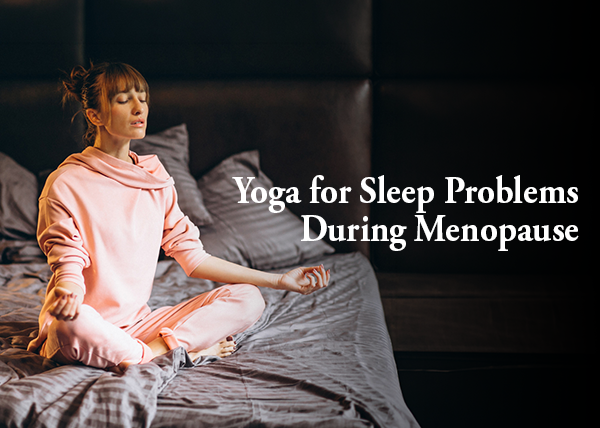
If you’re lying awake at 3 a.m. again, sheets damp from a hot flash, mind racing, you already know menopause and good sleep don’t always go together. Yoga for sleep during menopause won’t switch off hot flashes or rebalance hormones on its own, but a calming practice built around the right poses, breathing exercises, and a consistent wind-down routine may help settle your nervous system enough to actually fall, and stay, asleep.
This guide covers why menopause disrupts sleep in the first place, what research says about yoga’s role in managing it, the poses and breathing techniques most often recommended, and a simple bedtime routine you can start tonight.
Why Menopause Disrupts Sleep
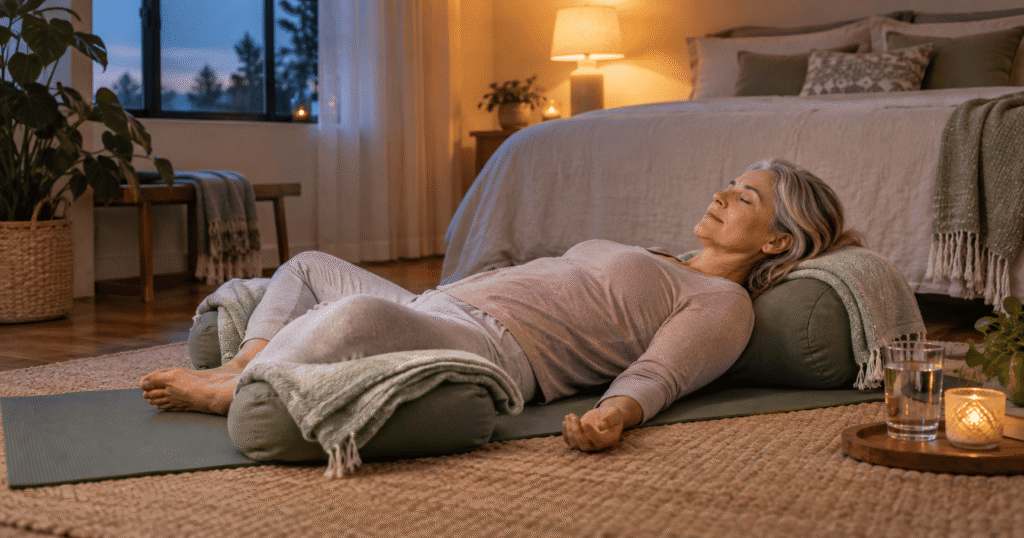
Sleep problems during menopause usually come from more than one direction at once. Falling estrogen and progesterone levels can affect the body’s temperature regulation, which is part of why night sweats and hot flashes tend to interrupt sleep. Anxiety, low mood, and a busier, more wired nervous system are also common during this transition, and a racing mind at bedtime is one of the most frequently reported complaints among people going through perimenopause and menopause. On top of that, natural aging changes to sleep architecture mean lighter, more easily interrupted sleep even without menopause symptoms layered on top.
Can Yoga Really Help with Menopause Insomnia?
What the Research Suggests
Yoga’s role here comes mainly through calming the nervous system rather than doing anything directly to hormone levels. Some research has looked specifically at Yoga Nidra, a guided relaxation practice done lying down, as a non-pharmacological approach to insomnia in postmenopausal women, with encouraging early findings around improved sleep quality and reduced night waking. Broader research reviewing multiple studies on yoga and menopause has also reported associations between regular practice and improvements in sleep quality, mood, and overall menopause symptom burden. As with most yoga and health research, these studies tend to be small, and the researchers behind them are generally careful to note that larger, more rigorous trials are still needed.
What Yoga Can’t Do
Yoga isn’t a treatment for menopause, and it won’t stop hot flashes or hormonal changes on its own. If insomnia is severe, persistent, or paired with other symptoms that feel unmanageable, that’s a conversation for your doctor, not something to try to solve through movement and breathing alone.
Best Yoga Poses for Better Sleep During Menopause
These poses are gentle, restorative, and specifically chosen because they encourage the body to settle rather than activate. Move slowly, keep your breath easy, and use props (blankets, pillows, a wall) wherever they help you relax more fully into each shape.
Legs-Up-the-Wall Pose (Viparita Karani)
Lie on your back with your legs resting up a wall, hips a comfortable distance away. This gentle inversion is widely used to ease tired legs and encourage the body to shift out of “alert” mode.
Reclining Bound Angle Pose (Supta Baddha Konasana)
Lying on your back with the soles of your feet together and knees supported by blankets or blocks, this pose opens the hips and chest while keeping the body fully supported and passive.
Child’s Pose (Balasana)
A resting pose with the hips back toward the heels and arms extended or resting alongside the body. It’s often used as a gentle, grounding pose to slow the breath before moving into stillness.
Seated Forward Bend (Paschimottanasana)
A slow forward fold from a seated position, with a bent knee or strap if your hamstrings are tight. This pose has a naturally introspective, calming quality that many people find helpful before bed.
Supported Bridge Pose (Setu Bandhasana)
Lying on your back with the hips gently lifted and supported by a block or bolster, this restorative version of bridge pose can ease lower back tension without requiring active effort.
Breathing Exercises to Calm the Body Before Bed
Pairing poses with slow, intentional breathing tends to make the biggest difference for winding down.
Bhramari (Humming Bee Breath)
Exhale slowly while making a soft humming sound, with your ears gently covered if that feels comfortable. Many people find the vibration itself noticeably calming.
Extended Exhale Breathing
Simply making your exhale longer than your inhale, for example inhaling for a count of four and exhaling for a count of six or eight, can help shift the nervous system toward a calmer state.
Alternate Nostril Breathing (Anulom Vilom)
A slow, seated practice that alternates breath between nostrils. It’s commonly used to support a more balanced, settled nervous system and is gentle enough for an evening practice.
What Is Yoga Nidra, and Why Is It Recommended for Menopause Sleep?
Yoga Nidra, sometimes called “yogic sleep,” is a guided relaxation practice done lying down, usually led by a recorded or live voice guiding you through a body scan and breath awareness while you stay in a state between waking and sleep. It doesn’t involve any physical movement, which makes it accessible even on nights when you’re too tired or too warm to want to stretch. It’s one of the more specifically studied practices for postmenopausal insomnia, and many people use it either as a full practice on its own or as the final step in a longer bedtime routine.
A Simple Bedtime Yoga Routine for Menopause
Consistency matters more than length here. A short, repeatable routine tends to work better than an occasional long one.
| Time | Practice | Focus |
| 5 minutes | Seated Forward Bend, gentle neck rolls | Slow down and signal the day is winding up |
| 8–10 minutes | Reclining Bound Angle Pose, Child’s Pose, Supported Bridge Pose | Passive, supported stretching |
| 5 minutes | Legs-Up-the-Wall Pose | Settle the legs and nervous system |
| 5–10 minutes | Extended exhale breathing or Bhramari | Calm the mind before lying down |
| 10–20 minutes | Yoga Nidra (guided recording) | Full-body relaxation, done in bed if preferred |
This adds up to roughly 30 to 45 minutes, though even the breathing exercises and Yoga Nidra alone, without the poses, can be worthwhile on nights when time or energy is limited.
Other Sleep Habits Worth Combining with Yoga
Yoga tends to work best alongside the basics of sleep hygiene rather than instead of them: a cool, dark bedroom, a consistent bedtime and wake time, limiting caffeine and alcohol in the evening, and keeping screens out of the last 30 to 60 minutes before bed. If night sweats are a major disruptor, moisture-wicking sleepwear and layered bedding you can easily adjust overnight can help alongside your wind-down routine.
A journal by the bed can also be worth trying if racing thoughts are the main problem rather than temperature. Writing down whatever is circling your mind, even a short, messy list, before starting your yoga routine can make it easier to actually settle into the poses and breathing exercises rather than lying there half-listening to a guided recording while still mentally drafting tomorrow’s to-do list.
When to See a Doctor About Menopause Insomnia
If sleep problems are severe, ongoing for weeks or months, or paired with symptoms like significant mood changes, heart palpitations, or sleep apnea signs such as loud snoring or gasping for air, it’s worth speaking with your doctor. Menopause-related sleep disruption can sometimes benefit from medical approaches such as hormone therapy or other treatments, and a doctor can help rule out other causes of insomnia that yoga and lifestyle changes alone won’t address.
Yoga for Better Sleep at Canada Yoga Studio
Canada Yoga Studio doesn’t run a program specifically for menopause, but a few existing offerings support the kind of calming, nervous-system-focused practice this guide covers. Sound Healing sessions run 90 minutes online, using Tibetan singing bowls, gongs, and chimes to support relaxation, and are among the offerings the studio highlights for stress reduction and improved sleep. The Nervous System Reset is a 4-week guided journey combining mindful movement, breathwork, and meditation, built for exactly the kind of overstimulated, hard-to-settle nervous system that often shows up during menopause. For a more active, breath-focused practice, Kundalini Yoga and Multi-Dimensional Yoga both incorporate pranayama and meditation alongside movement.
If you’d like a longer reset away from daily routine, Canada Yoga Studio’s wellness retreats run 3 to 5 days and combine yoga, meditation, mindfulness, and sound healing. It’s worth asking directly what’s included, such as accommodation and meals, when you enquire.
Frequently Asked Questions
Does yoga really help with menopause insomnia?
Yoga isn’t a treatment for menopause or insomnia, but some research, including studies focused on postmenopausal women, suggests that calming practices like Yoga Nidra and restorative yoga may support better sleep quality as part of a broader routine. Results vary from person to person.
What is the best yoga pose for menopause sleep?
Restorative, passive poses like Legs-Up-the-Wall, Reclining Bound Angle Pose, and Supported Bridge Pose are commonly recommended because they encourage the body to settle rather than activate.
Can yoga nidra replace sleep?
No. Yoga Nidra is a deeply relaxing practice, but it isn’t a substitute for actual sleep. It’s best used as a tool to help you fall asleep more easily or to support relaxation if you’re having trouble sleeping through the night.
How long before bed should I practise yoga?
Most people find a wind-down routine in the 30 to 60 minutes before bed works well, though even a short breathing practice right before lying down can help.
Can breathing exercises help with night sweats?
Breathing exercises won’t stop night sweats directly, since these are driven by hormonal changes, but slow breathing may help calm the stress response that often makes waking up from a night sweat harder to settle back down from.
Is restorative yoga better than a more active practice for sleep?
For an evening routine, yes, generally. Restorative and gentle yoga are more suited to winding down than a vigorous practice, which can be more energizing and better suited to earlier in the day.
When should I talk to a doctor about menopause sleep problems?
If insomnia is severe, persistent, or accompanied by other concerning symptoms, it’s worth speaking with your doctor rather than relying on yoga and lifestyle changes alone. They can help identify the underlying causes and appropriate treatment options.
Start Tonight
You don’t need a long practice to begin. A few restorative poses, a couple of minutes of slow breathing, and a short Yoga Nidra recording are a reasonable place to start tonight. If you’d like guided support building a calming routine, explore Sound Healing sessions or contact Canada Yoga Studio to ask what might suit this stage of life.