
Meditation Retreat in Canada: Types, Benefits & How to Choose the Right Retreat

A meditation retreat in Canada can be a one-day experience, a silent residential programme or a multi-day wellness getaway that combines guided meditation, mindful movement, nature and reflection. The right retreat depends on your goals, experience level, available time, preferred environment and budget. Some retreats focus mainly on silence and meditation, while others include yoga, walking meditation, sound healing, journaling and group activities. Before booking, check the exact schedule, meals, accommodation, experience requirements and cancellation policy so you know what to expect.
What Is a Meditation Retreat?
A meditation retreat is a structured experience designed to give participants dedicated time for meditation, quiet reflection and mindful activities.
Unlike a regular meditation class, a retreat may include several connected sessions throughout the day. These sessions can include guided meditation, mindful breathing, walking meditation, gentle yoga, journaling and periods of rest.
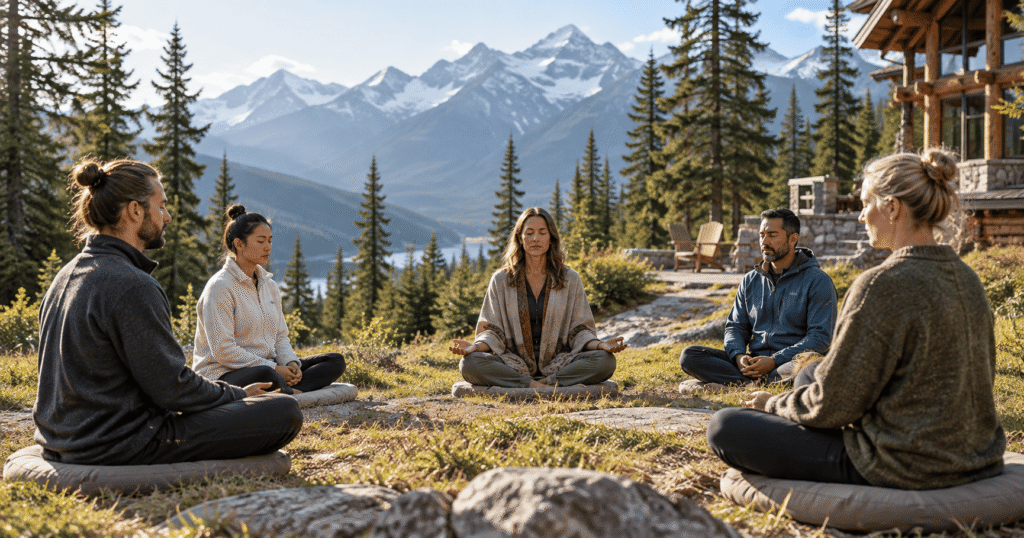
Some retreats take place in a yoga studio or wellness centre. Others are held in mountain lodges, forest settings or residential retreat centres. The environment may encourage participants to spend less time on daily routines and more time paying attention to their thoughts, breathing and surroundings.
Every retreat is different. Some are highly structured, while others include more personal time. Some welcome conversation and group discussion, while silent meditation retreats may limit communication for specific periods.
Before choosing a retreat, read the complete description rather than assuming that every meditation retreat follows the same format.
Types of Meditation Retreats in Canada
Meditation retreats in Canada can be organised in several different ways. Understanding the main types can help you choose an experience that feels appropriate for you.
Guided Meditation Retreats
Guided meditation retreats are led by a teacher or facilitator who explains the practice and provides instructions throughout the session.
This format can be helpful for beginners because participants are not expected to meditate without direction. The facilitator may guide the group through breathing awareness, body scanning, visualisation, mindfulness or another meditation practice.
Before booking, check how much of the schedule is guided and whether there is time to ask questions.
Mindfulness Retreats
Mindfulness retreats focus on present-moment awareness during meditation and everyday activities.
Participants may practise mindful breathing, walking, eating, listening and sitting. The purpose is usually to bring greater attention to ordinary experiences instead of moving through the day automatically.
A mindfulness retreat may include group discussions, journaling and quiet time. It can suit people who want to explore mindfulness in a practical and structured environment.
Silent Meditation Retreats
Silent meditation retreats limit conversation for a specific period. The length and rules can vary significantly.
Some retreats may include complete silence for most of the day. Others may allow conversation during meals or designated group sessions.
Silence can create a calm environment, but it may not be comfortable for everyone. Before attending, ask:
- How long is silence expected?
- Can participants speak with the facilitator?
- Are mobile phones restricted?
- Are meals taken silently?
- What happens if a participant feels uncomfortable?
- Is the retreat suitable for first-time meditators?
Understanding the expectations in advance can help you choose a retreat that matches your personality and experience level.
Yoga and Meditation Retreats
Yoga and meditation retreats combine seated practices with movement, breath awareness and relaxation.
A typical schedule may include a gentle yoga class in the morning, guided meditation, mindful walking and quiet reflection. The movement component can vary from restorative practices to more active yoga sessions.
Check the yoga style and physical intensity before booking. A retreat described as a yoga and meditation retreat may not be suitable for every experience level.
Sound Healing and Meditation Retreats
Some retreats combine meditation with sound-based practices using instruments such as singing bowls, gongs and chimes.
Sound healing sessions may be included as a relaxation or reflective activity alongside meditation and gentle movement. Canada Yoga Studio describes its sound healing sessions as including sound instruments, guided meditation and gentle breathwork. Learn more about sound healing and meditation practices.
Sound healing is a wellness practice and should not be described as a medical or mental health treatment.
One-Day Meditation Retreats
A one-day meditation retreat can be a suitable starting point for people who want a focused experience without booking overnight accommodation.
These retreats may include guided meditation, yoga, walking meditation, meals, sound healing and periods of reflection. They can also be easier to plan for people with work, family or travel commitments.
Always check the start and end time, travel requirements and included meals before booking.
Residential Meditation Retreats
Residential meditation retreats include overnight accommodation and usually follow a structured schedule over several days.
They may provide more time for meditation, silence, nature walks, group discussions and personal reflection. Accommodation may be shared or private, and it may be included in the registration fee or charged separately.
Ask about the room type, meals, check-in process, personal time and cancellation terms before making payment.
What Are the Benefits of Attending a Meditation Retreat?
People attend meditation retreats for different reasons. Some want to learn a meditation technique, while others want time away from their usual routine.
A retreat may provide:
Dedicated Time for Quiet and Reflection
A structured retreat gives you time to pause and reflect without managing your usual daily schedule. This may help you notice how you are feeling, what you need and which habits you want to understand better.
Guided Learning
A retreat can introduce you to different meditation methods in a supportive setting. You may learn how to focus on the breath, observe thoughts or practise mindful movement.
Greater Awareness
Regular meditation sessions may help participants explore their awareness of breathing, thoughts, body sensations and daily reactions.
Connection With Nature
Mountain, forest and outdoor retreat settings can provide opportunities for mindful walking and quiet observation. Nature may become part of the retreat experience rather than simply being a background location.
Personal Reflection
Journaling, quiet meals and unstructured time may give you space to think about your routines and personal priorities.
Community
Group meditation and shared activities can connect you with people who are also interested in wellness, mindfulness and personal reflection.
A More Consistent Practice
Learning in a structured setting may help you understand which meditation style feels comfortable enough to continue at home.
The experience is different for everyone. Meditation retreats may support relaxation, mindfulness and self-reflection, but they do not guarantee a particular result.
Meditation retreats are wellness experiences and should not replace professional medical or mental health care.
What Activities Are Included in a Meditation Retreat?
The activities depend on the organiser and the exact retreat schedule. Possible inclusions may include:
- Guided meditation
- Mindful breathing
- Walking meditation
- Gentle yoga
- Sound healing
- Nature connection
- Journaling
- Wellness discussions
- Group reflection
- Quiet periods
- Mindful meals
- Rest and personal time
Some retreats may include several hours of seated meditation, while others may offer a more balanced schedule with movement and outdoor activities.
Before booking, check how much time is spent in meditation, whether activities are optional and whether rest periods are included.
Are Meals and Accommodation Included?
Meals and accommodation vary from one meditation retreat to another.
A retreat may include:
- Breakfast
- Lunch
- Dinner
- Tea and water
- Vegetarian meals
- Vegan meals
- Plant-based meals
- Sattvic meals, when specifically confirmed
- Snacks or light refreshments
If you have allergies, food intolerances or dietary preferences, inform the organiser before booking.
Accommodation may include a shared room, private room or separate lodging arrangement. Some residential retreats include accommodation in the registration fee, while others charge separately.
A one-day meditation retreat may include meals and activities without requiring an overnight stay.
Before registering, confirm:
- Which meals are included
- Whether drinks are provided
- Whether accommodation is included
- Whether rooms are shared or private
- Check-in and check-out times
- Whether extra nights are available
- Whether dietary requirements can be accommodated
Do not assume that meals, equipment or lodging are included simply because they appear in retreat photographs.
Are Meditation Retreats Suitable for Beginners?
Many meditation retreats welcome beginners, but the level of support can differ.
Before booking, check:
- Whether previous meditation experience is required
- Whether sessions are guided
- How long participants are expected to sit
- Whether walking meditation or gentle movement is included
- Whether rest periods are available
- Whether silence is required
- Whether questions can be asked
- Whether the schedule can be adapted
- Whether the retreat is physically comfortable for you
A shorter guided or one-day meditation retreat may be easier for a first experience than a longer silent retreat with several hours of seated practice.
If you have concerns, contact the organiser before making a payment. Ask about the daily schedule, movement options and support available during the retreat.
How to Choose the Right Meditation Retreat in Canada
Start With Your Main Goal
Think about what you want from the experience.
You may be looking for:
- Quiet reflection
- Meditation instruction
- Mindfulness practice
- Nature connection
- Yoga and meditation together
- Sound healing
- A structured wellness day
- A longer residential experience
Your goal can help you decide whether a guided, silent, mindfulness, yoga or sound healing retreat is the right fit.
Consider Your Available Time
One-day retreats require less planning and may not require accommodation. Weekend and multi-day retreats offer more time away but require additional planning for lodging, meals and travel.
Choose a format that fits your schedule rather than booking a longer retreat simply because it sounds more immersive.
Check the Experience Level
Beginners may prefer guided sessions, shorter practices, flexible movement and clear instructions.
More experienced participants may want longer meditation periods, silence or a specific meditation tradition. Read the retreat description carefully to understand what is expected.
Choose the Right Environment
Meditation retreats may take place in:
- Mountain settings
- Forest locations
- Wellness centres
- Yoga studios
- Residential retreat centres
- Small group venues
- Larger group settings
Think about whether you would feel more comfortable in a quiet nature setting, a studio environment or a social group retreat.
Understand the Silence Policy
If the retreat includes silence, check when it begins and ends. Some programmes allow conversation during specific periods, while others may have stricter rules.
Knowing the policy in advance can make the experience more comfortable.
Compare the Total Cost
Compare the complete package instead of only the registration fee.
Check whether the total cost includes:
- Meals
- Accommodation
- Classes
- Activities
- Parking
- Transportation
- Equipment
- Additional services
Meditation Retreat Comparison Checklist
| Factor | What to Check | Why It Matters |
| Location | Exact venue and travel route | Helps you plan arrival |
| Duration | One day, weekend or multi-day | Helps you choose the right commitment |
| Meditation style | Guided, mindfulness, silent or mixed | Matches your expectations |
| Experience level | Beginner-friendly or advanced | Helps you choose safely |
| Schedule | Meditation hours, rest and activities | Shows how demanding the day may be |
| Meals | Included meals and dietary options | Prevents planning problems |
| Accommodation | Shared, private or separate | Helps you calculate the full cost |
| Accessibility | Movement and seating options | Supports comfort during sessions |
| Silence policy | Rules and quiet periods | Helps you prepare mentally |
| Cancellation | Cancellation and transfer terms | Clarifies booking conditions |
| Contact | Organiser’s enquiry details | Gives you a place to ask questions |
What to Check Before Booking a Meditation Retreat
Before confirming your place, ask the organiser:
- Where exactly is the retreat held?
- What date and time does it begin?
- What time does it finish?
- How many days does it last?
- Which meditation style is included?
- Who leads the sessions?
- Is the retreat suitable for beginners?
- How large is the group?
- Are meals included?
- Is accommodation included?
- Is parking available?
- What transportation options are available?
- What equipment should you bring?
- Is the venue accessible?
- What is the cancellation policy?
- Is a booking transfer possible?
- How do you complete registration?
- Who should you contact with questions?
Confirm the current information directly with the organiser before booking because dates, schedules, prices and inclusions can change.
A One-Day Meditation Retreat Example in Banff
For people searching for a one-day meditation retreat in Alberta, Spirit Peak Retreat is a Canada Yoga Studio event held at Banff Rocky Mountain Resort in Banff, Alberta.
The event is scheduled for October 4, 2026, from 8:00 AM to 4:30 PM. Confirmed inclusions are yoga, meditation, walking meditation, sound healing, breakfast, lunch and parking. Beginners are welcome, and no overnight stay is required.
If you are comparing meditation and wellness retreats in Canada, you can learn more about the Spirit Peak Retreat in Banff.
Check the official event page for the latest details before making travel arrangements or sending an enquiry.
How to Prepare for a Meditation Retreat
A few simple steps can help you feel more prepared.
Before attending:
- Read the complete itinerary
- Understand whether silence is required
- Confirm the arrival and departure times
- Check the travel route and venue
- Wear comfortable clothing
- Bring a water bottle
- Pack a journal
- Bring a yoga mat if required
- Pack personal medication and essentials
- Inform the organiser about dietary needs
- Prepare for quiet periods
- Ask what equipment will be provided
- Confirm meals and accommodation
- Ask questions before making payment
You do not need to have a perfect meditation practice before attending. The most useful preparation is understanding the schedule, communicating your needs and choosing a retreat that matches your comfort level.
Frequently Asked Questions
What is a meditation retreat in Canada?
A meditation retreat is a structured wellness experience that may include guided meditation, mindful breathing, walking meditation, quiet reflection, journaling and nature-based activities.
What types of meditation retreats are available?
Common types include guided meditation retreats, mindfulness retreats, silent meditation retreats, yoga and meditation retreats, sound healing retreats, one-day retreats and residential retreats.
Are meditation retreats suitable for beginners?
Many retreats welcome beginners, especially guided and one-day programmes. However, you should confirm the experience requirements, meditation duration, silence policy and available support before booking.
What are the benefits of attending a meditation retreat?
A meditation retreat may provide dedicated time for quiet, self-reflection, mindfulness, relaxation, learning and connection with nature or a supportive group. Results vary from person to person.
Are meals and accommodation usually included?
Not always. Some retreats include selected meals or accommodation, while others charge separately. One-day retreats may not require overnight accommodation.
What is the difference between a silent and guided meditation retreat?
A guided retreat includes instructions from a teacher or facilitator. A silent retreat limits conversation for specific periods and may involve longer periods of independent practice.
How do I choose the right meditation retreat?
Compare the meditation style, location, duration, schedule, experience level, silence policy, activities, meals, accommodation, accessibility, total cost and booking terms.
Does Spirit Peak Retreat require an overnight stay?
No. Spirit Peak Retreat is a one-day event at Banff Rocky Mountain Resort in Banff, Alberta. It runs from 8:00 AM to 4:30 PM on October 4, 2026, and no overnight stay is required.
Final Thoughts
Choosing the right meditation retreat in Canada starts with understanding what you want from the experience. A guided one-day retreat may suit a beginner who wants a structured introduction, while a residential or silent retreat may be better for someone looking for a longer period of quiet practice.
Before booking, check the exact meditation style, schedule, meals, accommodation, experience level, silence policy, accessibility and total cost. When the details are clear, you can choose a retreat that feels practical, comfortable and aligned with your goals.
If you are comparing one-day meditation retreats in Alberta, review the Spirit Peak Retreat details and contact Canada Yoga Studio with any questions about the event.