
Yoga for Flexibility: 12 Stretches to Improve Mobility

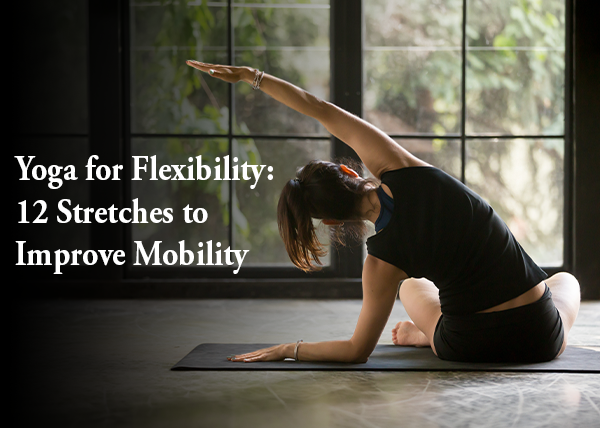
Feeling stiff after sitting for long hours, waking up with tight muscles, or struggling with simple movements can make everyday activities uncomfortable. Whether someone spends most of the day working at a desk or follows an active fitness routine, maintaining flexibility and mobility is important for comfortable, efficient movement.
Practising yoga for flexibility is a gentle way to stretch tight muscles, improve joint movement, and develop better body awareness. Unlike intense workouts, yoga combines controlled movements, comfortable stretching, and mindful breathing. This makes it accessible to beginners and people with different levels of physical fitness.
A regular yoga practice can help improve flexibility in the hips, hamstrings, shoulders, back, and other areas that commonly feel tight. More importantly, yoga encourages people to move within their comfortable range rather than forcing their bodies into difficult positions.
This guide explores 12 effective yoga stretches to improve flexibility and mobility, explains their benefits, and provides a simple daily routine that beginners can practise at home.
What Is Flexibility and Why Is It Important?
Flexibility refers to the ability of muscles and surrounding tissues to lengthen enough for a joint to move through its available range of motion. Good flexibility makes everyday movements such as bending, reaching, sitting, and walking more comfortable.
When muscles feel tight, certain movements may become restricted. For example, tight hamstrings can make bending forward uncomfortable, while limited shoulder flexibility may make reaching overhead more difficult.
Flexibility is also an important part of physical fitness because it helps the body perform movements without unnecessary restriction. However, being flexible does not mean a person needs to touch their toes or perform advanced yoga poses.
The goal of flexibility training is to maintain comfortable movement that supports daily activities and physical well-being.
What Is the Difference Between Flexibility and Mobility?
Flexibility and mobility are closely related, but they are not exactly the same.
Flexibility describes how far muscles and other soft tissues can stretch. For example, the ability to stretch the hamstrings while bending forward is related to flexibility.
Mobility refers to the ability to move a joint through its available range of motion with control. It involves flexibility, joint structure, muscle strength, and coordination.
A person may have flexible hamstrings but still struggle to control a deep squat because the movement also requires ankle mobility, hip stability, and muscular strength.
Yoga can help develop both flexibility and mobility by combining stretching with active movements and controlled postures. This makes yoga a useful addition to a balanced fitness routine.
How Does Yoga Help Improve Flexibility and Mobility?
Yoga encourages the body to move through different positions while gradually stretching and strengthening muscles. With consistent practice, these movements can help improve the range of motion around certain joints.
Gently Stretches Tight Muscles
Many yoga poses focus on muscle groups that commonly become tight, including the hamstrings, hip flexors, calves, shoulders, and back.
Regular stretching can gradually improve the ability of these muscles to move through a comfortable range. Instead of forcing a deep stretch, yoga encourages slow and controlled movements.
Supports Joint Mobility
Yoga includes bending, extending, rotating, and balancing movements that help people use and control the available movement of their joints.
Poses such as Cat-Cow, Low Lunge, and Downward-Facing Dog encourage movement around the spine, hips, ankles, and shoulders.
Improves Body Awareness
Yoga requires attention to posture, breathing, and alignment. This helps practitioners become more aware of how different parts of the body move together.
Improved body awareness can make it easier to recognise uncomfortable positions and adjust movements accordingly.
Builds Strength Alongside Flexibility
Some yoga stretches also engage muscles that support joint movement. For example, Warrior II strengthens the legs while stretching the hips, and Cobra Pose activates the back muscles while opening the front of the body.
Developing strength alongside flexibility supports better control during everyday movement.
Encourages Relaxation During Stretching
Slow breathing and comfortable positioning may help reduce unnecessary muscle tension. When the body feels relaxed, gentle stretching can become easier to manage.
According to the NHS guidance on strength and flexibility, exercises such as yoga and stretching can help maintain the joint movement needed for daily tasks and physical activity.
12 Best Yoga Stretches to Improve Flexibility and Mobility
The following yoga stretches target major areas of the body, including the back, hips, hamstrings, shoulders, and legs. These beginner-friendly poses can be practised individually or combined into a full-body flexibility routine.
1. Cat-Cow Pose (Marjaryasana–Bitilasana)
Cat-Cow Pose is one of the easiest yoga movements for improving spinal mobility. It involves gently rounding and extending the back while coordinating movement with breathing.
To practise, begin on hands and knees with the wrists positioned beneath the shoulders and the knees beneath the hips. While inhaling, gently lower the belly and lift the chest into Cow Pose. While exhaling, round the spine upward and allow the head to lower into Cat Pose.
Repeat the movement slowly for 8–10 rounds without forcing the back into an uncomfortable position.
Cat-Cow encourages movement through the spine and can help reduce feelings of stiffness after prolonged sitting or sleeping. It also improves awareness of how the pelvis and back move together.
Beginners with sensitive knees can place a folded blanket under them, while people with wrist discomfort may prefer a seated variation.
2. Downward-Facing Dog (Adho Mukha Svanasana)
Downward-Facing Dog is a full-body yoga stretch that targets the hamstrings, calves, shoulders, and back. It also engages the arms and upper-body muscles.
The pose begins on hands and knees. From this position, press through the hands and slowly lift the hips upward and backward, forming an inverted V shape. The knees can remain slightly bent while the spine stays comfortably extended.
Hold the position for 15–30 seconds while breathing naturally.
This yoga pose can help improve flexibility in the back of the legs while encouraging shoulder mobility and upper-body endurance.
Beginners should avoid forcing the heels toward the floor. Keeping the knees bent is often more comfortable, especially when the hamstrings are tight.
People with wrist injuries or symptoms that worsen when the head is lowered may need a supported alternative.
3. Standing Forward Bend (Uttanasana)
Standing Forward Bend is a gentle stretch that mainly targets the hamstrings and calves while allowing the upper body to relax.
Begin by standing with the feet approximately hip-width apart. Slowly bend forward from the hips while keeping the knees slightly bent. Allow the hands to rest on the thighs, shins, yoga blocks, or another comfortable support.
Remain in the position for 15–30 seconds before bending the knees further and gradually returning to standing.
This stretch can help improve flexibility in the back of the legs and make movements involving hip bending feel easier.
Beginners do not need to touch the floor. The focus should remain on a comfortable stretch rather than achieving a particular position.
Anyone who experiences dizziness while bending forward can practise a supported version with the upper body remaining higher.
4. Child’s Pose (Balasana)
Child’s Pose is a relaxing yoga posture that gently stretches the back and hips. It is commonly used as a resting position during yoga sessions.
To practise, begin on the knees with the big toes touching or comfortably separated. Slowly move the hips toward the heels and extend the arms forward while lowering the upper body toward the mat.
The forehead can rest on a cushion or folded blanket if reaching the floor feels uncomfortable.
Hold the pose for 30–60 seconds while allowing the breathing to remain slow and natural.
Child’s Pose provides a gentle stretch through the back and may help release feelings of tension around the shoulders and hips. It is particularly useful between more active yoga movements.
People with knee discomfort can use additional support or choose a seated forward stretch instead.
5. Low Lunge Pose (Anjaneyasana)
Low Lunge is one of the most useful yoga stretches for improving hip flexibility. It particularly targets the hip flexors, which are muscles located around the front of the hips.
These muscles may feel tight after long periods of sitting.
Begin on hands and knees before stepping the right foot forward. Keep the front knee positioned above the ankle while the opposite knee remains on the mat. Slowly lift the chest and rest the hands on the front thigh.
Hold the position for 20–30 seconds before switching sides.
Low Lunge encourages flexibility in the front of the hips and helps prepare the body for activities that involve walking, climbing stairs, and extending the legs backward.
Beginners can place a folded blanket beneath the back knee for comfort. The stretch should feel gentle rather than creating pressure in the lower back.
6. Butterfly Pose (Baddha Konasana)
Butterfly Pose is a seated yoga stretch that focuses on the inner thighs and hips. It can be particularly helpful for people who want to improve flexibility in the lower body.
To practise, sit upright on the yoga mat and bring the soles of the feet together. Allow the knees to move outward naturally while holding the feet or ankles.
Keep the spine comfortably extended and avoid pressing the knees toward the floor.
Remain in the position for 20–40 seconds while breathing steadily.
Butterfly Pose encourages hip movement and gently stretches the muscles of the inner thighs. With regular practice, the position may become more comfortable.
Beginners can sit on a folded blanket or place cushions beneath the knees to reduce strain.
7. Seated Forward Bend (Paschimottanasana)
Seated Forward Bend is a traditional yoga posture that stretches the hamstrings and encourages comfortable movement through the hips and back.
Begin by sitting with the legs extended forward. Keep the knees slightly bent if the hamstrings feel tight. Slowly lean forward from the hips while reaching toward the legs.
The hands may rest on the thighs, knees, or shins depending on flexibility.
Hold the stretch for approximately 20–30 seconds without rounding the back excessively or pulling the body forward.
This pose can help improve hamstring flexibility and encourage awareness of hip movement. It can be especially useful for beginners who struggle with tightness in the back of the legs.
A yoga strap around the feet may provide support, but it should never be used to force a deeper stretch.
8. Cobra Pose (Bhujangasana)
Cobra Pose is a gentle backbend that stretches the front of the torso and activates the muscles supporting the spine.
To practise, lie on the stomach with the palms placed beside the lower ribs. Keep the elbows close to the body and slowly lift the chest while using the back muscles and light support from the hands.
The hips and lower body remain comfortably supported on the mat.
Hold the position for 10–20 seconds before lowering the chest slowly.
Cobra Pose encourages spinal extension, which is the movement involved in gently bending the back backward. It can also help improve awareness of upper-body posture.
Beginners should avoid pushing into a deep backbend. A small chest lift is sufficient, and the pose should be avoided or modified if it causes back pain.
9. Pigeon Pose (Eka Pada Rajakapotasana Preparation)
Pigeon Pose is a hip-opening yoga stretch that targets the gluteal muscles and other tissues around the outer hip.
Because this position can be intense, beginners should approach it carefully.
Begin on hands and knees, then bring one knee forward toward the same-side wrist while extending the opposite leg backward. Keep the front foot relatively close to the body if that feels more comfortable.
Support the front hip with a folded blanket or yoga block if necessary, and remain upright rather than forcing the body forward.
Hold for 15–30 seconds before changing sides.
Pigeon Pose may help improve flexibility around the hips, but it should never create twisting pressure or pain in the knee.
For beginners or people with knee sensitivity, a Reclined Figure-Four Stretch is often a more comfortable alternative.
10. Supine Spinal Twist (Supta Matsyendrasana)
Supine Spinal Twist is a gentle floor-based yoga posture that encourages rotation through the spine.
Begin by lying on the back with the knees bent and feet resting on the mat. Bring the knees together and slowly lower them toward one side while keeping the movement comfortable.
The arms can extend sideways, and the head may remain facing upward.
Hold the position for 20–30 seconds before returning the knees to the centre and repeating on the opposite side.
This pose encourages movement through the back and torso while providing a relaxing stretch.
Beginners can place a pillow under the knees if they do not comfortably reach the floor. The twist should never be forced, especially when there is existing back discomfort.
11. Extended Triangle Pose (Utthita Trikonasana)
Extended Triangle Pose is a standing yoga stretch that works on hip mobility, hamstring flexibility, and movement through the sides of the torso.
To practise, stand with the feet wide apart and turn one foot outward. Extend the arms sideways, then gently reach over the front leg while lowering one hand toward the thigh, shin, or a yoga block.
The opposite arm may extend upward or rest on the hip if shoulder mobility is limited.
Hold the position for 15–30 seconds before returning to standing and switching sides.
Triangle Pose stretches several areas of the body while encouraging balance and controlled movement.
Beginners should avoid locking the knees or forcing the hand toward the floor. A shorter stance and a yoga block can make the posture more accessible.
12. Reclined Figure-Four Stretch (Supta Kapotasana Variation)
Reclined Figure-Four Stretch is a beginner-friendly hip stretch that targets the gluteal muscles and outer hip.
Begin by lying on the back with both knees bent. Place the right ankle over the left thigh, just above the knee. Slowly bring the left thigh toward the chest while keeping the head and shoulders relaxed.
The hands can hold behind the left thigh, or the left foot can remain on the floor for a gentler variation.
Hold the position for 20–30 seconds before changing sides.
This stretch can help improve flexibility around the hips and glutes. It is often easier to control than deeper hip-opening poses, making it suitable for many beginners.
The position should remain comfortable, with no pressure on the knee joint.
A Simple 20-Minute Yoga Routine for Flexibility and Mobility
A daily flexibility routine does not have to be complicated. Combining gentle spinal movements, hip stretches, standing poses, and relaxation can help create a balanced full-body practice.
The following routine uses all 12 stretches and is suitable for beginners who want to improve flexibility gradually.
| Yoga stretch | Suggested time |
| Cat-Cow Pose | 2 minutes |
| Downward-Facing Dog | 1 minute |
| Standing Forward Bend | 1 minute |
| Child’s Pose | 2 minutes |
| Low Lunge | 2 minutes, both sides |
| Butterfly Pose | 2 minutes |
| Seated Forward Bend | 1 minute |
| Cobra Pose | 1 minute |
| Pigeon Pose or a supported alternative | 2 minutes, both sides |
| Supine Spinal Twist | 2 minutes, both sides |
| Extended Triangle Pose | 2 minutes, both sides |
| Reclined Figure-Four Stretch | 2 minutes, both sides |
| Total | 20 minutes |
The suggested times include short holds, repeated movements, breathing, and transitions. Beginners can shorten the session or replace challenging poses with gentler variations.
Before beginning, it is helpful to warm up with a few minutes of easy walking or gentle movement. The American Heart Association’s stretching guidance recommends stretching when muscles are warm and moving slowly without pain.
How Often Should Someone Practise Yoga for Flexibility?
Flexibility generally improves through regular and gradual practice rather than occasional deep stretching.
Beginners can start with yoga two or three days per week and gradually increase the frequency as the movements become more comfortable. Gentle daily practice may also be suitable, provided the body is not being pushed beyond its comfortable limits.
For many basic static stretches, holding a position for around 10–30 seconds is a practical starting point. Repeating a comfortable stretch may help accumulate more stretching time without excessive strain. These recommendations are consistent with established flexibility-training guidance.
American Heart Association
Some people may notice that certain movements feel easier after a few sessions, while measurable long-term improvements can take several weeks of consistent practice. Progress depends on existing mobility, age, physical activity, and individual health.
Rather than measuring success by how deeply a person can stretch, it is more useful to notice whether everyday movements become more comfortable and controlled.
Morning vs Evening Yoga: Which Is Better for Flexibility?
Both morning and evening yoga can support flexibility. The best time depends on personal preferences, daily routines, and how the body feels.
Benefits of Morning Yoga for Flexibility
Morning yoga provides an opportunity to introduce gentle movement after several hours of sleep. Poses such as Cat-Cow, Child’s Pose, and Low Lunge may help the body feel more comfortable before daily activities begin.
Because muscles may feel stiff in the morning, it is important to start with light movement and avoid immediately attempting deep stretches.
Benefits of Evening Yoga for Flexibility
Evening yoga can be useful after a day spent sitting, standing, or performing repetitive activities. Gentle stretches for the hips, hamstrings, shoulders, and back may help relieve feelings of tightness.
An evening session can also include slower breathing and relaxing postures, such as Child’s Pose and Supine Spinal Twist.
There is no universal rule that yoga must be practised at a particular time to improve flexibility. Consistency, comfortable technique, and gradual progression are more important.
Common Mistakes to Avoid During Flexibility Yoga
Yoga can be a gentle way to improve mobility, but incorrect stretching techniques may lead to discomfort.
Forcing the Body into Deep Stretches
One of the most common mistakes is trying to achieve an advanced position before the body is ready.
Deep stretching should not cause sharp pain. Beginners should gradually explore their available range of motion rather than pushing beyond it.
Skipping the Warm-Up
Stretching cold muscles aggressively can feel uncomfortable. A few minutes of walking, joint movements, or gentle yoga can help prepare the body.
Holding the Breath
Some beginners hold their breath when a stretch becomes challenging. Slow, natural breathing can help maintain a more relaxed posture and reduce unnecessary tension.
Bouncing During Stretches
Rapid bouncing movements can place unnecessary stress on muscles and joints when performed without appropriate training.
Beginners should generally use smooth, controlled movements instead.
Comparing Flexibility with Others
Every person’s anatomy, mobility, and physical history are different. Some individuals naturally have greater flexibility than others.
The goal of yoga is not to copy how another person looks in a pose. Progress should be based on personal comfort, movement quality, and consistency.
Ignoring Discomfort or Pain
A mild stretching sensation may be normal, but sharp pain, numbness, tingling, or increasing discomfort should not be ignored.
Anyone with an injury, joint condition, recent surgery, or another relevant medical concern should seek professional guidance before attempting unfamiliar stretches.
How to Improve Flexibility Faster and Safely
Improving flexibility requires patience, but certain habits can make a yoga routine more effective and sustainable.
Practise Consistently
Regular stretching encourages gradual adaptation. Practising for 15–20 minutes several times a week may be more manageable than completing one long session occasionally.
Combine Stretching with Strength Training
Flexibility is only one component of mobility. Strong muscles help control movement through a joint’s available range.
Combining yoga with appropriate strengthening exercises can create a more balanced fitness routine.
Use Yoga Props When Needed
Yoga blocks, straps, cushions, and folded blankets can help beginners practise poses without forcing uncomfortable positions.
Props are useful tools for adapting yoga to individual bodies and flexibility levels.
Move Throughout the Day
Long periods of inactivity can contribute to feelings of stiffness. Taking short walking breaks, changing sitting positions, and performing gentle movements can complement a regular yoga routine.
Follow Beginner-Friendly Yoga Classes
Learning the correct movements can be easier with guidance from a qualified instructor. Yoga classes can help beginners understand alignment, breathing, and suitable modifications.
For those looking to build a consistent practice, Canada Yoga Studio is a place to explore yoga instruction and beginner-friendly practice options.
Can Beginners Improve Flexibility with Yoga at Home?
Yes, beginners can improve flexibility through yoga at home without needing advanced equipment or extensive experience.
A non-slip yoga mat, comfortable clothing, and enough space to move are usually sufficient for basic stretching routines.
The most important factor is selecting movements that match the person’s current ability. Someone with tight hamstrings may begin with bent-knee forward folds, while a person with limited hip mobility may use cushions or blocks for support.
Beginners can also choose a shorter routine involving Cat-Cow, Low Lunge, Butterfly Pose, Child’s Pose, and Reclined Figure-Four Stretch.
As the positions become more comfortable, the duration and variety of stretches can gradually increase.
Guided classes can provide additional support, particularly when learning correct alignment or adapting poses for physical limitations.
Frequently Asked Questions About Yoga for Flexibility
1. Can yoga really improve flexibility?
Yes, regular yoga practice can help improve flexibility by stretching muscles and gradually increasing comfortable movement around joints. The amount of improvement varies depending on consistency, physical condition, and the stretches being practised.
2. What are the best yoga poses for flexibility?
Some useful yoga poses for flexibility include Downward-Facing Dog, Standing Forward Bend, Butterfly Pose, Low Lunge, Seated Forward Bend, and Reclined Figure-Four Stretch. Each targets different muscle groups, making them suitable for a balanced full-body stretching routine.
3. Is 15 minutes of yoga a day enough to improve flexibility?
Fifteen minutes of consistent yoga can be a useful starting point for improving flexibility. A short session focused on major muscle groups may help develop a sustainable routine, especially when stretches are practised regularly and comfortably.
4. How long does it take to become more flexible with yoga?
Flexibility improvements vary between individuals. Some people feel more comfortable after several sessions, while lasting changes may take several weeks or longer. Consistent practice and gradual progression are more important than forcing quick results.
5. Can someone do yoga if they are very inflexible?
Yes. People do not need to be flexible before starting yoga. Beginner-friendly movements and modifications allow individuals to practise within their current range of motion. Yoga blocks, straps, and cushions can make stretches more accessible.
6. Which yoga poses are best for hip flexibility?
Low Lunge, Butterfly Pose, Reclined Figure-Four Stretch, and appropriately modified Pigeon Pose can help stretch muscles around the hips. Beginners should choose positions that feel comfortable and avoid pressure on the knees or lower back.
7. Can yoga improve mobility as well as flexibility?
Yes. Yoga combines stretching, strengthening, balance, and controlled movement, all of which can contribute to mobility. Active poses that require muscle control are particularly useful for developing comfortable joint movement.
8. Should yoga stretches be held for 30 seconds?
Holding a comfortable static stretch for approximately 10–30 seconds is a common starting recommendation. Beginners may start with shorter holds and gradually increase the duration, depending on how the body responds.
9. Is it better to stretch every day or three times a week?
Both approaches can be useful. Practising flexibility exercises at least two or three times per week is a reasonable starting point, while gentle daily stretching may help maintain a consistent habit. Recovery and personal comfort should guide the frequency.
10. Can yoga help with stiffness caused by sitting all day?
Yoga may help reduce feelings of stiffness associated with prolonged sitting by encouraging movement through the hips, back, and shoulders. Gentle stretches, regular movement breaks, and suitable strengthening exercises can work together to support comfortable mobility.
Conclusion
Yoga for flexibility offers a practical and accessible way to improve mobility, stretch tight muscles, and support comfortable everyday movement. From gentle poses such as Cat-Cow and Child’s Pose to deeper stretches such as Low Lunge, Butterfly Pose, and Seated Forward Bend, each movement targets different areas of the body.
Beginners do not need advanced flexibility or complicated routines to get started. A simple 15–20-minute yoga practice, performed consistently and with proper technique, can help develop better movement awareness and gradually improve flexibility.
The key is to move patiently, breathe naturally, and respect the body’s limits. Instead of focusing on how far a stretch can go, practitioners should concentrate on comfortable progress and long-term mobility.
For those who prefer structured instruction, Canada Yoga Studio provides a starting point for exploring yoga and developing a regular practice suited to individual fitness and flexibility goals.