
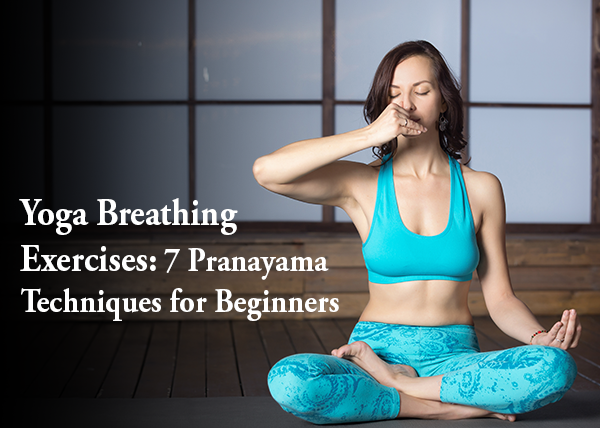
Yoga Breathing Exercises: 7 Pranayama Techniques for Beginners

What Are Yoga Breathing Exercises?
Most of us breathe without thinking about it. We inhale, we exhale, and that is about as much attention as we give to the process. But in yoga, breathing is treated as something far more important it is considered the bridge between your body and your mind.
Yoga breathing exercises, known in Sanskrit as Pranayama, are structured breathing practices that have been part of the yoga tradition for thousands of years. The word “pranayama” comes from two Sanskrit words: prana, meaning life energy or breath, and ayama, meaning to extend or control. Together, pranayama translates roughly as “the extension of breath and life force.”
Unlike shallow chest breathing that most of us do throughout the day, yoga breathing exercises teach you to breathe more fully, more slowly, and more intentionally. Each technique has a specific purpose some are meant to calm your nervous system, others are designed to build energy, and some help with mental focus and clarity.
What makes pranayama so accessible is that you do not need any equipment, a lot of space, or even prior yoga experience. You just need your breath, a quiet space, and a willingness to pay attention.
Whether you are brand new to yoga or have been practicing for a while but have not explored breathwork, this guide walks you through 7 beginner-friendly pranayama techniques that you can start using today.
Why Pranayama Matters for Beginners
When people think about yoga, they usually picture poses downward dog, warrior pose, child’s pose. But ancient yoga texts, including the Yoga Sutras of Patanjali, place pranayama as one of the eight essential limbs of yoga. In fact, breath control was considered just as important if not more so than physical postures.
So why should beginners pay attention to yoga breathing exercises?
The Science Behind It
Modern science backs what ancient yogis knew. Controlled breathing directly affects your autonomic nervous system the part of your body that manages your stress response. When you breathe slowly and deeply, you activate the parasympathetic nervous system, which is often called the “rest and digest” system. This slows your heart rate, lowers blood pressure, and helps your body shift out of fight-or-flight mode.
According to a study published in the International Journal of Yoga, regular pranayama practice is associated with:
- Reduced anxiety and stress levels
- Improved lung function and respiratory efficiency
- Better focus and mental clarity
- Lower cortisol levels (the stress hormone)
- Improved sleep quality
Benefits Specific to Beginners
For someone just starting out with yoga, pranayama offers a gentle and approachable entry point. You do not need to be flexible. You do not need to hold difficult poses. You just sit comfortably and breathe with intention.
Here are some reasons beginners especially benefit from pranayama:
- It builds body awareness Before you can master yoga poses, you need to feel connected to your body. Breathwork helps you develop that awareness.
- It calms pre-class nerves If you feel nervous about joining a yoga class, a few minutes of breathing can help settle your mind.
- It complements physical practice Once you learn how to breathe properly, your yoga poses become more effective and enjoyable.
- It is low-risk Most pranayama techniques are safe for nearly everyone, including beginners, older adults, and people with limited mobility.
How to Prepare Before You Start
Before diving into the seven techniques, here are a few simple tips to set yourself up for a good experience:
Find a Comfortable Position
You do not need to sit in a full lotus pose. Simply sit cross-legged on a mat or cushion, or sit upright in a chair with your feet flat on the floor. The important thing is that your spine is tall and you are not slouching.
Choose the Right Time
Many yoga teachers recommend practicing pranayama in the morning on an empty stomach. This is when the mind is fresh and the digestive system is not working hard. That said, any quiet moment in your day works just fine, especially if mornings are hectic for you.
Start Small
If you are new to yoga breathing exercises, start with just 5 to 10 minutes per session. As you grow more comfortable, you can extend your practice to 20 or 30 minutes.
Breathe Through Your Nose (Unless Instructed Otherwise)
In most pranayama techniques, breathing through the nose is preferred. The nose filters, warms, and humidifies the air before it reaches your lungs, which is better for your respiratory system. Some techniques do involve mouth breathing, and those will be noted below.
Listen to Your Body
If any breathing technique makes you feel dizzy, lightheaded, or uncomfortable, stop immediately and return to normal breathing. Never force your breath.
Technique 1: Diaphragmatic Breathing (Belly Breathing)
Best for: Complete beginners, stress relief, relaxation
Diaphragmatic breathing, also called belly breathing or abdominal breathing, is the foundation of almost all yoga breathing exercises. If you learn nothing else from this guide, learn this one.
Why It Works
Most people breathe using only the upper portion of their lungs you can tell because the chest rises and falls, but the belly stays relatively still. Diaphragmatic breathing teaches you to use your full lung capacity by engaging the diaphragm, a dome-shaped muscle just below your lungs.
When the diaphragm contracts and moves downward, it creates more space in the chest cavity, allowing the lungs to fully expand. This leads to deeper, more efficient breathing that sends more oxygen to your cells.
How to Do It
- Sit comfortably or lie flat on your back.
- Place one hand on your chest and one hand on your belly.
- Take a slow breath in through your nose for a count of 4.
- As you inhale, feel your belly rise and expand. Your chest should remain relatively still.
- Exhale slowly through your nose for a count of 4 to 6. Feel your belly fall.
- Repeat for 5 to 10 minutes.
What to Watch For
- If your chest is rising more than your belly, you are still chest breathing. Gently redirect your focus to the belly.
- It may feel a little strange at first. That is completely normal. Keep practicing and it will become natural.
Technique 2: Nadi Shodhana (Alternate Nostril Breathing)
Best for: Calming anxiety, balancing energy, improving focus
Nadi Shodhana is one of the most well-known and widely practiced yoga breathing exercises. The name means “channel cleansing” in Sanskrit, referring to the idea that this breath clears the energy pathways in the body.
Why It Works
Research from the Journal of Clinical and Diagnostic Research found that Nadi Shodhana significantly reduced anxiety and improved cardiovascular function in study participants. Practitioners report feeling calmer, more centered, and mentally clearer after just a few rounds.
How to Do It
- Sit comfortably with your spine tall.
- Rest your left hand on your left knee with your palm facing upward.
- Bring your right hand to your face. Place your right thumb over your right nostril and your ring finger over your left nostril.
- Close your right nostril with your thumb. Inhale slowly through your left nostril for a count of 4.
- Close both nostrils. Hold the breath for a count of 4 (optional for beginners).
- Release your thumb. Exhale through your right nostril for a count of 4.
- Inhale through your right nostril for a count of 4.
- Close both nostrils. Hold for a count of 4.
- Release your ring finger. Exhale through your left nostril for a count of 4.
- This is one complete cycle. Repeat for 5 to 10 cycles.
Tips
- Keep the breath smooth and steady throughout.
- If the breath retention feels uncomfortable, simply skip it and breathe continuously.
Technique 3: Ujjayi Breathing (Ocean Breath)
Best for: Yoga practice, building internal heat, maintaining focus during movement
Ujjayi breathing is one of the most commonly used yoga breathing exercises during physical yoga sessions, especially in Hatha and Vinyasa styles. It produces a soft, ocean-like sound that many find deeply calming.
Why It Works
Ujjayi breath creates a slight constriction at the back of the throat, which slows the breath down and creates gentle internal warmth. It also gives the practitioner an auditory anchor the sound of the breath becomes a point of focus, helping to quiet mental chatter.
How to Do It
- Sit comfortably and breathe naturally for a moment.
- Inhale through your nose. As you exhale, try to fog up an imaginary mirror in front of you open your mouth slightly and make a “haaaaah” sound as if you are trying to fog up a glass.
- Once you feel that constriction at the back of your throat, close your mouth and repeat the exhale through your nose, maintaining that slight constriction.
- Now apply the same constriction to the inhale as well.
- You should hear a soft, whispery sound like gentle ocean waves. This is Ujjayi breath.
- Practice for 5 minutes on its own, then try incorporating it into your next yoga session.
Technique 4: Kapalabhati (Skull-Shining Breath)
Best for: Energizing the body, clearing the mind, improving digestion
Note: This is a more active technique. People with high blood pressure, heart conditions, hernias, or who are pregnant should consult a healthcare provider before attempting Kapalabhati.
Kapalabhati is sometimes called the “breath of fire” in casual yoga circles. It involves short, sharp exhales followed by passive inhales. It is energizing, cleansing, and once you get the hang of it, quite satisfying.
Why It Works
The rapid exhales in Kapalabhati strongly engage the abdominal muscles, which creates a massaging effect on the internal organs. It also generates body heat quickly and is said to clear the respiratory passages of stale air and toxins.
How to Do It
- Sit tall with your hands resting on your knees.
- Take a full, natural breath in.
- Begin pumping your exhales each exhale should be short, sharp, and forceful, driven by a strong contraction of the lower belly pulling inward. The inhale happens passively just let the belly relax and air will rush in.
- Start with one exhale per second about 20 exhales per round.
- After completing a round, take a deep breath in, hold briefly, then exhale slowly.
- Rest for a moment and observe how you feel before beginning the next round.
- Beginners can start with 2 rounds of 20 pumps.
Technique 5: Bhramari (Humming Bee Breath)
Best for: Anxiety, insomnia, headaches, emotional release
Bhramari is one of the most immediately soothing yoga breathing exercises available. The name comes from the Sanskrit word for the Indian black bee, because the humming sound made during this practice resembles a bee buzzing.
Why It Works
The humming sound produced in Bhramari creates internal vibrations that stimulate the vagus nerve a major component of the parasympathetic nervous system. This directly helps calm the mind and body. Studies have shown Bhramari can reduce heart rate and lower blood pressure within just a few minutes.
How to Do It
- Sit comfortably and close your eyes.
- Place your index fingers gently over your ears (pressing the small flap of cartilage the tragus to partially close the ear canal).
- Take a deep inhale through your nose.
- As you exhale, make a steady humming sound like “mmmmm” keeping your mouth closed.
- Feel the vibration in your face, skull, and chest.
- Continue for 5 to 10 rounds.
Tips
- The humming should feel pleasant, not strained.
- You can experiment with different pitches to find one that resonates most.
Technique 6: Sitali (Cooling Breath)
Best for: Overheating, summer practice, cooling emotions like anger or frustration
Sitali is a unique breathing technique because it involves inhaling through the mouth specifically through a rolled tongue. If you cannot roll your tongue (this is a genetic trait not everyone has), you can substitute with a related technique called Sitkari, where you breathe in through slightly parted lips and teeth.
Why It Works
Inhaling through a rolled tongue creates a cooling, evaporative effect similar to how sweating cools the body. This makes Sitali especially useful during hot weather or when you feel physically or emotionally heated.
How to Do It
- Sit comfortably and relax your shoulders.
- Roll your tongue lengthwise into a tube shape, letting the tip stick out slightly between your lips.
- Inhale slowly through the rolled tongue you should feel the cool air entering.
- Close your mouth and exhale slowly through your nose.
- Repeat for 8 to 12 rounds.
Sitkari (Alternative)
If you cannot roll your tongue:
- Part your lips slightly and press your upper and lower teeth together gently.
- Inhale through the teeth you will hear a soft hissing sound and feel the cool air.
- Close your mouth and exhale through the nose.
Technique 7: Box Breathing (Sama Vritti)
Best for: Stress, anxiety, concentration, preparing for meditation
Box breathing, known in yoga as Sama Vritti, which means “equal fluctuation,” is a structured breathing technique that uses four equal counts for each part of the breath. It is one of the most widely recommended yoga breathing exercises for managing stress and improving focus.
Why It Works
The equal ratios of inhale, hold, exhale, and hold regulate the carbon dioxide and oxygen levels in the blood, which has a direct calming effect on the nervous system. This technique is used by military personnel, athletes, and therapists alike for its ability to bring rapid calm.
How to Do It
- Sit comfortably with your back straight.
- Exhale all the air from your lungs.
- Inhale through your nose for a count of 4.
- Hold the breath for a count of 4.
- Exhale through your nose for a count of 4.
- Hold the breath out for a count of 4.
- This is one complete box. Repeat for 4 to 8 rounds.
Adjusting the Count
As a beginner, a count of 4 is ideal. As you grow more comfortable, you can increase to a count of 5 or 6 for a deeper, more calming effect.
How to Build a Daily Pranayama Routine
Having a list of seven techniques is great, but the real benefit comes from consistent practice. Here is how you can put together a simple daily routine using these yoga breathing exercises:
Sample 15-Minute Morning Routine
| Time | Technique | Purpose |
| 0–3 min | Diaphragmatic Breathing | Settle the body and mind |
| 3–7 min | Nadi Shodhana | Balance and calm |
| 7–10 min | Box Breathing | Focus and clarity |
| 10–15 min | Bhramari | Deep relaxation |
Sample 10-Minute Evening Routine
| Time | Technique | Purpose |
| 0–3 min | Diaphragmatic Breathing | Decompress from the day |
| 3–7 min | Bhramari | Soothe the nervous system |
| 7–10 min | Box Breathing | Prepare for restful sleep |
Tips for Consistency
- Practice at the same time each day This builds a habit naturally.
- Start with just one technique Do not feel pressured to practice all seven at once. Pick one and get comfortable with it before adding more.
- Keep a simple journal Note how you feel before and after each session. This helps you track progress and stay motivated.
- Connect breathwork to your existing yoga practice If you already attend yoga classes, begin incorporating Ujjayi breath during your sessions.
Common Mistakes Beginners Make
Even simple yoga breathing exercises can be done incorrectly if you are not aware of a few common pitfalls. Here is what to watch out for:
1. Forcing the Breath
Pranayama should never feel like a struggle. If you are straining to complete a breath count, your count is too long. Start smaller and build gradually.
2. Breathing Too Fast
Especially in techniques like Nadi Shodhana or Box Breathing, beginners sometimes rush through the counts. Slow down and let each breath be full and complete.
3. Holding Tension in the Face and Shoulders
Many people unconsciously tighten their face, jaw, or shoulders during breathwork. Check in with your body regularly. Let your face soften, your jaw relax, and your shoulders drop.
4. Practicing on a Full Stomach
Yoga breathing exercises, especially Kapalabhati, should not be done immediately after eating. Allow at least two hours after a full meal.
5. Expecting Instant Results
Pranayama builds its benefits over time. A single session is helpful, but the real transformation happens with regular, committed practice over weeks and months.
6. Skipping the Exhale
Many beginners focus so much on the inhale that they cut the exhale short. A complete exhale is just as important it clears the lungs of stale air and makes room for a full, fresh inhale.
Who Can Benefit Most from Yoga Breathing Exercises?
The honest answer is: almost everyone. But here are some specific groups who often see remarkable results from pranayama:
People Managing Stress and Anxiety
Breathing directly influences the nervous system. Regular pranayama practice helps reduce the baseline level of stress in the body, making everyday challenges feel more manageable.
Pregnant Women
Breathwork during pregnancy can help manage physical discomfort, reduce anxiety about labour, and support overall wellbeing. At Canada Yoga Studio, prenatal yoga sessions incorporate safe and supportive breathing practices tailored specifically for expectant mothers.
New Mothers
The postpartum period is physically and emotionally demanding. Gentle pranayama techniques like Bhramari and diaphragmatic breathing can support recovery and emotional balance. Explore postpartum yoga at Canada Yoga Studio to learn how breathwork fits into a holistic postnatal recovery plan.
Children
Kids benefit enormously from learning basic yoga breathing exercises. Techniques like Bhramari (the humming bee breath) are especially popular with children because they are playful and fun. Canada Yoga Studio’s kids yoga sessions introduce age-appropriate breathing and movement practices that help children manage emotions and improve focus.
Older Adults
Pranayama is gentle enough for older adults and can be practiced seated in a chair, making it highly accessible regardless of physical ability.
People New to Yoga
If you have been curious about yoga but feel intimidated by physical poses, pranayama is the perfect starting point. It is low-impact, immediately beneficial, and builds the body awareness that makes physical yoga easier to learn.
How Canada Yoga Studio Can Support Your Journey
Learning yoga breathing exercises on your own is a great start, but having qualified guidance makes a real difference especially when you are new and want to make sure you are practicing safely and effectively.
Canada Yoga Studio offers a welcoming, inclusive environment for students of all levels, backgrounds, and abilities. Here is how their offerings can complement and deepen your pranayama practice:
Hatha Yoga Classes
Hatha yoga classes in Calgary at Canada Yoga Studio emphasize the integration of breath and movement. Hatha yoga is one of the best settings to develop your pranayama practice because the pace is steady and deliberate, giving you time to focus on your breath with each posture.
Multi-Dimensional Yoga
For those looking for a deeper, more expansive experience, multi-dimensional yoga brings together various layers of practice including breathwork, movement, and awareness. This holistic approach treats pranayama not as an add-on but as a central element of practice.
Sound Healing
Sound healing in Calgary at Canada Yoga Studio pairs beautifully with pranayama. The vibrations produced in sound healing sessions resonate well with breathwork practices like Bhramari, creating a deeply restorative experience. Many students find that combining these two modalities takes their relaxation and mindfulness to a whole new level.
Pranic and Aura Cleansing
Pranic and aura cleansing sessions connect directly to the yogic understanding of prana life energy that pranayama works with. These sessions can complement your breathwork practice by working on energy at a deeper level.
Nutrition and Wellness Coaching
Yoga and nutrition are deeply interconnected. Nutrition and wellness coaching at Canada Yoga Studio helps students create a lifestyle that supports their physical and mental health goals, including the benefits they are working toward through breathwork and yoga practice.
Prenatal and Postnatal Support
Canada Yoga Studio is particularly experienced in supporting women through pregnancy and the postpartum period. Breathing techniques are a central part of these specialized classes, helping women build resilience, manage pain, and find moments of calm during one of life’s most significant transitions.
💡 Ready to take your yoga breathing exercises to the next level with expert guidance?
Visit Canada Yoga Studio today to explore classes and sessions that are right for you.
Final Thoughts
Yoga breathing exercises are one of the most practical, accessible, and genuinely helpful tools available for managing the demands of modern life. Whether you are dealing with daily stress, looking to improve your sleep, working to build a deeper yoga practice, or simply wanting to feel more grounded and present in your body, pranayama offers something real and achievable.
The seven techniques covered in this guide diaphragmatic breathing, Nadi Shodhana, Ujjayi, Kapalabhati, Bhramari, Sitali, and Box Breathing each serve a distinct purpose and can be mixed and matched to suit your needs on any given day. Some days you might need the energizing effect of Kapalabhati. Other days, the gentle hum of Bhramari might be exactly what helps you get through.
The key is to start. Pick one technique from this list ideally the one that resonates with you most and commit to practicing it for just five minutes a day for the next two weeks. Pay attention to how it affects your mood, your sleep, your energy levels, and your ability to handle stress. Chances are, you will notice a difference much sooner than you expect.
And if you are based in Calgary or Canada and want the support of an experienced, caring yoga community, Canada Yoga Studio is here to meet you wherever you are in your journey whether you are a complete beginner, a parent, an expectant mother, or someone looking to explore the deeper dimensions of yoga.
Breathe. Slow down. Begin.
📌 Share this post if you found it helpful, and let us know in the comments which breathing technique you are going to try first. We would love to hear about your experience!
📩 Have questions about which yoga class is right for you? Reach out to Canada Yoga Studio their team is always happy to help.
Related Reading: