
How to Get Better at Yoga

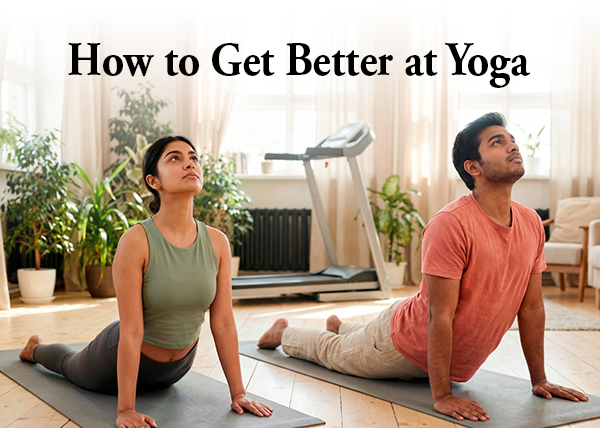
Getting better at yoga is not only about becoming more flexible or learning advanced poses. Progress can also mean breathing more comfortably, improving your balance, developing body awareness, building strength and practising with greater confidence.
The most effective way to improve your yoga practice is to create a realistic routine, focus on the foundations and give your body time to adapt. Whether you practise at home, attend classes or are returning to yoga after a break, small and consistent steps can make your practice feel more comfortable and intentional.
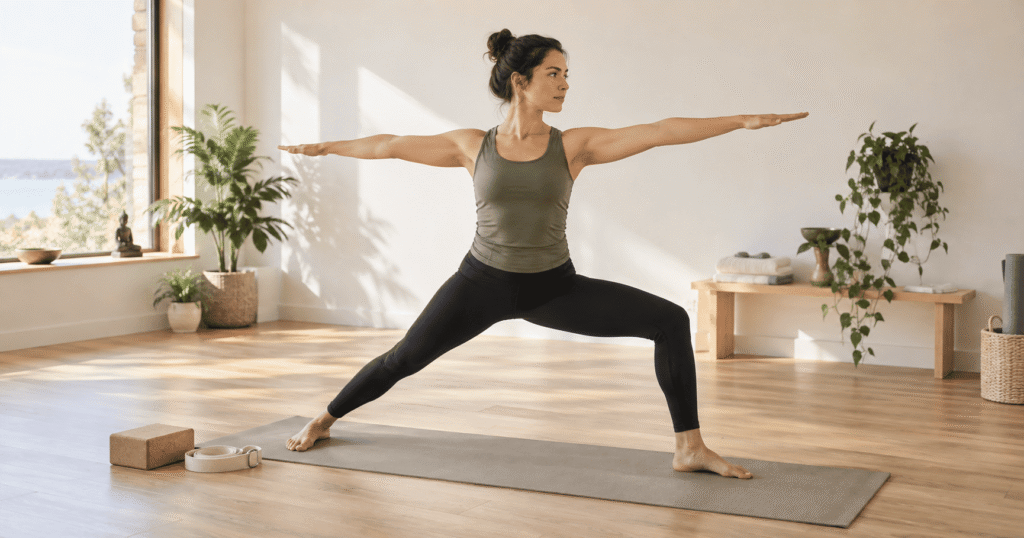
What Does Getting Better at Yoga Actually Mean?
Yoga progress looks different for everyone. One person may notice improved balance, while another may become more aware of their breathing or feel more confident following a sequence.
Getting better at yoga may include:
- Moving with greater control
- Understanding basic alignment
- Breathing more steadily during movement
- Holding poses with better awareness
- Improving balance and stability
- Building strength gradually
- Developing comfortable mobility
- Staying focused during practice
- Knowing when to rest or modify a pose
- Practising more consistently
Touching your toes or performing an advanced pose is not the only measure of progress. A stronger yoga practice is often one that feels more controlled, mindful and sustainable.
How to Get Better at Yoga: 10 Practical Ways
1. Practise Consistently
Regular practice is usually more helpful than occasional intense sessions. You do not need to practise for a long time every day to make progress. A realistic routine that fits your schedule is easier to maintain.
You might begin with two or three yoga sessions per week. Some sessions could be longer, while others may include gentle movement, breathing exercises or relaxation.
The right frequency depends on your experience, energy levels, schedule and the type of yoga you practise. Consistency matters more than trying to follow a routine that is difficult to maintain.
2. Focus on the Foundations
Basic poses and movements are the building blocks of a stronger practice. Spending time on foundational movements can help you understand posture, alignment, transitions and breathing.
Instead of rushing through familiar poses, pay attention to:
- Where your feet and hands are placed
- How your weight is distributed
- Whether your spine feels comfortable
- How your breath changes
- Whether you can move without gripping or rushing
Repeating the basics is not a sign that you are falling behind. It gives you an opportunity to notice details that may be missed when you are focused only on advanced poses.
3. Improve Your Breathing
Breathing is an important part of yoga. A steady, natural breath can help you stay aware of your body while moving or holding a pose.
During practice, try to notice:
- Whether you are holding your breath
- If your breathing becomes rushed
- How your body responds to slower movement
- Whether you can maintain comfortable breathing in a pose
Do not force deep or dramatic breathing. The goal is to develop awareness and comfort. If a breathing technique feels uncomfortable, return to your normal breathing and ask a qualified teacher for guidance.
4. Pay Attention to Alignment and Body Awareness
Alignment is not about making your body look exactly like someone else’s. Bodies have different proportions, mobility levels and movement patterns.
Useful alignment questions include:
- Do I feel stable?
- Can I breathe comfortably?
- Am I placing unnecessary pressure on a joint?
- Can I modify this position?
- Am I moving with control?
A qualified yoga teacher can offer feedback that is difficult to notice when practising alone. If you attend a class, listen to instructions but also pay attention to how the movement feels in your own body.
5. Build Strength Gradually
Yoga can involve strength through standing poses, controlled transitions, balance work and supported holds. Building strength takes time, so gradual progression is important.
You may begin by focusing on:
- Stable standing positions
- Controlled movement between poses
- Comfortable holds
- Strong but relaxed posture
- Engaging the muscles without unnecessary tension
Avoid treating physical discomfort as proof that a pose is working. Strength development should be approached patiently and adjusted to your current ability.
6. Improve Flexibility With Patience
Flexibility often changes gradually. Regular movement, relaxed breathing and consistent practice may support comfortable mobility over time.
To practise flexibility safely:
- Warm up before deeper movement
- Avoid forcing a range of motion
- Use props when needed
- Stay aware of your breathing
- Leave space for rest and recovery
- Stop if you feel sharp or unusual pain
A gentle stretch and sharp pain are not the same thing. You do not need to push further simply because another person can move more deeply.
7. Use Props When They Help
Yoga blocks, straps, bolsters, blankets and cushions can make a practice more comfortable and accessible. Props are not a sign of weakness. They can support balance, positioning and awareness.
For example:
- A block may bring the floor closer
- A strap may help you maintain a comfortable grip
- A blanket may support the knees
- A bolster may make seated or restorative positions more comfortable
Use props to support your current practice rather than forcing your body into a position it is not ready for.
8. Repeat Key Poses and Sequences
Repeating selected poses or short sequences can help you notice changes in coordination, confidence and body awareness.
You may find that a movement becomes easier to follow, your transitions feel less rushed or your breathing remains steadier. These small changes are meaningful forms of progress.
You do not need to change your routine every time you practise. Repetition gives you the opportunity to understand how a sequence feels from one session to the next.
9. Learn With Feedback
Guidance can be useful when you are unsure about alignment, breathing, modifications or how to progress safely.
You could learn through:
- Group yoga classes
- Private instruction
- Online yoga classes in Canada
- Workshops
- Guided practice sessions
- Conversations with an experienced teacher
Choose an option that suits your schedule and learning style. If you prefer practising at home, structured online instruction may help you maintain a routine. If you benefit from direct feedback, an in-person class may be a better fit.
You can also learn more about the Canada Yoga Studio team before choosing the type of guidance you prefer.
10. Make Time for Rest
Rest is part of a balanced yoga practice. It may include a rest day, a gentle session, breathing practice or a quiet relaxation period at the end of class.
Rest can give you time to notice how your body feels and decide what type of movement is appropriate for your next session. More practice is not always better if you are consistently ignoring fatigue or discomfort.
How Often Should You Practise Yoga?
There is no single schedule that works for everyone. Your routine may depend on your current experience, goals, physical comfort, available time and preferred style of yoga.
A simple weekly routine might look like this:
| Day | Example practice |
| Monday | Gentle movement and breathing awareness |
| Wednesday | Strength, standing poses and balance |
| Friday | Mobility, stretching and mindful movement |
| Weekend | A longer class, light practice, walking or rest |
This is only an example. You can adjust the duration and intensity according to your needs. Someone returning to yoga may begin with shorter sessions, while a regular practitioner may choose a more varied schedule.
How to Improve Flexibility, Strength and Balance Through Yoga
Improving Flexibility
Flexibility may improve through regular, comfortable movement. Focus on steady breathing and avoid comparing your range of motion with someone else’s.
A consistent practice may be more useful than forcing yourself into deeper positions. Use modifications and props when needed.
Improving Strength
Strength can be developed through controlled transitions, standing poses, balance work and steady holds. Pay attention to technique instead of rushing to make a pose more difficult.
If a movement feels unstable or uncomfortable, reduce the intensity or ask a teacher for a modification.
Improving Balance
Balance requires concentration, stable foundations and patience. Helpful strategies may include:
- Looking at one steady point
- Placing the feet carefully
- Using a wall or block for support
- Keeping the breath steady
- Practising on both sides
- Returning to the pose calmly after losing balance
Wobbling is a normal part of learning. Balance improves through practice, not through forcing yourself to remain perfectly still.
Common Mistakes That Can Slow Down Yoga Progress
Some habits may make it harder to build a steady practice.
Practising only when you feel motivated
Motivation changes. A simple routine makes practice more reliable.
Comparing yourself with advanced practitioners
Other people may have different experience levels, bodies, schedules and movement histories. Focus on your own awareness and consistency.
Forcing poses
Pushing too far can make practice uncomfortable and may reduce your ability to move with control.
Ignoring your breathing
Holding the breath or rushing through movement can make it harder to stay aware of your body.
Skipping the foundations
Basic poses and transitions help you develop the skills needed for more challenging movements.
Changing your routine too often
Constantly changing styles or sequences may make it difficult to notice gradual progress. Give a routine enough time to become familiar.
Avoiding props
Props can make a pose more comfortable and may help you understand the intended movement.
Ignoring rest
Rest supports a more sustainable practice. Include recovery instead of treating every session as a test.
Expecting immediate results
Yoga progress is usually gradual. A calmer breath, better balance or greater awareness may appear before noticeable changes in flexibility.
Can Classes Help You Get Better at Yoga?
Classes can provide structure, guidance and a regular time to practise. They may also help you understand modifications, ask questions and explore different approaches to movement and meditation.
You can choose between group classes, private instruction, online sessions or workshops. The best option depends on your goals, schedule and preferred learning environment.
If you are looking for a structured way to practise from home, explore online yoga classes. If you prefer in-person learning, ask about the class level, teaching approach and what beginners should expect before registering.
How Beginners Can Track Yoga Progress
You do not need to measure progress by how advanced a pose looks. Instead, consider keeping a simple practice record.
You could note:
- How often you practised
- How your breathing felt
- Which movements felt more familiar
- Whether your balance improved
- How comfortably you followed instructions
- Which poses required modification
- How focused you felt
- What questions you want to ask a teacher
Review your notes every few weeks. Looking back can help you notice changes that may be difficult to recognise from one session to the next.
When Should You Modify or Stop a Pose?
Yoga should be approached with attention and respect for your current ability. Modify or stop a pose if you experience sharp, unusual or worsening pain.
Helpful safety habits include:
- Move slowly into unfamiliar positions
- Use props for support
- Take breaks when needed
- Avoid competing with others
- Tell your teacher about relevant concerns
- Choose a suitable class level
- Seek advice from a qualified health professional when necessary
Yoga is not a replacement for medical care. If you have an injury, health condition or specific physical concern, speak with an appropriate health professional before changing your activity routine.
A Simple Way to Build a Better Yoga Routine
Use these five steps to create a realistic plan:
- Choose a manageable number of weekly sessions.
- Select classes or practices suitable for your current level.
- Focus on one area, such as breathing, balance or consistency.
- Record small changes over several weeks.
- Adjust the routine when your schedule, energy or needs change.
Improvement does not require perfection. A routine that you can maintain is often more useful than a demanding plan that you abandon quickly.
Frequently Asked Questions
How long does it take to get better at yoga?
The timeline varies from person to person. Progress depends on practice frequency, experience, instruction, goals and individual mobility. You may notice changes in awareness or confidence before seeing changes in flexibility or strength.
How often should I practise yoga to improve?
Many people begin with two or three sessions per week and adjust from there. The right frequency depends on the type of yoga, your schedule, your energy and how your body responds.
Can beginners get better at yoga at home?
Yes. Beginners can practise at home with clear instruction, a suitable space and a routine that matches their current ability. Online classes may provide structure, while in-person classes can offer direct feedback.
How can I improve flexibility through yoga?
Practise regular, comfortable movement and avoid forcing deeper positions. Use steady breathing, warm up gradually and consider props when they make a pose more accessible.
How can I improve my yoga balance?
Start with stable standing positions, focus your gaze, practise near a wall if needed and keep your breathing steady. Balance usually develops gradually through repetition.
Do yoga classes help with progress?
Classes may help by providing structure, teacher guidance and opportunities to learn modifications. Choose a class that matches your experience and physical comfort.
Should I use yoga props?
Props can support comfort, balance and positioning. Blocks, straps, blankets and bolsters may be useful for beginners and experienced practitioners alike.
What should I do if a yoga pose causes pain?
Stop or modify the pose if you feel sharp, unusual or worsening pain. Rest as needed and seek qualified health professional advice when appropriate.
Final Thoughts
Learning how to get better at yoga is less about chasing difficult poses and more about developing a consistent, aware and sustainable practice. Focus on your breathing, alignment, strength, balance and comfortable mobility. Use props, accept modifications and give yourself time to improve.
If you would like support with your practice, explore Canada Yoga Studio’s classes and upcoming yoga events in Canada to find an option that fits your goals and schedule.