
Wintering Well: Yoga Practices to Support Your Body Through Canada’s Coldest Months

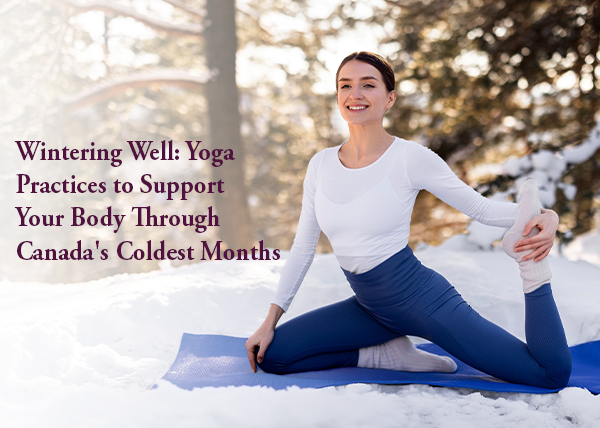
Canadian winters can change the rhythm of everyday movement. Colder mornings, shorter daylight hours, snowy roads and more time indoors may mean fewer walks, longer periods at a desk and a routine that feels very different from summer.
A thoughtful winter yoga practice does not need to be more intense to compensate. In fact, adapting yoga in winter can mean giving yourself more time to warm up, combining mobility with gentle strength, paying closer attention to your breath and choosing indoor practice when outdoor conditions are poor.
The goal is not to push through the season. It is to create a sustainable movement routine that works with your schedule, energy and environmentone you can return to consistently throughout Canada’s colder months.
Why Winter Yoga Matters During Canada’s Coldest Months
Winter yoga can provide structure when seasonal routines make regular movement harder to maintain. Instead of approaching winter as a time to achieve greater flexibility or master difficult poses, consider using yoga to maintain mobility, strength, body awareness and a steady relationship with movement.
A winter practice may look different from one person to another. Some days may suit a longer Hatha Yoga session, while others may call for ten minutes of mobility and breathing at home.
What matters most is adapting the practice to your current energy, experience and conditions rather than forcing yourself to maintain exactly the same routine year-round.
How Canadian Winters Can Change Your Daily Movement
During a Canadian winter, daily movement can decrease for practical reasons. Snow or icy roads may affect travel, dark mornings can make routines harder to maintain, and remote or office work may involve long periods of sitting.
You may also spend more time at home when temperatures fall or weather conditions make outdoor plans less appealing.
These routine changes do not automatically mean something is wrong with your body. They simply make intentional movement more valuable. Yoga during winter can become part of a broader winter wellness routine by creating regular opportunities to move, notice how your body feels and step away from prolonged sitting.
Why a Gradual Warm-Up Matters in Cold Weather
Moving directly from sitting or resting into deep stretches or demanding postures may not be the most comfortable way to begin.
Start with easy movements and gradually build towards larger ranges of motion and stronger poses.
The Government of Canada physical activity safety guidance recommends warming up before physical activity, staying hydrated, wearing appropriate warm clothing when exercising outside and starting slowly before gradually increasing activity according to your abilities.
For winter yoga, that can translate into a few minutes of joint mobility, gentle spinal movement and easy standing movements before progressing to longer holds or deeper positions.
Best Winter Yoga Practices for Cold Canadian Days
Effective winter yoga practices do not need to consist entirely of stretching. A balanced approach to yoga for cold weather can combine a gradual warm-up, mobility, gentle strength, steady movement, breath awareness and restorative pauses.
Here are several practices that can fit naturally into that approach.
1. Gentle Hatha Yoga for Winter Mobility and Mindful Movement
Hatha Yoga can work well within a winter routine because its more deliberate pace gives you time to notice alignment, breathing and how your body responds to each movement.
A structured Hatha practice can include mobility, strength, flexibility and periods of stillness without requiring fast transitions. It can also be modified by changing the range of motion, using props or spending less time in a posture.
If you prefer instructor-led practice, Canada Yoga Studio’s guided Hatha Yoga program incorporates postures, breath awareness, pranayama and guided practice.
Whatever format you choose, gradual progression is more useful than forcing your body into a predetermined shape.
2. Cat-Cow for Gentle Spinal Mobility
Cat-Cow can be a useful part of gentle yoga for winter, especially near the beginning of a session.
From hands and knees, move slowly between comfortable spinal flexion and extension while coordinating the movement with your breathing. There is no need to exaggerate either position.
Keep the movement smooth and stay within a range that feels natural. A few controlled repetitions can help transition from stillness into a broader yoga practice.
3. Low Lunge for Hip Mobility After Long Indoor Days
Long periods at a desk or working from home can make intentional hip movement especially welcome.
A Low Lunge can be incorporated into yoga for mobility without focusing on how deep you can go. Beginners can place a cushion under the back knee, bring yoga blocks underneath the hands or keep the torso upright.
Shorten the stance if necessary and use a smaller range. The goal is controlled movement and comfortable positioning, not forcing a dramatic stretch.
4. Warrior II for Gentle Strength and Stability
Not every winter session needs to focus on flexibility.
Warrior II is one of several winter yoga poses that can introduce gentle strength alongside mobility. It involves active engagement through the legs while encouraging awareness of stance, posture and overall stability.
Adjust the distance between your feet and the bend of the front knee according to your experience. A shorter stance is completely appropriate if it allows you to move with greater control.
5. Supported Child’s Pose for Slower Winter Days
More active yoga can be balanced with periods of stillness.
For a supported variation of Child’s Pose, use cushions, blankets or a bolster to create a position where you can rest without forcing your hips, knees or back.
Restorative winter yoga does not need to replace strength or mobility work. Instead, it can provide a quieter ending to a session or a practical option on days when you want to keep your routine gentle.
How to Warm Up Before Winter Yoga
A winter yoga warm-up should begin with easy movements and gradually progress towards larger movements.
Instead of starting immediately with your deepest forward fold, lunge or backbend, spend a few minutes moving the joints and spine first.
A Simple 5-Minute Winter Yoga Warm-Up
Minute 1: Shoulder rolls and comfortable neck movements.
Minute 2: Gentle wrist circles and ankle mobility.
Minute 3: Slow Cat-Cow movements coordinated with breathing.
Minute 4: Standing side bends and gentle spinal movement.
Minute 5: Easy marching in place or relaxed standing movements.
The Government of Canada recommends warming up before physical activity, and a short sequence like this provides a practical way to apply that principle before your yoga session.
Morning vs Evening Yoga in Winter: Which Is Better?
There is no universally best time to practise yoga during winter.
The better choice depends on your schedule, energy and the type of practice you are likely to maintain consistently.
Morning Yoga in Winter
Morning yoga in winter may work well if you prefer moving before work or before other responsibilities begin.
A short morning session might start with gradual mobility before moving into Hatha postures, gentle strength and breath awareness.
On dark winter mornings, keeping expectations realistic can help. A consistent 10-minute session may fit your life better than planning an hour-long routine that repeatedly gets postponed.
Canada Yoga Studio also offers Morning Flow as part of its in-studio yoga classes in Calgary, alongside other guided sessions.
Evening Yoga During Canada’s Winter Months
Evening practice can serve a different purpose.
After commuting, working from home or spending a long day at a desk, you may prefer gentle movement, breath awareness, meditation or restorative postures rather than a highly active flow.
Canada Yoga Studio’s Evening Reset follows this gentler movement and breathwork direction for people who prefer guided evening practice.
Neither morning nor evening is automatically better. Choose the time you can realistically return to.
Indoor Yoga vs Outdoor Yoga During a Canadian Winter
For many Canadians, indoor yoga in winter is simply the more practical option on certain days.
Extreme cold, heavy snow, hazardous ice and severe wind chill can all affect outdoor plans. Yoga does not need to become an outdoor endurance challenge just because movement is beneficial.
Practising indoors can help you maintain your routine even when the weather changes suddenly.
When Indoor Winter Yoga Makes More Sense
An indoor space provides a controlled environment where your mat, cushions, blocks and other props are readily available.
It also removes weather-related travel or outdoor-surface concerns from the practice itself.
That does not mean indoor yoga is automatically risk-free. Continue respecting your current mobility, experience and comfort, and modify movements when needed.
What to Consider Before Exercising Outdoors in Cold Weather
Before any outdoor physical activity during Canadian winter, check your local forecast and relevant weather alerts.
Consider the temperature, wind chill, surface conditions and whether you have appropriate layers for staying warm and dry. Hydration still matters in cold weather.
If weather conditions are poor, choosing an indoor session is a practical adjustmentnot a missed opportunity.
People with medical conditions or concerns about exercising in cold weather should seek individual guidance from an appropriate healthcare professional.
Breathwork for a Mindful Winter Yoga Practice
Breath awareness can bring a quieter dimension to winter yoga without requiring complicated techniques.
Begin by simply noticing the natural breath. You might observe the movement of the abdomen and ribs while sitting or lying comfortably, without deliberately making the breath very deep.
Diaphragmatic awareness can also be explored gently by noticing how the torso responds during comfortable breathing.
Traditional pranayama practices such as Nadi Shodhana, or alternate-nostril breathing, may also be included when appropriate and when taught with suitable guidance.
Beginners do not need advanced breath retention or forceful techniques. Breathwork in winter can remain simple: notice, slow down where comfortable, and coordinate breathing with movement.
A 20-Minute Winter Yoga Routine for Beginners
This beginner-friendly winter yoga routine combines warm-up, mobility, strength, breathing and rest.
5 Minutes: Gentle Winter Warm-Up
Begin with shoulder rolls and comfortable neck mobility.
Move through wrist and ankle circles, followed by slow Cat-Cow movements.
Finish the warm-up standing, using gentle side bends, easy marching or another simple movement that gradually prepares you for the next portion of the session.
8 Minutes: Winter Yoga Poses for Mobility and Strength
Move through a short sequence such as:
- Mountain Pose
- Warrior II
- Low Lunge
- A simple, gentle Hatha Yoga flow
- An optional slow Sun Salutation variation
Move deliberately rather than trying to complete as many poses as possible.
3 Minutes: Gentle Stretching and Mobility
Choose comfortable seated movement, a gentle twist and a supported forward fold.
Props can be used to make the positions more accessible.
2 Minutes: Breath Awareness
Sit or lie comfortably and observe your natural breathing.
Avoid forcing the breath or adding long breath holds.
2 Minutes: Rest and Relaxation
Finish in a comfortable resting position. Give yourself time to become still before getting up and returning to your day.
This is a sample routine and should be adjusted according to experience, mobility, health, comfort and instructor guidance.
How to Stay Consistent With Yoga Through a Canadian Winter
The behavioural side of yoga in winter can matter as much as the specific poses you practise.
Create a simple indoor space where your mat is easy to access. If possible, keep it visible rather than storing it somewhere that requires several steps to retrieve.
Schedule sessions just as you would another appointment, but allow shorter practices on busy days.
You might alternate between strength-focused sessions, mobility sessions and quieter restorative practices rather than expecting every session to look the same.
Guided classes can also provide structure when personal routines become difficult to maintain.
Most importantly, avoid an all-or-nothing approach. For a sustainable winter wellness routine, consistency over intensity is often the more realistic principle.
Try the 5-, 10- or 20-Minute Winter Yoga Rule
Use your available time to decide the session rather than deciding not to practise because a long session is impossible.
5 minutes: mobility plus breathing.
10 minutes: warm-up, a few comfortable poses and breath awareness.
20 minutes: a complete short winter sequence combining mobility, strength, breathing and rest.
A shorter intentional session can make regular movement easier to maintain when work, family commitments or winter conditions disrupt the day.
Should You Practise Surya Namaskar in Winter?
Surya Namaskar can form part of a winter yoga practice for people for whom the sequence is appropriate.
The pace and number of repetitions can be adjusted. Beginners can focus on alignment, breathing and controlled transitions rather than trying to complete many rounds.
A gradual warm-up beforehand may also make sense, particularly after a long period of inactivity.
There is no requirement to perform dozens of Sun Salutations for a winter practice to be worthwhile.
Why Guided Winter Yoga Can Help You Build a Sustainable Practice
Guided yoga can be useful when you are unsure how to adapt a pose, structure a balanced sequence or select an appropriate level of intensity.
A qualified instructor can suggest modifications, provide alignment cues, help you progress gradually and guide breath–movement coordination.
Instruction can also make it easier to build a routine around your experience rather than copying a sequence designed for someone with very different mobility or strength.
For people looking for more structure, Canada Yoga Studio offers guided Hatha Yoga and in-studio practices built around mindful movement, breath awareness and instructor-led progression.
Practice Winter Yoga With Canada Yoga Studio
A Canadian winter does not require an extreme wellness routine. It may simply require a more adaptable one.
Canada Yoga Studio offers structured Hatha Yoga along with Calgary-based Morning Flow, Evening Reset, meditation and breathwork sessions for people who prefer instructor-led practice.
Choose the format that fits your schedule, experience and current needs, and build from there.
Winter Yoga FAQs
Is yoga good to practise during winter?
Yoga can be part of a regular movement routine during winter when the practice is appropriate for your experience, comfort and health. A winter session can combine mobility, strength, mindful movement and breath awareness. On colder days, allow enough time to warm up and consider practising indoors when outdoor weather or surface conditions are poor.
What are the best winter yoga practices for beginners?
Beginner-friendly winter yoga practices can include a gradual warm-up, Cat-Cow, Low Lunge modifications, Mountain Pose, gentle standing poses, basic Hatha Yoga, breath awareness and supported restorative postures. Beginners should focus on comfortable movement and consistency rather than deep stretching or advanced poses.
How should I warm up before yoga in cold weather?
Before practising yoga in cold weather, begin with approximately five minutes of easy movement. Shoulder rolls, wrist and ankle mobility, Cat-Cow, gentle standing movements and slow marching are practical options. Gradually increase the size and intensity of your movements rather than beginning immediately with demanding poses or deep stretches.
Is morning yoga good during winter?
Morning yoga in winter can be a practical choice if it fits your schedule. Begin gradually, especially after getting out of bed, and consider combining mobility, gentle Hatha Yoga, basic strength and breath awareness. An evening session is equally valid if that is the time you can practise more consistently.
Can I practise Surya Namaskar in winter?
Yes, Surya Namaskar can be included in a winter practice when suitable for your experience and mobility. Start with a warm-up, use a controlled pace and adjust repetitions as needed. Beginners should prioritise comfortable alignment and breathing rather than completing a high number of rounds.
Is indoor yoga better during extreme Canadian winter weather?
During extreme cold, snowstorms, hazardous ice or severe wind chill, indoor yoga can be the more practical choice. Conditions vary significantly across Canada, so check local forecasts and weather warnings before outdoor activity. Avoid practising yoga on icy or unstable surfaces simply to maintain an outdoor routine.
How can I stay consistent with yoga during winter?
Make the routine easy to start. Keep your mat accessible, schedule sessions, use guided classes when helpful and allow yourself shorter practices on busy days. A five- or ten-minute session can preserve the habit when a longer routine is unrealistic. Aim for consistency over intensity.
Make Winter Yoga a Practice You Can Sustain
The most useful winter yoga routine is not necessarily the longest or most challenging one. It is the practice you can adapt as Canadian weather, daylight, schedules and energy levels change.
Begin gradually. Maintain both mobility and strength. Use breath awareness to support mindful movement, choose indoor practice when outdoor conditions are unsuitable, and give restorative work a place alongside more active sessions.
Some winter days may allow twenty or forty minutes of yoga. Others may allow five. Both can belong to a sustainable routine.
Looking for a structured practice you can maintain through the colder months? Explore guided Hatha Yoga and in-studio sessions at Canada Yoga Studio.