
Yin Yoga Benefits: What It Is and Who Should Try It

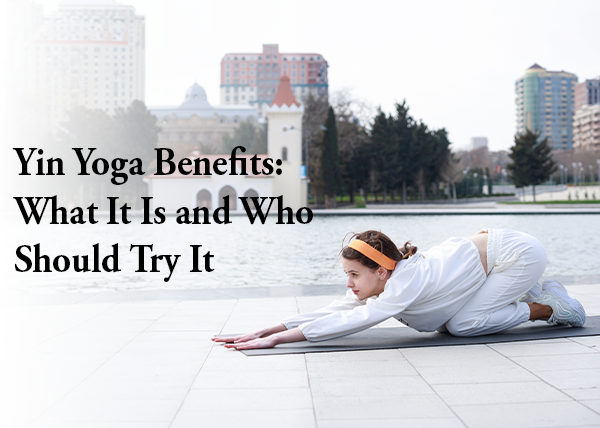
What Is Yin Yoga?
If you have ever felt tight, stiff, or just completely worn out at the end of the day, Yin Yoga might be exactly what your body has been asking for. This gentle, quiet style of yoga is built around holding poses for a longer period of time usually between two and five minutes so your body can really settle in and release tension at a deeper level.
Unlike faster-paced yoga styles that focus on building strength or getting your heart rate up, Yin Yoga works at a slower pace. The idea is to stay still, breathe, and let gravity do most of the work. You are not pushing or forcing anything. You are simply resting in a position and allowing your muscles and connective tissues to soften over time.
The practice draws from traditional Chinese medicine and the concept of energy channels in the body called meridians. By holding poses for longer periods, Yin Yoga is thought to help energy flow more freely through these channels, which can support overall health and wellbeing.
It is a practice that almost anyone can try, regardless of age, fitness level, or yoga experience. And once you experience that deep sense of release and calm that comes at the end of a class, it is hard not to want to come back for more.
How Is Yin Yoga Different from Other Styles?
To understand Yin Yoga benefits, it helps to understand what makes this style stand apart from others.
Most yoga styles like Hatha Yoga or Vinyasa are considered “Yang” practices. They involve movement, engagement of the muscles, and building heat in the body. These are wonderful practices with their own set of benefits.
Yin Yoga, on the other hand, works in the opposite direction. Here is a simple breakdown:
| Feature | Yang Yoga (e.g., Hatha, Vinyasa) | Yin Yoga |
| Pace | Active and moving | Slow and still |
| Muscles | Engaged and working | Relaxed and passive |
| Target area | Muscles | Connective tissues, joints, fascia |
| Hold time | Short (a few breaths) | Long (2 to 5 minutes or more) |
| Energy | Building and energizing | Calming and restoring |
This makes Yin Yoga a wonderful complement to more active styles. If you already go to multi-dimensional yoga classes or other active practices, adding Yin into your week can help your body recover and stay balanced.
Top Yin Yoga Benefits You Should Know About
1. Improved Flexibility and Joint Mobility {#flexibility-and-joint-mobility}
One of the most well-known Yin Yoga benefits is how it helps the body become more flexible over time but not just in your muscles. Yin Yoga works on the connective tissues around your joints, including the ligaments, tendons, and fascia. These tissues do not respond well to quick, short stretches. They need longer, gentle holds to actually lengthen and release.
When you hold a Yin pose for three to five minutes, those deeper tissues start to respond. Over time, regular practice can lead to noticeably greater range of motion in your hips, spine, shoulders, and legs.
This is especially helpful for people who:
- Sit at a desk all day
- Have chronic tightness in the hips or lower back
- Feel stiff in the mornings
- Want to improve mobility as they age
2. Deep Connective Tissue Release
Your body is wrapped in a web of connective tissue called fascia. This tissue surrounds every muscle, organ, and bone in your body. When fascia becomes tight or restricted from stress, injury, poor posture, or just everyday life it can lead to pain, limited movement, and a general feeling of being “stuck.”
Yin Yoga directly targets this fascial system. The long holds allow the fascia to slowly release and become more hydrated and pliable. Many people describe a deep sense of release or even emotional release during or after a Yin class, which is completely normal and quite healing.
3. Stress Relief and Calm Mind
In today’s busy world, most of us spend a lot of time in “fight or flight” mode that alert, stressed-out state where your body is constantly ready to react. Yin Yoga gently moves you in the opposite direction, activating your parasympathetic nervous system, which is the “rest and digest” response.
When you hold a quiet, comfortable pose and focus on your breath, your heart rate slows, your muscles let go, and your mind starts to settle. Many people find that even one Yin class per week makes a big difference in how they handle daily stress.
This is why Yin Yoga pairs so well with practices like sound healing in Calgary, which also works to calm the nervous system and bring the mind to a quieter place.
4. Better Sleep Quality
Because Yin Yoga helps calm the nervous system and reduce stress, it can also have a positive effect on how well you sleep. Many people who struggle with falling asleep or staying asleep find that a regular Yin practice helps them wind down more easily at the end of the day.
Holding gentle poses before bed even just for 20 to 30 minutes can signal to your body that it is time to rest. The breath-focused nature of Yin Yoga also helps quiet the busy mind that often keeps people awake at night.
If sleep is something you struggle with, combining Yin Yoga with other supportive practices like nutrition and wellness coaching can help address the issue from multiple angles.
5. Emotional Balance and Mental Clarity
One of the more surprising Yin Yoga benefits that many people discover is how much it can affect your emotional state. In traditional Chinese medicine, different areas of the body are linked to different emotions. For example, the hips are often associated with stored stress and emotional tension.
When you spend time in a hip-opening pose for several minutes, it is not uncommon to feel a wave of emotion sometimes sadness, sometimes a sense of release or relief. This is not something to be afraid of. It is simply the body processing and letting go of what it has been holding.
Over time, regular Yin practice can lead to greater emotional resilience, a calmer outlook, and a clearer, more focused mind. This complements energy-based practices like pranic aura cleansing, which also works to clear energetic and emotional blockages in the body.
6. Improved Circulation and Energy Flow
According to traditional Chinese medicine, Yin Yoga stimulates the meridians the energy pathways that run through the body. Each meridian is connected to specific organs and bodily systems. By gently compressing and then releasing these pathways through long-held poses, Yin Yoga is believed to improve the flow of energy (called “Qi” or “Prana”) throughout the body.
Even from a purely physical standpoint, Yin Yoga improves circulation to areas that are often neglected like the deep tissues around the hips, pelvis, and spine. Better circulation means better nutrient delivery and waste removal at the cellular level, which supports overall health.
7. Support for Your Nervous System
Many of us have nervous systems that are stuck in overdrive. We feel anxious, reactive, or overwhelmed, and it can be hard to shift out of that state. Yin Yoga is one of the most effective tools for regulating the nervous system in a natural, drug-free way.
The combination of stillness, deep breathing, and long holds teaches your nervous system that it is safe to slow down. Over time, this can help reduce overall anxiety, lower baseline stress levels, and make it easier to return to a calm state after something stressful happens.
This is one of the reasons Yin Yoga is often recommended alongside therapies for anxiety, burnout, and trauma recovery always in consultation with a healthcare provider.
8. Mindfulness and Body Awareness
Sitting still in a pose for several minutes is actually a form of meditation. You are asked to observe what you feel without trying to change it to notice sensations in the body, thoughts in the mind, and the rhythm of your breath without reacting.
This builds a kind of inner awareness that carries over into everyday life. You start to notice when you are holding tension in your shoulders, when your breathing becomes shallow, or when your mind is racing. And with that awareness comes the ability to make small, positive changes.
Yin Yoga is a wonderful gateway into mindfulness for people who find traditional seated meditation difficult. Because you have the anchor of physical sensation to return to, it is often easier to stay present.
Who Should Try Yin Yoga?
One of the greatest things about Yin Yoga is that it truly is for almost everyone. Here is a closer look at who can benefit most:
People with Tight Hips or Lower Back Pain
If you carry tension in your hips, lower back, or pelvis, Yin Yoga is especially helpful. The long holds in poses like the Butterfly, Dragon, and Sleeping Swan target exactly these areas.
Beginners to Yoga
Because you are not required to be strong, flexible, or coordinated, Yin Yoga is one of the most beginner-friendly styles. You can use props like blankets, bolsters, and blocks to make every pose comfortable.
People with High Stress or Anxiety
If your mind is always busy and you find it hard to slow down, Yin Yoga can be a gentle way to practice doing exactly that.
Athletes and Active People
If you run, cycle, play sports, or do intense workouts, Yin Yoga gives your body a chance to recover and reduces the risk of injury. Adding one or two Yin sessions per week can greatly support an active lifestyle.
Pregnant and Postpartum Women
Gentle Yin-based poses can be very supportive during and after pregnancy. At Canada Yoga Studio, we offer prenatal yoga and postpartum yoga programs that incorporate restorative and mindful movement for women at every stage of this journey.
Older Adults
As we age, joint mobility and flexibility become increasingly important for quality of life. Yin Yoga is low-impact, adaptable, and safe for older adults when practiced mindfully.
Children and Teens
While traditional Yin Yoga is geared toward adults, mindful, restorative yoga can be introduced to children in age-appropriate ways. Canada Yoga Studio offers kids yoga sessions designed to build body awareness, focus, and calm in younger students.
Who Should Be Careful with Yin Yoga?
While Yin Yoga is generally very safe, there are some situations where caution is needed:
- Hypermobility: If your joints are naturally very loose, you may not need more range of motion. A qualified teacher can help you find the right depth in each pose.
- Recent injuries: If you have had a recent joint, ligament, or tendon injury, always consult your doctor before starting Yin Yoga.
- Pregnancy: Some poses are not suitable during pregnancy, which is why it is best to attend a class specifically designed for prenatal yoga, like those offered at Canada Yoga Studio.
- Certain chronic conditions: If you have osteoporosis, inflammatory joint conditions, or other chronic health issues, speak with your healthcare provider first.
Always let your teacher know about any injuries or health conditions before class so they can offer appropriate modifications.
What to Expect in a Yin Yoga Class
If you have never been to a Yin Yoga class, here is a simple picture of what typically happens:
- Settling in: The class usually begins with a short grounding practice perhaps some gentle breathing or a body scan to help you transition out of a busy day.
- The poses: You will move through a series of floor-based poses, each held for two to five minutes (sometimes longer). The teacher will guide you into each shape gently and remind you to breathe and soften.
- Props: Blankets, bolsters, blocks, and straps are commonly used to make poses more comfortable and accessible.
- The space between poses: Coming out of a Yin pose can feel intense there is often a brief period of sensation as the blood and fluids redistribute. Teachers usually guide a short “rebound” or rest between poses.
- Final relaxation (Savasana): Like most yoga classes, Yin ends with a period of complete rest, usually five to ten minutes. This is when much of the integration happens.
The atmosphere in a Yin class is quiet and unhurried. There is no performance, no competition, and no pressure to look a certain way. You are simply invited to be present with yourself.
Common Yin Yoga Poses for Beginners
Here are some beginner-friendly poses that capture the essence of a Yin practice:
Butterfly Pose
Sit on the floor and bring the soles of your feet together. Let your knees drop out to the sides and fold gently forward. This targets the inner thighs, groin, and lower back.
Sleeping Swan (Yin Pigeon)
From a kneeling position, slide one shin forward to the mat. Lower your upper body down over your front leg. This is a deep hip opener.
Dragon Pose (Low Lunge)
Step one foot forward and lower the back knee to the ground. Sink the hips low and hold. This targets the hip flexors, which are often very tight in people who sit a lot.
Sphinx Pose
Lie on your stomach and come up onto your forearms. Let your lower back gently compress. This is a lovely opener for the spine and a counterpose after forward folds.
Supported Fish
Place a bolster or rolled blanket under your mid-back and let your chest open. Arms rest out to the sides. This is deeply restorative and opens the chest and shoulders.
Legs Up the Wall
Lie on your back and swing your legs up against a wall. This gentle inversion is deeply calming and great for circulation.
How Often Should You Practice Yin Yoga?
There is no single right answer, but here are some general guidelines:
- Once a week is enough to start noticing a difference in flexibility and stress levels.
- Two to three times a week is ideal for deeper benefits, especially if you have chronic tightness or high stress.
- Daily short practices (20 to 30 minutes) can be a wonderful way to wind down each evening.
Because Yin Yoga is so gentle, there is generally no issue with practicing it frequently. However, it is always good to listen to your body and rest if something feels off.
Yin Yoga vs. Other Yoga Styles at Canada Yoga Studio
At Canada Yoga Studio, we believe that the best yoga practice is one that meets you where you are and supports your whole self body, mind, and energy. That is why we offer a wide range of yoga styles and wellness practices, so you can find what works best for you.
Here is how Yin Yoga fits alongside some of our other offerings:
- Hatha Yoga: Hatha classes build strength and flexibility through active poses. Adding Yin to your Hatha practice creates a beautiful balance between effort and ease.
- Multi-Dimensional Yoga: This integrative approach addresses the whole person. Yin Yoga fits naturally within a multi-dimensional framework by addressing the subtle body alongside the physical.
- Sound Healing: Combining Yin Yoga with sound healing (such as singing bowls or gong baths) creates a profoundly restorative experience. The vibration of sound deepens relaxation and helps the body release tension at a cellular level.
- Pranic Aura Cleansing: Both Yin Yoga and pranic healing work with the energy body. Together, they can help clear energetic blockages and restore a sense of vitality.
- Nutrition and Wellness Coaching: What you eat and how you live outside your yoga practice matters just as much as what happens on the mat. Pairing Yin Yoga with nutritional support helps create lasting wellness from the inside out.
How to Get Started with Yin Yoga in Calgary
Getting started is much simpler than you might think. Here is what you can do:
Step 1: Reach Out to Canada Yoga Studio
Visit Canada Yoga Studio to explore the current class schedule and find a session that works for you. Our teachers are experienced, warm, and welcoming to students at all levels.
Step 2: Come as You Are
You do not need any prior yoga experience, special equipment, or a flexible body to start. Just wear comfortable clothing and bring an open mind.
Step 3: Let the Teacher Know Your Needs
Before class, let your teacher know about any injuries, health concerns, or areas of the body you would like to work on. This helps them offer guidance that is right for you.
Step 4: Give It a Few Classes
Yin Yoga can feel unfamiliar at first staying still for several minutes can actually feel challenging in a way you might not expect. Give yourself a few classes to settle into the pace before deciding how you feel about it.
Step 5: Explore Complementary Practices
Once you feel comfortable with Yin, consider exploring some of the other offerings at Canada Yoga Studio. Whether it is prenatal yoga, postpartum support, kids yoga, or sound healing, there is something for every member of your family.
Conclusion
Yin Yoga benefits go far beyond simple stretching. This quiet, patient practice works on the deeper layers of your body your connective tissues, your nervous system, your energy flow, and your mind in ways that faster, more active styles simply cannot reach. Whether you are dealing with chronic tightness, stress, poor sleep, emotional tension, or just the general busyness of modern life, Yin Yoga offers a space to slow down, breathe, and let go.
It is suitable for beginners and experienced practitioners alike. It supports athletes and office workers, pregnant women and seniors, children and adults. And when combined with the right complementary practices sound healing, pranic cleansing, wellness coaching, and more it can become a truly transformative part of your weekly routine.
If you are in Calgary and curious about experiencing Yin Yoga for yourself, Canada Yoga Studio is a wonderful place to begin. Our team of experienced teachers is ready to guide you through every step of the journey, at whatever pace feels right for you.
Ready to slow down and feel better? Visit Canada Yoga Studio today and find the class that is right for you.
Looking for more ways to support your wellbeing? Explore our full range of programs including Hatha Yoga, Kids Yoga, Prenatal Yoga, Postpartum Yoga, Sound Healing, Pranic Aura Cleansing, and Nutrition & Wellness Coaching at Canada Yoga Studio.