
Yoga for Weight Loss: Does It Actually Work?

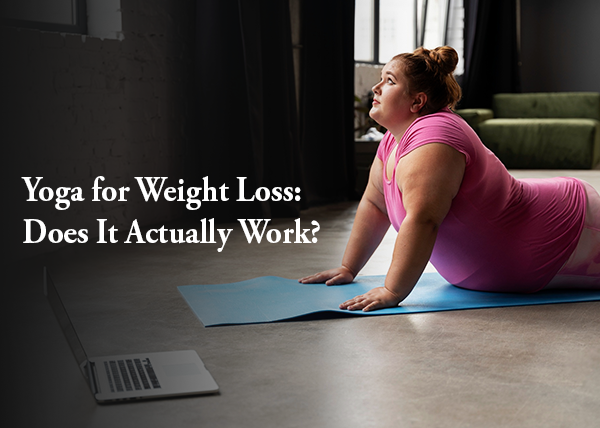
Many people search for yoga for weight loss expecting a neat list of poses that will quickly shrink their waistline. The reality is more nuanced. Body-weight change depends on a wide range of factors, and no single exercise type yoga included operates in isolation from everything else happening in your body and daily life.
That said, yoga is physical activity. Depending on the style and how you practise, it can involve meaningful levels of strength work, mobility training, cardiovascular effort and breath-led movement. Some forms of yoga are considerably more physically demanding than others. And beyond the movement itself, a consistent yoga practice may support body awareness, reduce stress-driven habits and help build the kind of regular routine that contributes to overall wellbeing. Whether or not that translates into weight change and by how much depends on the individual.
This article looks honestly at what yoga can and cannot offer when weight management is part of your goal.
Does Yoga Help You Lose Weight? The Short Answer
The straightforward answer is: possibly, for some people, as part of a broader lifestyle approach.
Yoga may contribute to weight-management efforts, particularly when it becomes part of a regular pattern of physical activity alongside balanced nutrition and adequate recovery. However, research has not shown that yoga consistently produces significant weight loss on its own, and outcomes vary considerably from person to person.
There is an important distinction worth making early: supporting weight management is not the same as guaranteeing weight loss. Yoga can be one useful component of a healthy, active lifestyle. It is not a method that produces a fixed, predictable amount of fat loss for every person who practises it, regardless of how many sessions they attend or which poses they perform.
If you have come across promises like “lose X kilograms in 30 days with yoga,” those claims are not supported by the available evidence. Weight change is complex, and being honest about that is where a realistic conversation about yoga actually starts.
What Does Research Say About Yoga for Weight Loss?
What a Systematic Review Found
A systematic review of yoga and energy balance published on PubMed examined 10 studies looking at how yoga might influence components of energy balance in adults with overweight or obesity. The review concluded that evidence suggesting yoga may influence energy intake or physical activity levels was limited, and that additional research using objective measurements was needed before stronger conclusions could be drawn.
In plain terms: some people who practise yoga regularly may make other positive lifestyle changes alongside it, but the evidence that yoga directly and reliably causes meaningful weight reduction remains limited and not definitive.
What a 2023 Meta-Analysis Found ?
A 2023 systematic review and meta-analysis looked at 15 studies examining the effect of yoga on anthropometric outcomes things like body weight, waist circumference and BMI in people with obesity or central obesity. The review found that evidence for meaningful improvements was inconclusive, with study quality ranging from very low to moderate and notable methodological limitations across the included research.
Again, this does not mean yoga has no value in a weight-management context. It means we should be cautious about overstating what yoga alone can produce and honest about the current state of the science.
The practical takeaway from the research: Yoga is not supported as a guaranteed standalone weight-loss method. A more realistic perspective is to view it as one possible component of a broader movement and wellness routine, rather than a solution by itself.
Why Weight Loss Is More Complex Than One Yoga Pose ?
Body weight is influenced by a wide range of factors that interact with one another in ways that are not always predictable or linear. These include:
- Overall physical activity levels across your whole week, not just one exercise session
- Energy intake and the general quality and pattern of your eating habits
- Individual energy needs, which vary substantially between people
- Genetics and body composition, which affect how your body responds to activity
- Age and hormonal factors, which change over time
- Sleep quality and recovery, both of which influence hunger hormones and energy regulation
- Stress levels, which can affect eating patterns and overall wellbeing
- Health conditions and medications, some of which directly affect weight
- Consistency over time, rather than intensity in short bursts
The Government of Canada physical activity guidance notes that regular physical activity can help support a healthy weight, while also acknowledging that the amount and type of activity needed varies among individuals and that other lifestyle and health factors play important roles.
This is why reducing the whole question of weight management to “which yoga poses burn the most calories” misses a great deal of what actually matters.
How Yoga May Support Healthy Weight Management
Yoga Adds Regular Physical Activity to Your Routine
Yoga gets the body moving. How much physical effort that involves depends heavily on the style you choose and how you practise it.
Lower-intensity practices such as restorative yoga, gentle Hatha or breath-led mobility sessions are valuable for recovery, flexibility and stress reduction, but they are not particularly high in physical output.
More physically demanding yoga practices such as dynamic Surya Namaskar sequences, Ashtanga-style flows, strength-focused posture work and movements like Yogic Pushups involve considerably more muscular engagement and cardiovascular effort. These can meaningfully contribute to your overall physical activity for the week.
Neither is inherently “better” for everyone. The right choice depends on your current fitness, health, experience and what you can realistically sustain.
Yoga Can Build Strength and Body Awareness
Many yoga postures involve holding and moving your own body weight. Warrior poses, plank variations, chair pose, balancing postures and controlled transitions between positions all require muscular effort from the legs, hips, core, arms and back.
Over time, regular practice of these movements may contribute to improved strength, better posture, greater stability and a more capable body overall. These are genuine physical benefits, regardless of whether they result in measurable weight change.
Breath Awareness Can Change How You Approach Movement
One of Canada Yoga Studio’s core philosophies and something that distinguishes yoga from many other forms of exercise is the relationship between breath and movement.
When you practise with consistent attention to your breath, it tends to change how you move. You pace yourself more deliberately. You notice when you are rushing or fatiguing. You stay present during the practice rather than just grinding through repetitions. This quality of attention can improve movement efficiency, reduce injury risk and make a session feel more sustainable over time.
Breath awareness does not directly burn fat. But it shapes the quality of every movement you make during practice, and that matters for long-term consistency.
Mindful Practice Can Support Consistency
A practice you can maintain consistently over months and years is almost always more effective for overall health and weight management than an extreme programme you follow intensely for a few weeks and then abandon.
Yoga, particularly when approached with realistic expectations and appropriate progression, is a form of exercise that many people find genuinely enjoyable and sustainable. That consistency showing up regularly, building gradually, adapting as needed is worth more than any short-term intensity spike.
Best Types of Yoga for Weight-Loss Goals
There is no universally “best” yoga style for losing weight. Different practices contribute different elements, and the most suitable choice depends on where you are starting from and what your body currently needs.
Hatha Yoga for Strength, Mobility and Sustainable Practice
Guided Hatha Yoga is an excellent starting point for people exploring yoga with fitness or weight-management goals. Hatha typically involves foundational postures held with attention to alignment, controlled movement, breath coordination and gradual progression through both strength and mobility work.
It is accessible to a wide range of experience levels and provides a solid base from which more demanding practices can be built. It does not guarantee weight loss, but it offers a structured, repeatable form of physical activity that develops the body steadily over time.
Dynamic Yoga and Surya Namaskar for a More Active Practice
Surya Namaskar the sun salutation sequence is one of the more physically continuous forms of yoga practice. It links whole-body movements through controlled transitions, involves both strength and mobility across multiple joints, and requires coordinated breathing throughout.
Practised at a measured pace with attention to form, Surya Namaskar can be a genuinely demanding yoga exercise. The energy you expend depends on your body size, the pace and the number of rounds there are no universally accurate calorie figures to attach to it, and claims like “108 Surya Namaskars burn X calories” are not meaningful because individual energy expenditure varies substantially.
If you want to learn Surya Namaskar properly with step-by-step guidance, alignment instruction, breath coordination and variations suited to your level Canada Yoga Studio’s Surya Namaskar Workshop in Calgary is designed exactly for that kind of gradual, well-structured learning.
Yogic Pushups for Strength-Focused Yoga Practice
Yogic Pushups are a physically demanding movement pattern within yoga that can add a meaningful strength component to your practice. They typically involve controlled lowering and lifting of the body, engaging the arms, shoulders, chest and core throughout the movement. When performed with attention to breath and alignment, they represent a genuine upper-body and core challenge.
Including Yogic Pushups in a regular practice can contribute to:
- Upper-body strength in the arms, chest and shoulders
- Core engagement throughout the movement
- Controlled, coordinated movement rather than momentum-driven repetitions
- Breath–movement connection as you lower and lift
However, several important points apply. Yogic Pushups do not target belly fat or remove fat from any specific part of the body no exercise works that way. Performing a certain number of repetitions does not produce a guaranteed or fixed amount of weight loss. And they are not appropriate as a high-volume exercise for every beginner.
If you have wrist discomfort, limited shoulder strength or limited prior upper-body training, modifications will likely be necessary. Performing them with guidance from a qualified instructor helps ensure your technique is sound and that you are progressing at a pace that suits your current level.
Yoga Poses for Weight Loss: What Should You Actually Focus On?
If you search “yoga poses for weight loss,” you will find a great deal of content that lists specific postures as though each one selectively burns fat from particular body areas. That is not how physiology works.
No individual yoga pose causes meaningful fat loss by itself, and no pose selectively removes fat from the belly, thighs, arms or any other specific area. The concept of spot reduction has been examined in research and is not supported.
What poses can contribute to is movement, mobility, strength, balance and physical practice progression. Here are some examples of postures that are commonly included in more active yoga sequences and what they actually involve.
Warrior Poses for Controlled Strength
Warrior I, Warrior II and related variations involve sustained lower-body engagement from the thighs and hips, along with core stability and shoulder-arm work in the upper body. Holding these postures requires real muscular effort, and transitioning between them in a flow adds a cardiovascular element. They are examples of postures that build physical capacity over time.
Chair Pose for Lower-Body Engagement
Utkatasana often called Chair Pose creates a sustained muscular demand in the thighs, hips and core, while also requiring postural control through the spine and shoulders. It is a simple but effective way to introduce lower-body strength work within a yoga context.
Plank Variations for Strength
Plank and its variations are among the most physically demanding positions in a standard yoga sequence. They require sustained core engagement, shoulder stability, spinal alignment and arm strength. Plank can be modified by lowering the knees for those building toward the full version, and progressions can be added for those with more experience.
Hanuman Asana: Flexibility, Patience and Progressive Practice
Hanuman Asana also known as Hanumanasana is a full split-based posture that represents an advanced level of hip mobility and hamstring flexibility. Reaching the full expression of this pose typically requires months or years of consistent, gradual preparation. It demands:
- Significant hip mobility across both hip joints
- Hamstring flexibility developed over time through patient, progressive stretching
- Controlled entry and exit, using props and support as needed
- Individual anatomical awareness, since not every body will reach the same range of motion
- Patience, which is arguably its most important requirement
Hanumanasana is not a weight-loss pose. It does not burn fat or produce any specific calorie output. Its role in a discussion about sustainable yoga practice is different and arguably more important: it illustrates that meaningful physical progress in yoga comes gradually, through consistent preparation and appropriate progression not through forcing an advanced outcome before your body is ready.
Beginners should never attempt to force the full split. Props, supported variations and step-by-step hip-opening preparation are the right approach. Canada Yoga Studio’s Hand Balancing & Hip Opening Workshop covers hip-opening, hamstring flexibility, forward folds and progressive preparation for split-based postures exactly the kind of guided, gradual work that makes poses like Hanumanasana accessible safely over time.
Can Yoga Help Reduce Belly Fat?
This is a common search, and it deserves a direct and honest answer.
Spot reduction the idea that exercising a specific area removes fat from that specific area is not physiologically accurate. Your body does not selectively burn fat from your abdomen because you practise core-focused yoga poses, any more than arm exercises specifically remove fat from your arms.
Body-fat changes occur according to broader energy balance over time, individual physiology, genetics, hormonal factors and lifestyle. Yoga may be one part of an active lifestyle that contributes to overall wellbeing and physical activity levels, but no yoga pose or sequence can target fat loss in a specific region.
Searching for “yoga for belly fat” is understandable it reflects a very common concern. The honest answer is that yoga can be part of a sustainable movement practice that supports overall health, but it does not offer a mechanism for removing fat from one particular area of the body.
How Often Should You Do Yoga for Weight Management?
There is no single correct answer to this, and any source that tells you “do yoga five days a week and lose X kilograms” is not giving you useful or accurate guidance.
Appropriate frequency depends on:
- Your current activity levels and fitness baseline
- The style and intensity of yoga you are practising
- How much recovery your body needs between sessions
- Your other physical activities during the week
- Your health, any injuries or conditions, and your experience
- What you can realistically and consistently sustain
As a general reference, Canadian physical activity recommendations suggest adults accumulate at least 150 minutes of moderate-to-vigorous physical activity per week for health benefits. It is worth noting that not every yoga session qualifies as moderate-to-vigorous activity the intensity depends heavily on the style you are practising and your individual effort level.
Rather than aiming for a specific number of sessions, focus on building a realistic, repeatable routine that you can maintain over the long term. Two consistent sessions per week that you genuinely keep up with are more valuable than five sessions that burn you out within a month.
Why Breath Awareness Matters More Than Chasing Calories ?
There is a tendency, when exercise and weight management are linked, to focus almost entirely on calorie output how many calories a session burns, which style burns the most, and so on. This framing is not especially useful for yoga, and it misses some of the most important things yoga can offer.
When you practise with genuine attention to breath, several things happen that purely calorie-focused thinking does not capture:
- You pace your movement more effectively, working within your actual capacity rather than pushing past it
- You develop greater body awareness, noticing tension, discomfort or fatigue before they become problems
- You stay more present during the session, which improves the quality of every movement
- You are less likely to rush through postures in a way that compromises alignment or increases injury risk
- You build a relationship with your practice that makes it genuinely sustainable over time
Breath awareness is central to Canada Yoga Studio’s approach, and it is not a soft or secondary concept it is foundational to what makes yoga practice different from simply performing a list of physical exercises.
Mindful Practice vs Quick-Fix Weight Loss
It is worth being direct about the difference between approaches, because the contrast matters for anyone who wants results that actually last.
| Quick-Fix Approach | Sustainable Yoga Approach |
| Maximum intensity immediately | Gradual, appropriate progression |
| Scale-only measure of success | Broader wellbeing, strength and mobility |
| Forcing advanced poses before you are ready | Modifications and supported variations |
| Short-term motivation bursts | Consistent, repeatable practice |
| “Burn fat fast” mindset | Mindful movement with breath awareness |
| Extreme routines that are hard to maintain | Realistic habits built over time |
The quick-fix approach tends to produce frustration: short periods of intense effort followed by burnout, injury or simply not enjoying the process enough to continue. The sustainable approach building gradually, practising consistently and paying attention to how your body actually responds tends to produce more meaningful and lasting changes across multiple dimensions of fitness and wellbeing.
This is not about being soft or unmotivated. It is about being realistic and strategically patient.
Nutrition Still Matters for Sustainable Weight Management
Movement is only part of the overall picture when weight management is a goal. Eating habits, food quality, meal patterns and overall energy intake matter, and yoga practice does not compensate for nutrition patterns that significantly work against your goals.
This does not mean following a restrictive diet or obsessively counting calories. It means that sustainable eating habits balanced, nourishing, flexible and maintained over time are a meaningful part of any weight-management approach, alongside regular physical activity.
If you would like support in this area, Canada Yoga Studio’s Nutrition & Wellness Coaching is built around evidence-based strategies, individualized support and long-term wellbeing rather than quick-fix dieting. It is positioned to complement your movement practice rather than replace it with a rigid food plan.
Why Guided Yoga Can Be Better Than Following Random Weight-Loss Videos ?
Online yoga videos are widely available and can be a useful introduction to the practice. But there are genuine limitations to following unstructured video content particularly when you have specific fitness or weight-management goals.
A qualified yoga instructor can offer things a video cannot:
- Understanding your current ability and starting point before selecting appropriate movements
- Real-time alignment feedback that prevents poor technique from becoming a habit
- Modifications tailored to your body, your wrist comfort, shoulder strength, hip mobility or any other individual factor
- Safe, progressive increases in challenge so your practice develops in a way that matches your capacity
- Breath–movement coordination guidance specific to your pace and experience
- A realistic practice structure that supports consistency rather than an all-or-nothing approach
This matters particularly for movements like Yogic Pushups and advanced postures like Hanumanasana, where technique and appropriate progression are genuinely important. No instructor can guarantee a particular weight-loss result that would not be accurate but they can help you build a practice that is physically appropriate, progressively challenging and sustainable.
A Personalized Practice Can Adapt as You Progress
A well-structured yoga journey for someone with fitness goals might progress through phases such as:
- Foundational mobility and breathing exercises
- Basic Hatha postures with alignment focus
- Introduction of strength-focused movements
- Controlled flows with Surya Namaskar sequences
- Addition of more demanding elements like Yogic Pushups
- Gradual flexibility work, including hip-opening preparation toward postures like Hanumanasana
Not every person needs to reach every stage and there is no fixed timeline for any of it. Canada Yoga Studio’s Multi-Dimensional Yoga combines mobility and flexibility work, strength-building sequences, breathwork, mindfulness and restorative practice into a balanced programme that adapts to where you actually are rather than where you are “supposed” to be.
A Balanced Yoga Routine for Strength, Mobility and Mindful Movement
The following is a sample general practice structure not a prescription for weight loss, and not a fixed workout plan that illustrates how different elements of yoga can be combined in one session.
Adjust every element according to your experience, physical condition and any health considerations. If you are new to yoga, working with a qualified instructor before beginning any new routine is advisable.
5 Minutes Warm-Up and Breath Awareness
- Gentle shoulder circles and shoulder mobility
- Spinal flexion and extension (cat-cow style movement)
- Gentle hip circles or low lunge rock
- Natural breath observation no forcing
10 Minutes Active Movement
- 3–5 slow, controlled rounds of Surya Namaskar with breath guidance
- Warrior I or Warrior II with held pauses
- Chair Pose for lower-body engagement
- Modified Yogic Pushups (knees down if needed) with controlled breath appropriate for your level only
5 Minutes Strength and Stability
- Plank hold with core engagement (modified or full)
- Side plank or supported variation
- Bridge pose for posterior chain engagement
5 Minutes Mobility and Flexibility
- Low lunge with hip-opening variation
- Seated or standing hamstring stretch
- Supported preparation work (not forced splits) for eventual Hanumanasana progression
3–5 Minutes Cool Down and Breath Awareness
- Supine spinal twist
- Legs-up or reclined rest
- Natural breath observation to close the session
What Realistic Progress With Yoga Actually Looks Like
Progress in yoga including yoga practised with weight-management goals in mind rarely looks like a straight line on a scale. Realistic signs of meaningful progress might include:
- Practising more consistently over weeks and months
- Noticing improved movement confidence in daily life
- Greater body awareness during and after sessions
- Gradually increased strength in holding or transitioning postures
- Improved joint mobility and range of motion
- Better balance and proprioception
- Developing breath–movement coordination that feels natural
- Being able to attempt more demanding variations of movements you previously modified
The number on a scale is one possible measure of change, but it does not capture the value of the physical capacities you are building or the consistency you are developing. Many people find that these other dimensions of progress are ultimately more meaningful than weight change alone.
When to Speak With a Health Professional
Because weight is a health-sensitive subject, it is worth knowing when professional guidance beyond yoga instruction is appropriate.
Consider speaking with a qualified health professional if:
- You are experiencing unexplained weight changes without clear lifestyle causes
- You have a chronic medical condition that affects your weight or activity capacity
- You take medications that influence weight or energy regulation
- You have a personal history of disordered eating
- Exercise produces concerning symptoms such as chest pain, dizziness or unusual fatigue
- You want personalized, clinically appropriate weight-management support
A yoga instructor is not a medical professional, and yoga practice is not a substitute for medical care or clinical weight-management guidance.
Yoga for Weight Loss FAQs
Does yoga actually help you lose weight?
Yoga may contribute to weight-management efforts for some people, particularly as part of a broader lifestyle that includes regular physical activity, balanced nutrition and adequate recovery. Current research shows mixed and limited evidence for yoga as a standalone weight-loss method. Individual outcomes vary, and no universal timeline or guaranteed result applies to everyone.
Which yoga is best for weight loss?
There is no single “best” yoga style for losing weight. More physically demanding practices such as dynamic Surya Namaskar sequences, Ashtanga-style flows or strength-focused sessions involve greater physical output. Hatha Yoga offers a balanced, sustainable approach to strength and mobility. The most useful style is one you can practise consistently and safely over time.
Can yoga reduce belly fat?
No yoga pose can selectively remove fat from the belly or any other specific body area. Spot reduction is not physiologically accurate. Body-fat changes depend on overall energy balance, individual physiology and a range of lifestyle factors. Yoga can be part of an active lifestyle, but it does not target fat in particular locations.
Is Surya Namaskar good for weight loss?
Surya Namaskar is one of the more physically active yoga sequences, involving whole-body movement, controlled transitions, strength and breath coordination. Practised consistently, it contributes to overall physical activity levels. However, the energy expenditure varies between individuals, and there are no accurate universal calorie figures to assign to it. It supports an active lifestyle without guaranteeing a specific weight outcome.
Do Yogic Pushups help with weight loss?
Yogic Pushups are a strength-focused movement that can add meaningful upper-body and core engagement to a yoga practice. They contribute to physical activity and strength development, both of which matter for overall health. They do not target fat from specific areas, and performing a set number of repetitions does not produce a guaranteed or fixed amount of weight loss. Appropriate technique and modifications matter, particularly for those with wrist or shoulder limitations.
Is Hanuman Asana good for weight loss?
Hanumanasana is an advanced flexibility and mobility posture that requires substantial hip opening, hamstring flexibility and gradual preparation. It is not a weight-loss exercise, and it should not be approached as one. Its value lies in the mobility, patience and consistent progressive practice it develops qualities that support sustainable physical progress more broadly.
How often should I practise yoga if weight management is my goal?
Appropriate frequency depends on the style you are practising, your current fitness, your recovery capacity and your overall activity levels. There is no one-size-fits-all answer. Building a consistent, realistic routine even two or three sessions per week tends to be more useful than sporadic intense effort. Canadian physical activity guidelines suggest at least 150 minutes of moderate-to-vigorous activity per week for adults, though not every yoga session reaches that intensity level.
Yoga Can Support the Journey But Consistency Matters More Than Quick Results
Yoga can be a meaningful part of a sustainable approach to physical activity, strength, mobility and healthy habits. Different yoga styles offer different levels of physical challenge, and finding the right fit for your current ability and goals is more valuable than chasing the most intense option available.
What the evidence, the research and practical experience consistently point toward is this: there is no quick fix, no universal timeline and no guaranteed transformation from yoga practice alone. Weight change is complex and shaped by far more than one type of exercise.
What yoga can offer when practised with breath awareness, mindful effort, gradual progression and appropriate guidance is a form of consistent, sustainable movement that supports your overall wellbeing across multiple dimensions, not just a number on the scale.
If you are ready to explore what a thoughtful, guided yoga practice can look like for your specific goals and starting point, Canada Yoga Studio offers structured programmes designed around exactly these principles.