
Yoga Nidra Meditation: Benefits and How to Practise at Home

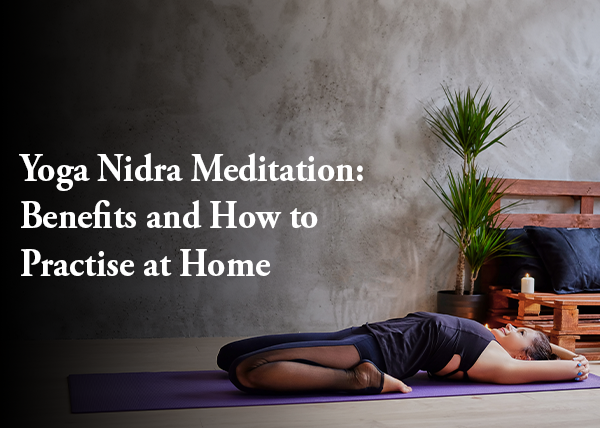
What Is Yoga Nidra Meditation?
If you have ever wished that you could rest deeply without actually falling asleep or if you feel like regular meditation is just too hard to stick with then Yoga Nidra meditation might be exactly what you have been looking for.
Yoga Nidra, which literally translates to “yogic sleep” in Sanskrit, is a guided meditation practice that brings your body into a state of complete physical, mental, and emotional relaxation. Unlike other forms of meditation where you sit upright and try to focus your attention, Yoga Nidra is practised lying down. You simply listen to a guide and follow along with no experience required.
The practice has its roots in ancient Indian tradition and was systematised in the modern era by Swami Satyananda Saraswati of the Bihar School of Yoga. He developed a structured method based on Tantric practices that has since been studied, adapted, and embraced by wellness communities all over the world including right here in Canada.
What makes Yoga Nidra so powerful is its ability to lead your awareness into the hypnagogic state that borderline zone between waking and sleeping. In this state, your conscious mind relaxes its grip, and your deeper mind becomes highly receptive. This is where real healing, reprogramming of habits, and emotional release can happen.
How Is Yoga Nidra Different from Regular Meditation?
Many people use the terms “meditation” and “Yoga Nidra” interchangeably, but they are actually quite different in approach and experience.
| Feature | Regular Meditation | Yoga Nidra Meditation |
| Position | Seated or standing | Lying down (Savasana) |
| Goal | Present-moment awareness | Conscious deep relaxation |
| Guidance | Often self-guided | Always guided (teacher or recording) |
| Brain State | Alpha waves | Theta and sometimes Delta waves |
| Effort Required | Moderate focus | Minimal you just listen |
| Duration | Varies | Typically 20–45 minutes |
In a standard mindfulness meditation, you are training your attention and staying alert. In Yoga Nidra meditation, you are deliberately crossing into deeper levels of consciousness while maintaining a thread of awareness. It is almost like being in a dream but still knowing that you are there.
This is why many people find Yoga Nidra far easier to begin with than conventional meditation. There is no pressure to “empty your mind” or sit perfectly still. You simply lie down, close your eyes, and follow the guidance.
The Science Behind Yoga Nidra
Over the past two decades, researchers have taken a serious look at Yoga Nidra and what it does to the body and brain. The findings are impressive.
Brain Wave Activity
During a Yoga Nidra session, EEG studies have shown that the brain transitions from Beta waves (normal waking activity) to Alpha waves (calm and creative thinking) and then into Theta waves (the state between sleep and wakefulness). Some longer sessions have even shown Delta wave activity which is typically only present during deep, dreamless sleep.
This is significant because Theta brain states are associated with:
- Deep subconscious processing
- Emotional healing
- Enhanced creativity
- Long-term memory consolidation
Hormonal Changes
Research published in journals like the Indian Journal of Physiology and Pharmacology has shown that Yoga Nidra can reduce levels of cortisol (the stress hormone) and increase dopamine release the same feel-good chemical involved in motivation and reward.
Autonomic Nervous System
Yoga Nidra activates the parasympathetic nervous system, also known as the “rest and digest” system. This counteracts the effects of chronic stress, which tends to keep the body in a constant state of fight-or-flight. Regular practice has been shown to lower heart rate, reduce blood pressure, and support better digestion.
Key Benefits of Yoga Nidra Meditation
1. Dramatically Reduces Stress and Anxiety
One of the most well-documented benefits of Yoga Nidra meditation is its ability to lower stress. When you enter the Theta state, your body releases physical and emotional tension that has built up over days, weeks, or even years. Many people report feeling lighter and more at ease after just one session.
For those dealing with chronic anxiety, Yoga Nidra provides a safe space to let the nervous system slow down and reset without any need for medication or complicated techniques.
2. Improves Sleep Quality
Yoga Nidra is sometimes called the “sleep meditation” for good reason. Because it mimics the brain wave patterns of deep sleep, it can actually help train your nervous system to enter deep sleep more easily at night.
If you struggle with insomnia or restless nights, a 20–30 minute Yoga Nidra session before bed or even during the day can make a significant difference.
3. Supports Emotional Healing
During Yoga Nidra, you work with what is called a Sankalpa: a short, positive intention or resolve. This intention is planted in the mind when it is most receptive, making it far more effective than repeating affirmations during your normal waking state.
Over time, regular practice can help dissolve emotional blockages, change negative thought patterns, and support healing from past trauma gently and at your own pace.
4. Enhances Focus and Mental Clarity
Paradoxically, this deeply relaxing practice also sharpens the mind. Because it clears out mental clutter and allows the nervous system to fully rest, people often find they are more focused, creative, and productive after a Yoga Nidra session.
Students, professionals, and creatives often use it as a mid-day reset a way to clear the mind without actually sleeping.
5. Relieves Chronic Pain
Studies involving people with conditions like fibromyalgia, arthritis, and chronic back pain have shown that Yoga Nidra can help reduce the perception of pain. By calming the nervous system and shifting focus inward, the practice can provide meaningful relief that complements other treatments.
6. Supports Women’s Health
Yoga Nidra is particularly beneficial for women navigating hormonal changes. It has been used to ease PMS symptoms, support prenatal wellness, and aid postpartum recovery. At Canada Yoga Studio, this practice is offered as part of a broader approach to women’s health, including our Prenatal Yoga program and Postpartum Yoga sessions.
7. Balances Energy Levels
Many practitioners report that a single 30-minute Yoga Nidra session feels as restorative as two to four hours of regular sleep. While this claim needs more clinical research, the subjective experience is widely reported and is likely connected to the depth of the brain wave states achieved.
8. Helps with Addiction and Habit Change
Because Yoga Nidra works directly with the subconscious mind, it can be a powerful tool for people working to break habits or change deeply ingrained patterns. The Sankalpa practice in particular creates a direct line to the part of the mind where habits and automatic responses live.
Who Can Practise Yoga Nidra?
One of the most wonderful things about Yoga Nidra meditation is that it is genuinely accessible to almost everyone. You do not need to be flexible, strong, or experienced in yoga. You do not even need to be able to sit still or quiet your mind.
Yoga Nidra is suitable for:
- Complete beginners who find conventional meditation frustrating
- Busy parents who need a quick and effective way to decompress
- Seniors and older adults who may have physical limitations
- Children and teenagers with appropriate, age-friendly guidance (learn more about Kids Yoga at Canada Yoga Studio)
- Pregnant women though certain modifications and extra care apply (explore our Prenatal Yoga in Canada)
- New mothers recovering from childbirth and adjusting to life with a newborn (see Postpartum Yoga)
- People managing chronic stress, anxiety, PTSD, or sleep disorders
- Athletes and fitness enthusiasts looking to improve recovery
- Advanced yoga practitioners seeking a deeper spiritual practice
The only situation where caution is needed is for those with certain types of psychosis or dissociative disorders in these cases, it is always best to consult a healthcare professional before beginning any deep relaxation or meditation practice.
How to Practise Yoga Nidra at Home: Step-by-Step Guide
Practising Yoga Nidra at home is simple. All you need is a quiet space, something comfortable to lie on, and either a teacher’s voice (in person or via recording) or a good script that someone reads to you.
What You Will Need
- A yoga mat, firm bed, or blanket on the floor
- A pillow for under your head
- A blanket to cover yourself (body temperature tends to drop during deep relaxation)
- An eye pillow or eye mask (optional but helpful)
- A Yoga Nidra audio recording or app (many free ones are available on YouTube or apps like Insight Timer)
Step-by-Step Instructions
Step 1: Prepare Your Space
Choose a time when you are unlikely to be interrupted early morning, during a lunch break, or in the evening before bed all work well. Turn off notifications on your phone. Dim the lights or close the curtains.
Step 2: Set Up Your Body
Lie flat on your back in Savasana (Corpse Pose). Let your legs fall open naturally and let your arms rest slightly away from your sides, palms facing upward. Make sure you are genuinely comfortable if your lower back is uncomfortable, place a rolled blanket under your knees.
Step 3: Set Your Sankalpa (Intention)
Before you begin, take a moment to set a simple, positive intention for your practice. This is called a Sankalpa. It should be short, stated in the present tense, and meaningful to you. Examples include:
- “I am calm and at peace.”
- “I am healing and whole.”
- “I am filled with energy and strength.”
You will return to this intention during the practice.
Step 4: Begin with Physical Relaxation
Your guide will typically start by directing your awareness to different parts of your body in a systematic way this is called a body scan or rotation of consciousness. You simply follow along, mentally noting each body part as it is named. This part of the practice systematically relaxes every muscle in your body.
Step 5: Work with Pairs of Opposites
Many Yoga Nidra scripts guide you through experiencing pairs of opposites for example, heaviness and lightness, warmth and cold, pain and pleasure. This technique helps stimulate both hemispheres of the brain simultaneously and deepen the relaxation response.
Step 6: Visualisation
In this stage, your guide will offer a series of rapid mental images things like a burning candle, a vast ocean, a dark night sky. You simply let these images arise and pass without holding on to them. This engages the deeper parts of your mind.
Step 7: Return to the Sankalpa
Near the end of the session, your guide will bring you back to your intention. At this point, your mind is deeply relaxed and highly receptive this is when the Sankalpa is most powerful.
Step 8: Gradual Awakening
Your guide will slowly bring you back to waking awareness becoming aware of your breath, the sounds around you, the feeling of the floor beneath you. Take your time. Wiggle your fingers and toes gently before sitting up.
Step 9: Rest and Reflect
After the session, sit quietly for a few minutes. You may feel groggy (like you have just woken up from a nap) or you may feel wide awake and clear. Both responses are normal. Drink a glass of water and give yourself a gentle re-entry into daily activity.
Tips to Get the Most Out of Your Yoga Nidra Practice
Here are some practical tips that can deepen your experience over time:
- Practise consistently. Even two to three sessions per week will produce noticeable results. Daily practice is even better.
- Choose the right time. Yoga Nidra works well at any time, but early morning (when you are already in a relaxed waking state) or late evening (to ease into sleep) tends to be particularly effective.
- Do not fight sleep. If you fall asleep during a session, that is fine especially when you first begin. Over time, you will learn to stay at the edge of sleep without crossing over.
- Use headphones. Listening through headphones can help block out distractions and allow the guide’s voice to land more directly.
- Keep a journal. After your sessions, jot down any insights, emotions, or images that arose. Over time, you may notice patterns that give you useful information about your inner life.
- Vary your recordings. Different teachers use different approaches. Explore a few to find a voice and style that resonates with you.
Common Mistakes to Avoid
Even though Yoga Nidra is simple, there are a few common pitfalls to watch out for:
Expecting Instant Results
While many people feel deeply relaxed after their first session, the deeper benefits improved sleep, emotional healing, habit change develop over weeks and months of regular practice. Give it time.
Being Too Warm or Too Cold
Because your body temperature drops during deep relaxation, it is easy to become uncomfortable partway through. Always have a blanket nearby and make sure the room is a comfortable temperature before you begin.
Practising When Too Tired
If you are completely exhausted, you may simply fall into sleep during Yoga Nidra which is not the same as the conscious relaxation state the practice aims for. If you are very tired, rest first with a short nap, then practise Yoga Nidra.
Using It as a Substitute for Professional Help
Yoga Nidra is a wonderful complementary tool for mental and emotional wellbeing, but it is not a replacement for therapy, medical treatment, or psychiatric care. If you are dealing with serious mental health challenges, please work with a professional alongside your practice.
How Yoga Nidra Fits Into a Complete Wellness Routine
Yoga Nidra meditation is most powerful when it is part of a broader approach to health and wellbeing. Here is how it complements other practices:
Paired with Hatha Yoga
Hatha yoga prepares the physical body for deep rest. When you have moved and stretched your muscles before a Yoga Nidra session, you are more likely to settle quickly and comfortably into relaxation. Explore Hatha Yoga classes in Calgary to get started.
Combined with Sound Healing
Sound healing practices using singing bowls, gongs, and other instruments create vibrations that naturally support the brainwave transition into Alpha and Theta states. This makes Sound Healing in Calgary a wonderful complement to Yoga Nidra practice.
Alongside Kundalini Yoga
Kundalini Yoga works with subtle energy in the body. Combining it with Yoga Nidra can deepen both practices, supporting a more complete experience of energetic and emotional balance.
With Pranic and Aura Work
Practices like Pranic and Aura Cleansing work with the body’s energy field and can amplify the restorative effects of Yoga Nidra by clearing energetic blockages that may otherwise interfere with deep relaxation.
Supported by Nutrition and Wellness Coaching
Your lifestyle and diet play a huge role in how well your nervous system can relax. Working with a Nutrition and Wellness Coach alongside your Yoga Nidra practice can help create the internal conditions for deeper rest and faster healing.
As Part of a Multi-Dimensional Approach
At Canada Yoga Studio, we believe that true wellness happens on many levels physical, mental, emotional, energetic, and spiritual. Our Multi-Dimensional Yoga offerings are designed to support all of these layers together.
Yoga Nidra at Canada Yoga Studio
At Canada Yoga Studio, we offer a welcoming, supportive environment for all levels of practitioners. Whether you are completely new to yoga and meditation or are deepening an existing practice, our experienced teachers are here to guide you.
Our approach to Yoga Nidra and wellness includes:
- Guided Yoga Nidra sessions integrated into various class formats
- Prenatal support through our Prenatal Yoga in Canada program perfect for expectant mothers who need gentle, restorative support
- Postpartum recovery through our Postpartum Yoga classes helping new mothers rebuild strength and find moments of calm
- Family wellness including our Kids Yoga sessions introducing children to mindfulness and relaxation from a young age
- Holistic energy work including Sound Healing and Pranic Aura Cleansing
- Transformative yoga paths including Kundalini Yoga
- Lifestyle support through Nutrition and Wellness Coaching
We serve students across Calgary and beyond, with both in-studio and online options available.
- Ready to experience the benefits for yourself? Visit Canada Yoga Studio to explore our class schedule and find a session that works for you.
Frequently Asked Questions
How long should a Yoga Nidra session be?
Most Yoga Nidra sessions run between 20 and 45 minutes. Shorter sessions of 10–15 minutes can still be beneficial, especially when you are just starting out or fitting in a quick mid-day reset.
Can I do Yoga Nidra every day?
Yes daily practice is perfectly safe and is actually encouraged. Many serious practitioners do a short Yoga Nidra session every day as part of their morning or evening routine.
Is Yoga Nidra the same as sleep?
No. While Yoga Nidra accesses brainwave states that are similar to sleep, you maintain a thread of awareness throughout. This conscious awareness is what makes it different from ordinary sleep and what gives it its unique therapeutic power.
Do I need any equipment to practise Yoga Nidra?
No special equipment is required. A comfortable place to lie down, a blanket, and a pillow are enough. A guided audio recording is also helpful, especially when learning on your own.
Can pregnant women practise Yoga Nidra?
Yes Yoga Nidra is generally very safe and beneficial during pregnancy. However, during later stages of pregnancy, you may need to lie on your side rather than flat on your back. Always check with your healthcare provider. Our Prenatal Yoga in Canada program includes guidance on appropriate modifications.
What if I fall asleep during Yoga Nidra?
This is very common, especially for beginners or people who are sleep-deprived. It is not a problem. Over time, you will develop the ability to stay at the threshold between waking and sleeping. For now, even the sleep itself is restorative.
How is Yoga Nidra connected to Kundalini Yoga?
Both practices work with subtle energy and consciousness. Kundalini Yoga uses movement, breathwork, and mantra to awaken energy in the body, while Yoga Nidra uses stillness and guided awareness to explore deeper states of consciousness. Together, they can support a rich and complete inner life.
How soon will I notice results?
Many people notice an immediate sense of calm and relaxation after their first session. Deeper benefits like improved sleep, reduced anxiety, and emotional healing typically develop over several weeks of consistent practice.
Final Thoughts
Yoga Nidra meditation is one of the most accessible, effective, and deeply nourishing practices available today. Whether you are looking for better sleep, less stress, emotional healing, or simply a reliable way to rest your overworked mind, Yoga Nidra offers a clear and gentle path forward.
The beauty of this practice is that it meets you exactly where you are. You do not need to be fit, flexible, or experienced. You do not need to have a perfect meditation practice or a still mind. You just need to lie down, close your eyes, and be willing to listen.
Over time, a regular Yoga Nidra practice can quietly transform the way you handle stress, the way you sleep, the way you relate to your own emotions, and the way you feel in your body day in and day out.
If you are based in Calgary or anywhere in Canada, we warmly invite you to explore what Canada Yoga Studio has to offer. From Yoga Nidra to Hatha Yoga, Sound Healing, Kundalini Yoga, Prenatal and Postpartum Yoga, and Nutrition Coaching we are here to support every step of your wellness journey.
💬 Have you tried Yoga Nidra before? We would love to hear about your experience in the comments below. And if you found this guide helpful, please share it with a friend who could use a little more rest and calm in their life.
Explore more at Canada Yoga Studio, your home for holistic wellness in Canada.