
Yoga Wellness Retreat in Canada: Inside Our 3-Day Vancouver Island Yoga & Ayurveda Retreat
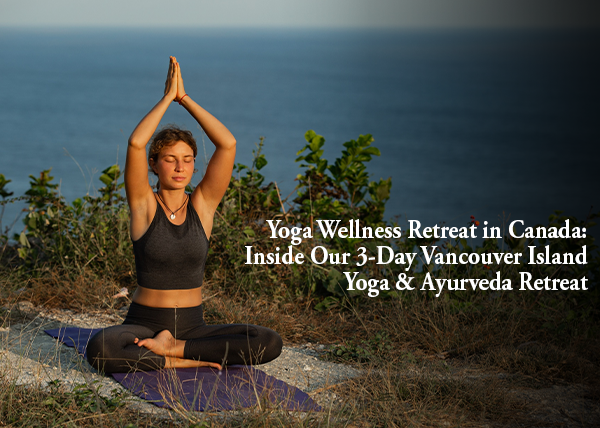
What if your next getaway gave you more than a change of scenery?
Imagine beginning your morning with mindful movement and breathwork, spending time surrounded by the natural beauty of Vancouver Island, learning how yoga and Ayurveda can become part of everyday living, sharing nourishing food with a small community, and ending the day with meditation, sound, or kirtan.
That is the idea behind our 3-day yoga wellness retreat in Canada.
Set in Parksville on Vancouver Island, this immersive experience brings together traditional yoga, pranayama, meditation, Ayurveda, sattvic food, nature, sound healing, and community. It is designed for people who want more than a conventional weekend away and are looking for time to slow down, deepen their practice, and reconnect with themselves.
Whether you are already practising yoga or considering your first retreat, this guide takes you inside the experience and explains what you can expect from our Vancouver Island Yoga & Ayurveda Retreat.
A Quick Look at Our 3-Day Vancouver Island Yoga Retreat
Before exploring the experience in detail, here is an overview of what makes this retreat different from a regular yoga class or weekend getaway.
| Retreat Feature | What to Expect |
| Location | Parksville, Vancouver Island, British Columbia |
| Duration | 3 days / 2 nights |
| Retreat Style | Yoga, Ayurveda, meditation and wellness |
| Yoga Practices | Hatha, Ashtanga-inspired practice, restorative movement and mindful flow |
| Wellness Practices | Pranayama, meditation, sound healing and nature-based reflection |
| Ayurveda | Dosha exploration, lifestyle learning and Ayurvedic food principles |
| Meals | Sattvic plant-based meals |
| Group Size | Limited to 20 participants |
| Experience Level | Suitable for different levels of yoga experience |
| Accommodation | Separate from the retreat fee |
The intention is not to fill every hour with activities.
A meaningful retreat should also create room to breathe, reflect, spend time in nature, connect with others, and simply experience a slower rhythm.
Why Choose Vancouver Island for a Yoga Wellness Retreat?
Location matters when you are intentionally stepping away from your usual routine.
Vancouver Island offers something that is difficult to recreate inside a busy urban environment: space.
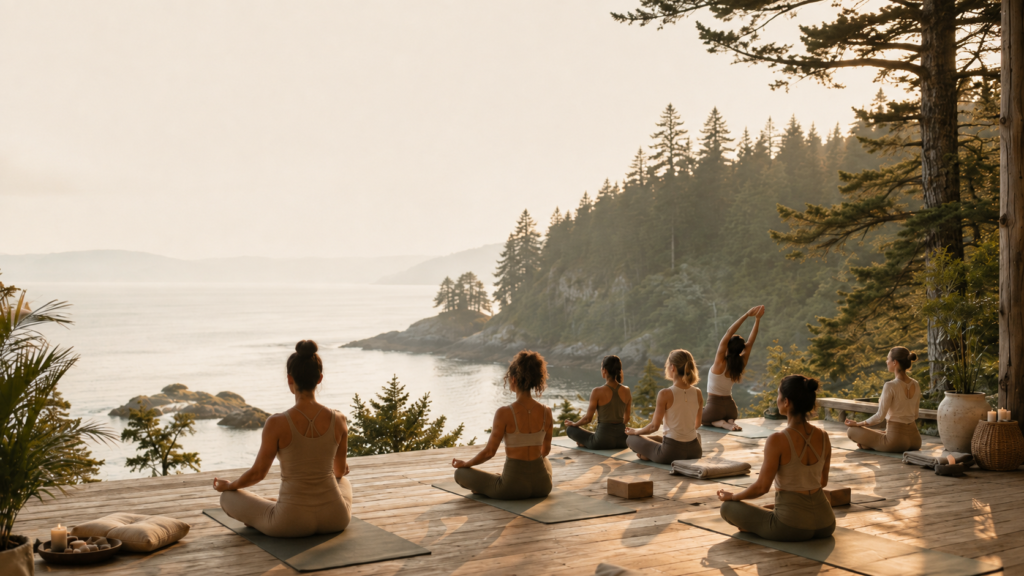
Its coastline, forests, beaches, open landscapes, and slower pace create an ideal setting for yoga, meditation, nature walks, reflection, and rest.
Our retreat takes place in Parksville, British Columbia, on the eastern side of Vancouver Island.
For participants travelling from cities such as Vancouver, Calgary, Victoria, Toronto, or elsewhere in Canada, arriving on the island creates a noticeable transition from everyday life into retreat mode.
Here, wellness does not have to happen only on the yoga mat.
A walk along the coast can become an opportunity to practise awareness.
A quiet moment outdoors can become a meditation.
A shared meal can encourage you to eat more slowly and intentionally.
A morning without your regular schedule can give you space to notice how your body and mind actually feel.
That combination of structured practice and natural surroundings is one reason Vancouver Island yoga retreats appeal to people looking for something deeper than a conventional vacation.
What Makes This Yoga and Ayurveda Retreat Different?
A yoga retreat can take many forms.
Some focus heavily on physical yoga classes. Others are primarily luxury escapes with one or two wellness activities added to the schedule.
Our approach is different.
The retreat brings several parts of traditional yogic living together so that participants can explore how movement, breathing, meditation, food, lifestyle, sound, nature, and community can complement one another.
Traditional Yoga Beyond Physical Exercise
For many people, yoga begins with asanathe physical postures practised on a mat.
But traditional yoga extends far beyond flexibility.
Throughout the retreat, participants explore yoga through movement, breath awareness, pranayama, meditation, mindful stillness, and reflection.
Hatha Yoga plays an important role because its deliberate approach encourages you to pay closer attention to alignment, breathing, stability, and awareness rather than rushing through movements.
If you want to understand this style before attending the retreat, explore our Hatha Yoga sessions, which combine classical asana, pranayama, meditation, and mindful practice.
The retreat also incorporates more dynamic and restorative approaches so the weekend has a natural balance between effort and rest.
Ayurveda as a Practical Part of the Retreat
Ayurveda adds another dimension to the experience.
Instead of treating wellness as something that happens only during a one-hour class, Ayurveda encourages participants to think about everyday routines, food, individual constitution, rest, and lifestyle.
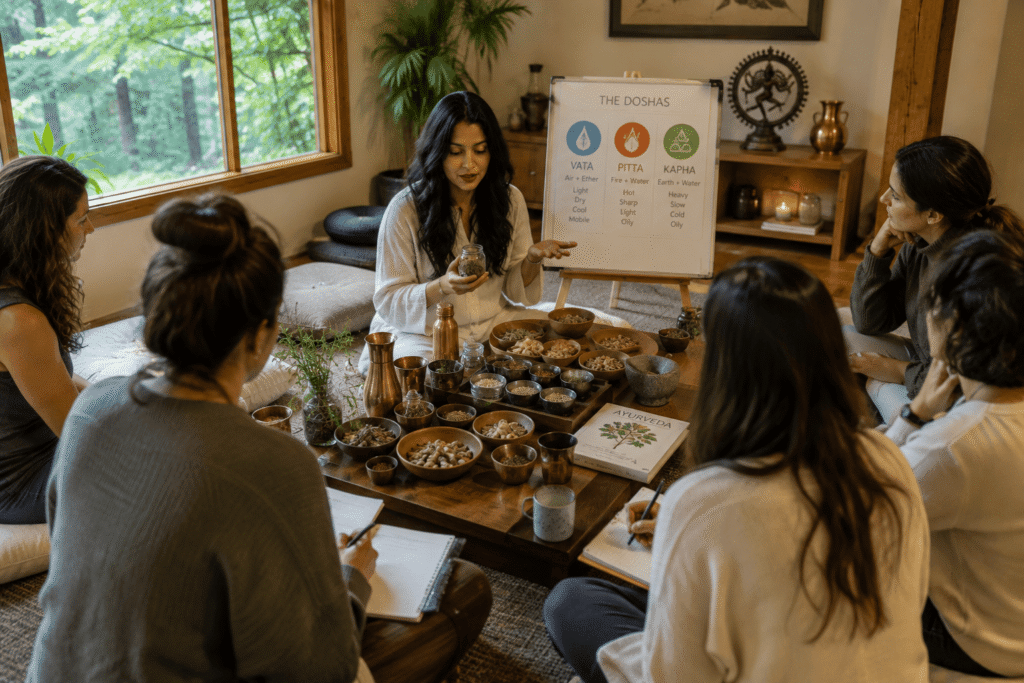
During the retreat, Ayurveda is introduced in an accessible way through activities such as dosha exploration and lifestyle-oriented learning.
You do not need previous knowledge of Ayurveda.
The purpose is to help you understand some of its foundational ideas and consider how they may relate to your own routines.
For someone searching specifically for a yoga and Ayurveda retreat in Canada, this combination provides an opportunity to experience both traditions within the same weekend rather than attending separate workshops.
Pranayama and Meditation
Breathing often receives less attention than postures in modern yoga, yet it is central to traditional practice.
Pranayama sessions give participants time to explore the relationship between breath, attention, and movement.
Meditation adds another layer by creating opportunities to become still and observe rather than constantly doing.
These practices are also part of our broader Multi-Dimensional Yoga program, where yoga is approached through asana, pranayama, meditation, mindfulness, and complementary practices rather than physical movement alone.
During the retreat, having more time allows participants to explore these elements without the pressure of immediately returning to work, errands, or daily responsibilities after class.
Sound Healing, Chanting and Kirtan
The retreat also creates space for practices involving sound.
These may include chanting, kirtan and sound-based relaxation experiences.
Sound can completely change the atmosphere of a wellness practice. Instead of focusing on achieving a physical posture, you are invited to become still, listen, breathe, and experience vibration.
If this part of the retreat particularly interests you, Canada Yoga Studio also offers dedicated Sound Healing sessions that combine mindful practices with sound and vibration.
Sattvic Plant-Based Food
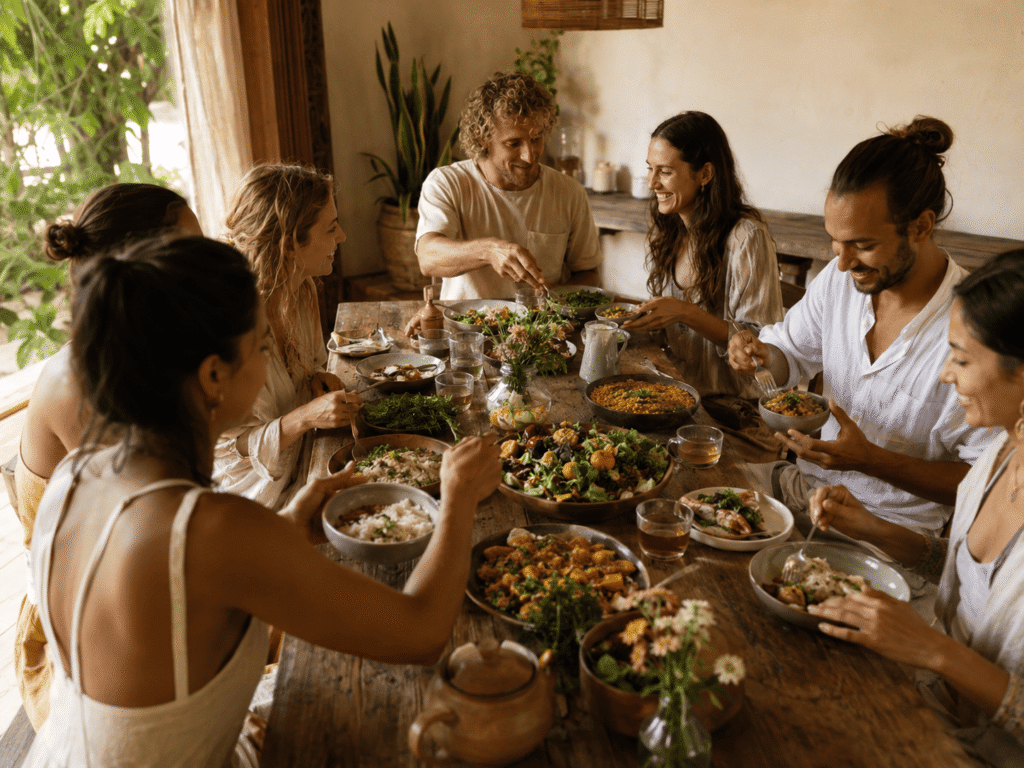
Food is not treated as an afterthought during the weekend.
Sattvic plant-based meals form part of the retreat experience and are influenced by Ayurvedic principles.
Within yogic traditions, sattvic food is generally associated with fresh, simple, balanced ingredients and mindful preparation.
But the value of a shared retreat meal goes beyond ingredients.
It is also about changing how we eat.
Instead of grabbing breakfast while answering emails or having dinner in front of a screen, retreat meals give participants time to sit down, slow down, connect with others, and pay attention to the experience of eating.
That makes food another part of the weekend’s overall practice of awareness.
Inside the 3-Day Vancouver Island Yoga Retreat Itinerary
So what does a three-day yoga retreat actually look like?
The weekend follows a gradual rhythm rather than placing the most intensive experiences immediately after arrival.
The first stage is about grounding.
The second is about exploration.
The final stage is about integration.
Day 1: Arrival, Grounding and Hatha Yoga
The first day begins by allowing participants to transition from travelling and everyday responsibilities into the retreat environment.
An opening circle provides an opportunity to arrive, meet the group, understand the flow of the weekend, and begin shifting attention inward.
A guided Hatha Yoga practice then helps reconnect movement and breathing.
The goal is not to begin with the most challenging yoga session possible.
Instead, the first practice creates a foundation for the rest of the retreat by encouraging grounding, mobility, awareness, and presence.
After practice, the evening moves toward shared food and community.
A satsang or reflective gathering provides space for discussion and connection before participants settle into the slower pace of the weekend.
By the end of Day 1, the biggest transition has already taken place.
You have moved from everyday routine into retreat time.
Day 2: Yoga, Nature, Ayurveda and Sound Healing
The second day goes deeper into the retreat experience.
Morning practice offers an opportunity to work with movement, breath, and alignment when the mind is fresh and the day’s distractions have not yet begun.
After breakfast, part of the experience moves into nature.
Vancouver Island is not simply the location of the retreat; its landscape becomes part of the weekend.
Nature walks, beach time, mindful observation, or outdoor meditation can provide a refreshing contrast to structured indoor practice.
Later, participants explore pranayama and Ayurveda.
Ayurvedic sessions may introduce concepts such as doshas, daily routines, mindful food choices, and other foundational lifestyle principles.
The goal is practical understanding rather than overwhelming participants with theory.
As the day progresses, the pace begins to soften.
Restorative practices provide an opportunity to release effort after a fuller day of movement and learning.
Sound healing then shifts the focus toward listening, stillness, and relaxation.
The evening may include chanting, kirtan, community gathering, or a fire circle.
This mix of movement, learning, nature, sound, food, and community is what makes Day 2 the heart of the Vancouver Island wellness retreat experience.
Day 3: Breathwork, Integration and a Mindful Return
The final day is about bringing different elements of the retreat together.
Morning breathwork and mindful yoga provide space to practise with less urgency.
Rather than trying to learn as much as possible before leaving, participants are encouraged to reflect on what has been most meaningful.
Ayurvedic lifestyle discussions can help translate ideas from the retreat into practical everyday habits.
You may leave with a breathing practice you want to continue.
Perhaps morning yoga becomes more important.
You may want to become more intentional around food.
Maybe meditation becomes five quiet minutes before beginning work.
Or perhaps the most useful lesson is simply recognising when your body and mind need genuine rest.
A closing circle helps bring the weekend to a natural end before participants begin the journey home.
What Can You Experience During a Yoga and Ayurveda Retreat?
A good retreat should give you experiences that are difficult to create during an ordinary one-hour class.
During this three-day weekend, participants have opportunities to explore several areas of yogic and mindful living.
Build a More Complete Yoga Practice
Instead of thinking only about poses, you can experience how asana, pranayama, meditation, mindful movement, and relaxation fit together.
Understand the Basics of Ayurveda
Ayurvedic workshops introduce concepts that can encourage greater awareness of everyday routines, food, balance, and individual differences.
Experience Different Forms of Meditation
Meditation can happen while sitting quietly, focusing on the breath, walking in nature, listening during sound healing, or simply practising awareness during everyday activities.
Spend Intentional Time in Nature
Beach walks and forest surroundings create opportunities to disconnect from the usual pace of daily life and become more aware of your environment.
Connect With a Small Yoga Community
With the retreat limited to a smaller group, participants have more opportunities for genuine conversation, shared meals, practice, and community interaction.
Who Is This 3-Day Yoga Retreat in Canada For?
You do not have to be an advanced yogi to benefit from a retreat.
This experience may be especially suitable if you:
- Want a short wellness getaway in British Columbia
- Are looking for a yoga retreat in Canada without committing to a full week
- Want to deepen an existing yoga practice
- Are curious about Ayurveda
- Want to experience pranayama or meditation in a retreat environment
- Enjoy wellness experiences connected with nature
- Want to explore sound healing or kirtan
- Have been practising yoga mainly as exercise and want to explore its broader traditions
- Prefer smaller retreat groups
- Want dedicated time away from your regular routine
It can also work well for someone attending their first yoga retreat in Canada, because three days provides enough time to experience retreat life without requiring a long stay.
Is This Yoga Retreat Suitable for Beginners?
One of the most common concerns first-time participants have is whether they are “good enough at yoga” to attend a retreat.
You do not need advanced flexibility or complicated poses to have a meaningful retreat experience.
Yoga retreats are not competitions.
Different sessions throughout the weekend have different purposes. Some involve movement, while others focus on breathing, meditation, nature, Ayurveda, sound, or reflection.
That means there are many ways to participate beyond physical asana.
If you are new to yoga, let the instructors know about your experience level and any limitations before beginning practice.
The weekend should be approached with curiosity rather than pressure.
What Is Included in the Retreat?
A major part of choosing the right wellness retreat in Canada is understanding what your experience actually includes.
The retreat brings together:
- Guided yoga sessions
- Hatha Yoga
- Ashtanga-inspired practice
- Restorative yoga
- Pranayama and breathwork
- Meditation
- Ayurveda workshops
- Dosha exploration
- Sattvic plant-based meals
- Nature walks and outdoor time
- Sound healing
- Chanting and kirtan
- Community activities
- Closing reflection and integration
For current dates, pricing, availability and the latest retreat inclusions, check the official Yoga Retreat in Vancouver Island page.
Is Accommodation Included?
Accommodation is separate from the retreat fee.
This gives participants flexibility in deciding where they would prefer to stay while attending the weekend.
Because accommodation availability can change, it is best to arrange your stay soon after confirming your retreat place.
Yoga Retreat vs Regular Vacation: What Is the Difference?
A vacation and a retreat can both offer time away, but the intention is usually different.
On a regular vacation, the schedule may revolve around sightseeing, restaurants, entertainment, shopping, and travelling between attractions.
A yoga wellness retreat creates a different rhythm.
Instead of asking, “How much can I fit into three days?” the question becomes, “How intentionally can I experience these three days?”
You wake up with time for practice.
Meals are part of the experience.
Nature becomes part of the schedule.
Breathing and meditation receive deliberate attention.
Even rest has a purpose.
For people who often return from vacations feeling like they need another vacation, this slower approach can make a yoga retreat particularly appealing.
Why a 3-Day Yoga Retreat Can Be a Great First Retreat
Yoga retreats can range from a single day to several weeks.
Longer retreats can be valuable, but they are not practical for everyone.
A 3-day yoga retreat in Canada offers a useful middle ground.
It is long enough to step away from your normal schedule and experience multiple practices, yet short enough to fit around many work and family commitments.
The format also allows the weekend to have a clear progression:
Day 1: Arrive and ground.
Day 2: Explore and deepen.
Day 3: Integrate and return.
For someone who has never attended a retreat before, this can feel much more approachable than immediately committing to seven or ten days.
How to Prepare for a Vancouver Island Yoga Retreat
A little preparation can help you get more from the weekend.
Reduce Your Schedule Before You Arrive
Where possible, avoid packing the hours immediately before the retreat with unnecessary commitments.
Arriving mentally exhausted can make it harder to transition into a slower environment.
Tell Your Instructor About Relevant Limitations
If you have physical restrictions, injuries, pregnancy, or anything else that may affect your yoga practice, communicate this before participating.
Come Without Performance Expectations
You do not need to prove anything on a retreat.
The person beside you may have practised yoga for fifteen years or fifteen days.
Your experience remains your own.
Give Yourself Permission to Disconnect
Consider reducing unnecessary phone use during the weekend.
You do not need to completely disappear from the world, but spending less time on notifications can help you become more present.
What to Pack for a Vancouver Island Yoga Retreat
Vancouver Island weather can vary, so comfortable layers are useful.
Consider packing:
- Comfortable yoga clothing
- Warm layers
- Weather-appropriate outerwear
- Walking shoes
- Reusable water bottle
- Journal and pen
- Personal toiletries
- Any required medications
- Swimwear if relevant to planned activities
- Comfortable clothes for evenings and community time
- A yoga mat if requested by the retreat organizers
You do not need an elaborate retreat wardrobe.
Comfort and practicality should come first.
Getting to Parksville on Vancouver Island
Parksville is located on the eastern side of Vancouver Island in British Columbia.
People travelling from mainland British Columbia can reach Vancouver Island by ferry or air, while travellers coming from other Canadian provinces can connect through major regional airports and transportation hubs.
Nanaimo is one of the main gateways for reaching Parksville.
If you are travelling from outside the island, plan transportation and accommodation well in advance rather than leaving arrangements until immediately before the retreat.
Ferry schedules, flights, ground transportation, and travel times can change, so always check current transportation information when organising your trip.
Allowing yourself extra arrival time can also help ensure that your retreat begins calmly instead of with a stressful last-minute journey.
Meet the Yoga Community Behind the Retreat
A retreat experience depends greatly on the people guiding it.
Canada Yoga Studio brings together instructors and wellness practitioners with experience across yoga, meditation, breathwork, sound, and complementary practices.
The studio’s teaching philosophy is rooted in making traditional yoga accessible while maintaining attention to mindful practice, individual guidance, and the wider dimensions of yoga beyond physical postures.
You can learn more about the people behind the studio on our Yoga Teachers and Wellness Faculty page.
The Vancouver Island retreat is also a collaborative experience, bringing together Canada Yoga Studio and Namaskar Yoga Studio alongside facilitators specialising in areas such as Ayurveda and kirtan.
This combination allows the weekend to offer a wider experience than would be possible through a single yoga class or instructor.
How to Bring the Retreat Experience Home With You
A valuable yoga retreat should not end the moment you leave Vancouver Island.
The real question is what you carry home.
You may decide to continue with a ten-minute morning practice.
You might use breathing techniques before a stressful meeting.
Perhaps meditation becomes part of your evening routine.
You may approach meals more mindfully or spend more intentional time outdoors.
You might simply become better at recognising when you need to slow down.
Small practices are often easier to sustain than dramatic lifestyle changes.
If you want to continue practising after the retreat, Canada Yoga Studio offers yoga and wellness programs that can help you maintain consistency beyond the weekend.
Frequently Asked Questions About Our Vancouver Island Yoga Retreat
Where is the yoga retreat held?
The retreat takes place in Parksville on Vancouver Island, British Columbia, Canada.
How long is the retreat?
The retreat runs for three days and two nights, making it suitable for people looking for a short yoga and wellness getaway.
Is this yoga retreat suitable for beginners?
The retreat includes a variety of yoga and wellness practices rather than focusing exclusively on advanced physical postures. Participants should speak with the retreat team about any individual needs or physical limitations before attending.
What styles of yoga are included?
The retreat includes practices influenced by Hatha Yoga and Ashtanga alongside restorative movement, pranayama, meditation, and slower mindful practices.
Do I need experience with Ayurveda?
No previous knowledge of Ayurveda is required. The retreat introduces Ayurvedic concepts through guided workshops and lifestyle-oriented learning.
Are meals included?
Sattvic plant-based meals prepared with Ayurvedic principles form part of the retreat experience.
Is accommodation included?
Accommodation is separate from the retreat fee. Participants should confirm the latest accommodation arrangements when booking.
What wellness activities are included besides yoga?
The experience may include pranayama, meditation, Ayurveda workshops, sound healing, chanting, kirtan, nature walks, community gatherings, and reflective practices.
How many participants can attend?
The retreat is designed for a limited group of up to 20 participants.
What should I bring to the retreat?
Comfortable yoga clothing, layers, walking shoes, personal essentials, a reusable water bottle, and weather-appropriate clothing are good starting points. Check the final participant information from the retreat team before travelling.
Ready to Experience a 3-Day Yoga Retreat on Vancouver Island?
A yoga retreat is not necessarily about escaping your life.
It can be about creating enough space to see your daily life more clearly.
For three days, you have the opportunity to move with awareness, pay attention to your breath, explore Ayurveda, meditate, spend meaningful time in nature, eat more mindfully, experience sound and community, and temporarily step outside the pace of your usual routine.
Our Vancouver Island Yoga & Ayurveda Retreat brings these elements together in Parksville, British Columbia, creating an immersive experience rooted in traditional yoga and mindful living.
If you are searching for a yoga retreat in Canada, a short wellness retreat on Vancouver Island, or an opportunity to explore yoga and Ayurveda together, this weekend offers a meaningful place to begin.