
Yoga for PCOS: Best Poses, Breathing Exercises & Daily Routine

Living with PCOS (polycystic ovary syndrome) often means managing a mix of symptoms at once: irregular cycles, stress, fatigue, and a nervous system that rarely feels settled. Yoga for PCOS won’t cure the condition, but a gentle, consistent practice built around the right poses, breathing exercises, and a simple daily routine may help you manage stress, support your body, and feel more grounded while you work with your doctor on a broader PCOS management plan.
This guide covers what the research actually says about yoga and PCOS, the poses and breathing exercises most commonly recommended, a sample daily routine you can start with, and a few safety points worth knowing before you begin.
What Is PCOS and How Can Yoga Help?
PCOS is a hormonal condition that affects how the ovaries function, and it’s commonly linked to irregular periods, higher androgen (testosterone) levels, and insulin resistance. Because PCOS touches the endocrine system, the nervous system, and metabolism all at once, managing it usually involves more than one approach: medical care, nutrition, movement, and stress management working together.
This is where yoga fits in. It isn’t a treatment for PCOS, and no yoga practice should replace medical care from your doctor or a specialist. That said, a small but growing body of research has looked at yoga as a complementary practice alongside standard PCOS care. Reviews of these studies have reported associations between regular yoga practice and improvements in markers like insulin resistance, cycle regularity, and hormone levels, along with reductions in stress, anxiety, and low mood. The researchers behind this work are consistently clear that the evidence so far comes from small studies, and that larger, better-designed trials are still needed before firm conclusions can be drawn. In practical terms, that means yoga may complement your PCOS management, particularly around stress and general wellbeing, but it should be treated as a support, not a solution on its own.
Best Yoga Poses for PCOS
The poses below are commonly recommended for PCOS because they gently work the hips and pelvis, support circulation to the lower abdomen, and calm the nervous system. Move slowly, breathe steadily, and skip anything that causes pain or sharp discomfort.
Garland Pose (Malasana)
A deep squat that opens the hips and groin while gently engaging the pelvic floor. Keep your heels down if you can, or place a folded blanket under them for support, and hold for several slow breaths.
Butterfly Pose (Baddha Konasana)
Sit with the soles of your feet together and knees relaxed out to the sides. This pose gently opens the hips and inner thighs and is often paired with slow, deep breathing to encourage relaxation.
Bridge Pose (Setu Bandhasana)
Lying on your back with knees bent, lift the hips gently off the floor. Bridge pose can help ease lower back tension and is often described as calming for the nervous system.
Cat-Cow Pose (Chakravakasana)
On hands and knees, alternate between arching and rounding the spine in rhythm with your breath. This gentle flow warms up the spine and abdominal area and is a good way to connect movement with breath before a longer practice.
Cobra Pose (Bhujangasana)
Lying on your stomach, gently lift the chest while keeping the lower ribs grounded. Cobra pose can help open the chest and abdomen and is often included in sequences aimed at supporting digestion and circulation.
Seated Forward Bend (Paschimottanasana)
A gentle forward fold from a seated position. This pose is often included for its calming, introspective quality, and can be modified with a bent knee or a strap around the feet if hamstrings are tight.
Child’s Pose (Balasana)
A resting pose that can be used at any point in your practice to slow down, breathe, and reset. It’s a good pose to return to whenever a sequence feels like too much.
Breathing Exercises (Pranayama) for PCOS
Breathwork, known as pranayama in yoga, is often paired with poses to help calm the nervous system, which matters for PCOS given how closely stress and hormone regulation are connected.
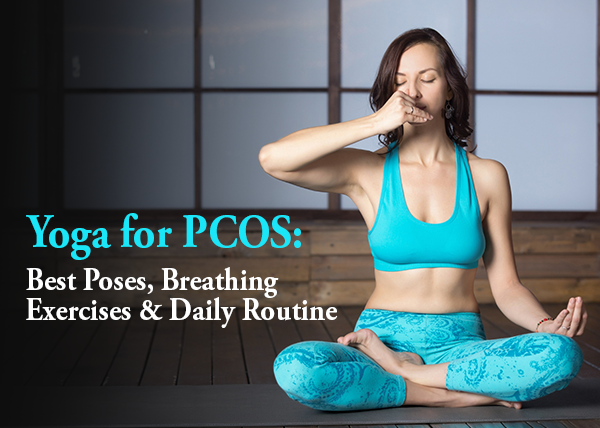
Anulom Vilom (Alternate Nostril Breathing)
A slow, seated breathing practice that alternates breath between the left and right nostril. It’s widely used to support a calmer, more balanced nervous system and is generally considered gentle enough for daily practice.
Bhramari (Humming Bee Breath)
A breathing exercise where you exhale with a gentle humming sound while covering your ears. Many people find it noticeably calming, and it’s often used as a short practice for stress and anxiety.
Ujjayi Breath (Ocean Breath)
A slightly audible breath created by softly constricting the back of the throat on inhale and exhale. It’s commonly used throughout a yoga practice to keep the breath steady and the mind focused.
Kapalabhati (Skull Shining Breath)
A more vigorous breathing technique involving short, forceful exhales. Some practitioners include it for its energizing effect, but it isn’t suitable for everyone. It’s generally advised to avoid Kapalabhati during menstruation, pregnancy, or if you have high blood pressure, and it’s worth learning it from a qualified instructor rather than a video alone.
A Simple Daily Yoga Routine for PCOS
Consistency tends to matter more than duration. A short daily practice is generally more sustainable than an occasional long one. Here’s a simple structure you can adapt:
| Time | Practice | Focus |
| 5 minutes | Cat-Cow, gentle neck and shoulder rolls | Wake up the spine and release tension |
| 10–12 minutes | Garland Pose, Butterfly Pose, Cobra, Bridge Pose | Hip and pelvic mobility, gentle strength |
| 5 minutes | Seated Forward Bend, Child’s Pose | Slow down and stretch |
| 5–8 minutes | Anulom Vilom or Bhramari breathing | Calm the nervous system |
This adds up to roughly 25 to 30 minutes, though even 10 to 15 minutes on busier days is worthwhile. Practising at a similar time each day, such as first thing in the morning or as a wind-down before bed, tends to make the habit easier to stick with.
Additional Lifestyle Tips Alongside Yoga
Yoga works best as one part of a broader approach to PCOS management. Alongside your practice, many people find it helpful to focus on consistent sleep, balanced meals that support stable blood sugar, regular movement beyond yoga, and ongoing care from a doctor or specialist familiar with PCOS. If nutrition feels like the missing piece, working with a wellness coach can help translate general advice into something realistic for your routine, which is part of why nutrition and movement are often addressed together rather than separately.
Safety Considerations Before Starting
A few points worth keeping in mind:
- PCOS affects everyone differently, so what works well for one person may not suit another. It’s worth speaking with your doctor before starting a new yoga or breathing practice, especially if you’re also managing insulin resistance, thyroid issues, or fertility treatment.
- Avoid forceful breathing techniques like Kapalabhati during your period, if you’re pregnant, or if you have high blood pressure.
- Deep hip-opening poses can feel intense if you’re also experiencing pelvic pain. Ease into them gradually and back off if something feels sharp rather than simply unfamiliar.
- Yoga may support relaxation and general wellbeing, but it isn’t a substitute for medical treatment, medication, or a diagnosis. Please continue working with your healthcare provider on your overall PCOS care.
Yoga for PCOS at Canada Yoga Studio
Canada Yoga Studio doesn’t currently run a dedicated PCOS program, but several existing offerings support the kind of gentle, consistent practice this guide covers. Hatha Yoga sessions focus on slow, deliberate movement that pairs well with the poses and breathing exercises above, and are available both in-studio in Calgary and online across Canada. If nutrition and lifestyle changes are part of your PCOS management plan, Nutrition & Wellness Coaching can help build a plan around your daily routine alongside your yoga practice.
For a longer, more immersive reset, Canada Yoga Studio’s wellness retreats run 3 to 5 days and combine yoga, meditation, mindfulness, and sound healing. If stress management is a big part of what you’re looking for, Sound Healing sessions, run in approximately 45-minute sessions, may also support relaxation alongside your regular practice.
Frequently Asked Questions
Can yoga cure PCOS?
No. Yoga is not a cure or medical treatment for PCOS. Some research suggests it may support stress management, general wellbeing, and certain hormone-related markers as a complementary practice, but it should be used alongside, not instead of, care from your doctor or specialist.
What are the best yoga poses for PCOS?
Commonly recommended poses include Garland Pose, Butterfly Pose, Bridge Pose, Cat-Cow, Cobra, Seated Forward Bend, and Child’s Pose. These focus on hip and pelvic mobility, gentle strength, and calming the nervous system.
How often should I practise yoga for PCOS?
Many people find a short daily practice, around 15 to 30 minutes, more helpful for consistency than occasional longer sessions. Even a few minutes of breathing exercises on busy days can be worthwhile.
Are there breathing exercises specifically for PCOS?
Anulom Vilom (alternate nostril breathing) and Bhramari (humming bee breath) are commonly used for their calming effect on the nervous system. Kapalabhati is sometimes included but should be avoided during menstruation, pregnancy, or with high blood pressure.
Can beginners do yoga for PCOS?
Yes. Most of the poses and breathing exercises covered here are beginner-friendly. If you’re new to yoga, a slower-paced class such as Hatha Yoga can be a good starting point for learning proper form.
Should I avoid certain yoga poses during my period if I have PCOS?
Some practitioners prefer to avoid deep inversions and forceful breathing techniques like Kapalabhati during menstruation. Gentle poses and calming breathwork are generally considered fine. If you’re unsure, check with your instructor or doctor.
Does yoga help with PCOS-related weight management?
Some research has looked at yoga’s effect on markers like insulin resistance and BMI in people with PCOS, with encouraging but limited results. Yoga can be a supportive part of an overall routine that includes nutrition and movement, but it isn’t a standalone weight management solution.
Can yoga help with PCOS-related stress and anxiety?
Many people find that yoga and breathing exercises support relaxation and a calmer nervous system, which can be particularly helpful given how closely stress and hormone regulation are linked in PCOS. It complements, but doesn’t replace, support from a healthcare provider if you’re managing anxiety or low mood.
Start Where You Are
You don’t need a perfect routine to begin. A few gentle poses and a couple of minutes of breathing practice, done consistently, are a reasonable place to start alongside your medical care. If you’d like guided support building that consistency, explore Hatha Yoga sessions at Canada Yoga Studio or reach out to ask about nutrition and wellness coaching to build a plan around your routine.