
30-Minute Hatha Yoga for Beginners: A Simple Full-Body Practice

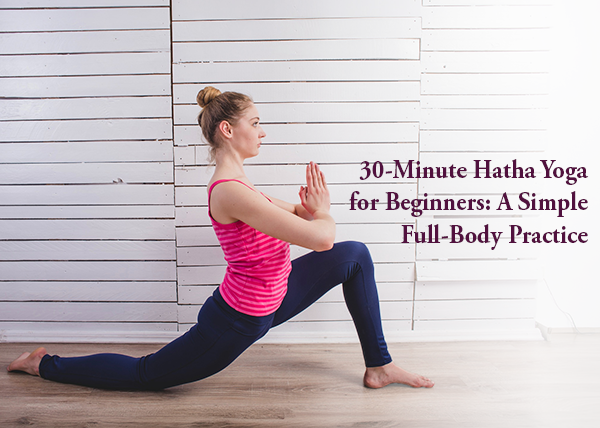
Starting a yoga practice does not require prior experience, advanced flexibility, or an hour to spare. Hatha Yoga for beginners is one of the most approachable ways to learn foundational postures, build body awareness and develop a steady relationship with your breath all within a manageable 30-minute session. This article walks you through a complete full-body routine you can follow at home, from gentle warm-up through to standing poses, floor mobility and relaxation. Beginners who also want structured, progressive guidance alongside this resource can explore Canada Yoga Studio’s guided Hatha Yoga program as a complement to practicing independently.
Hatha Yoga for Beginners: Quick Takeaways
- Hatha Yoga typically uses a slower, more deliberate pace than flow-based styles.
- Beginners can modify poses to suit their current mobility and experience level.
- A 30-minute practice can include warm-up, standing poses, floor poses, breathing and relaxation.
- Flexibility is not a requirement it develops gradually with consistent practice.
- Consistency matters far more than attempting advanced poses before you’re ready.
What Is Hatha Yoga? A Beginner-Friendly Explanation
In modern yoga class settings, Hatha Yoga refers to a posture-based practice that moves at a deliberate, unhurried pace. Each pose known as an asana is held for several breaths while the practitioner focuses on alignment, stability and breath awareness. Sessions often include transitions between standing and floor positions, basic pranayama (breathing exercises), and a short relaxation period at the end.
Unlike styles that link poses into continuous movement, Hatha Yoga gives you time to understand how each position feels, notice where you might be holding tension, and adjust before moving on. That structure makes it particularly well-suited to someone learning for the first time.
Is Hatha Yoga Good for Beginners?
For most people who are new to yoga, the answer is yes with one important clarification. The slower pace of a typical Hatha class provides time to learn proper posture setup, understand breathing and work within your own range of motion. Because you aren’t rushing from one pose to the next, you can pay attention to how your body responds and use modifications when needed.
That said, not every class labelled “Hatha” is automatically easy. The experience depends on the teacher, the sequence chosen and the pace of the session. If you’re joining a studio class, checking the class description or speaking briefly to the instructor beforehand can help you confirm it’s a good fit.
What Do You Need for a 30-Minute Hatha Yoga Practice?
Hatha Yoga at home requires very little equipment. Here is what helps:
- Yoga mat provides grip and cushioning for floor poses
- Comfortable, breathable clothing nothing too tight or restrictive
- Yoga blocks useful for bringing the floor closer to your hands; books or a folded blanket can work as a temporary substitute
- Cushion or folded blanket helpful for seated positions or to support the knees in low lunge
- Water nearby if you’d like it
- Enough clear floor space to extend your arms and step one leg back comfortably
Props are tools, not signs of weakness. Using a block in Triangle Pose, for example, allows you to maintain alignment rather than collapsing the torso to reach the floor.
Do You Need to Be Flexible to Start Hatha Yoga?
No. Flexibility is not a prerequisite it’s a possible outcome of consistent practice over time. Many beginners find that their hamstrings feel tight, their shoulders restrict movement, or their hips don’t open as far as they expect. All of that is completely normal.
In this routine, you’ll be encouraged to keep knees softly bent, use props where needed and work within a comfortable range rather than forcing a pose. Yoga is not a flexibility test. It’s a practice of body awareness and gradual, sustainable movement.
How to Prepare Your Body for Beginner Hatha Yoga?
Jumping straight into standing poses or deeper stretches without preparation can make the body feel stiff and uncooperative. A brief movement warm-up helps increase circulation, loosen the joints and bring your attention into the body before more structured postures begin.
For this routine, the first few minutes focus on gentle mobility through:
- Seated or standing breath awareness to settle the mind and notice your starting point
- Shoulder rolls to release tension in the upper back and neck
- Small, comfortable neck movements tilting side to side, not full circles
- Cat-Cow spinal movement to warm up the back and connect movement to breath
- Wrist and ankle rolls to prepare the joints that will bear weight during standing poses
- Gentle hip circles or small lateral movement to begin warming the lower body
The goal of this phase is to prepare and mobilize not to stretch deeply or prove anything.
30-Minute Hatha Yoga for Beginners: Full-Body Routine
This is the core of the article. The routine below is structured by time, not just a list of poses, so you can follow it with or without a timer and understand what each phase is meant to accomplish.
Minutes 0–3: Arrive, Settle and Connect With Your Breath
Comfortable Seated Pose or Easy Cross-Legged Position
Begin by sitting comfortably on your mat. If sitting cross-legged feels uncomfortable, place a folded blanket or cushion under your hips this small adjustment often makes a significant difference. You can also sit on a chair with your feet flat on the floor.
Let your hands rest on your thighs or in your lap. Allow your shoulders to drop away from your ears. You don’t need to look a particular way just find a position where you can stay still without straining.
Natural Breath Awareness
Without changing anything about how you’re breathing, simply notice it. Is the breath short or longer? Does the chest rise, or does the belly move? Is there any tension you can release on the exhale?
This opening phase is about arriving mentally and physically before any movement begins. Three minutes of quiet settling is genuinely useful, not a formality to rush through.
Minutes 3–7: Gentle Full-Body Warm-Up
Shoulder Rolls
Begin rolling the shoulders forward in slow circles, then reverse the direction. Move at your own pace rather than trying to create a dramatic range. Repeat 5–8 times in each direction.
Neck Mobility
Gently tilt your right ear toward your right shoulder, hold for a breath or two, then bring the head back to centre and repeat on the left. You can also slowly lower the chin toward the chest and lift it back up. Avoid rolling the neck in full circles.
Cat-Cow
Move onto all fours with hands below shoulders and knees below hips. On an inhale, let the belly soften toward the floor and lift the gaze gently this is Cow. On an exhale, round the spine upward toward the ceiling and drop the head this is Cat. Move slowly and let the breath guide the movement rather than the other way around. Repeat 6–8 times.
Wrist and Ankle Mobility
From all fours, gently circle each wrist and then shake the hands out. Before standing, sit back briefly and circle each ankle in both directions. These small movements prepare the joints for weight-bearing postures.
Minutes 7–11: Mountain Pose and Gentle Standing Mobility
Mountain Pose Tadasana
Stand with your feet roughly hip-width apart or together, whichever feels more stable. Press gently through all four corners of both feet. Allow the knees to remain soft not locked rigidly back. Let the arms hang naturally at the sides, palms facing forward.
Relax the jaw. Drop the shoulders. Breathe naturally.
Mountain Pose might appear simple, but it introduces foundational alignment that carries through every standing posture: grounded feet, relaxed shoulders, easy breath, active awareness.
Standing Side Stretch
From Mountain Pose, inhale and raise the right arm up alongside the ear. On an exhale, gently lean to the left, allowing the left hand to rest on the outer thigh for support. Hold for 2–3 breaths, feeling the stretch along the right side. Inhale back to centre and repeat on the other side.
Gentle Forward Fold
From standing, soften your knees generously and slowly hinge forward from the hips, letting your hands hang toward the floor or rest on your shins or thighs. There is no need to straighten the legs the priority is a comfortable release in the back of the legs and lower back. Let the head hang heavy. Hold for 4–5 breaths, then roll slowly back up to standing, bringing the head up last.
Minutes 11–16: Slow Hatha Sun Salutation
The Sun Salutation Surya Namaskar is a foundational Hatha Yoga sequence that links breath, movement and full-body awareness. In this routine, you’ll move through one slow, modified version rather than several rapid repetitions.
A beginner-friendly flow:
- Mountain Pose stand tall, breathe
- Arms lift inhale, sweep the arms out and up overhead
- Gentle Forward Fold exhale, soften the knees and fold
- Half Lift inhale, bring the spine parallel to the floor with a flat back, hands on shins
- Step one foot back exhale, step the right foot back to a low lunge or step both feet back to a modified Plank position
- Modified Plank or knees-down variation hold for one breath if comfortable
- Gentle Cobra lower to the floor, press through the hands and lift the chest without locking the elbows; keep the lower ribs on the mat
- Downward-Facing Dog or Tabletop exhale, push back; bend the knees generously if Downward Dog feels too intense
- Step forward walk or step the feet toward the hands
- Rise to standing inhale and slowly roll up to Mountain Pose
Move through the sequence once on each side, keeping transitions slow and breath-connected. If a transition feels awkward, pause, reset and continue without rushing.
Learning the breath coordination and individual alignment of each Sun Salutation step takes time. If you want to practise this sequence in more detail with step-by-step guidance, Canada Yoga Studio’s Surya Namaskar Workshop covers variations progressively for beginners.
Minutes 16–21: Beginner Hatha Yoga Poses for Strength and Stability
These three standing poses build leg strength, improve balance awareness and introduce the body to holding postures with deliberate alignment.
Warrior II Virabhadrasana II
Step your feet wide apart roughly one leg-length. Turn the right foot out 90 degrees and the left foot in slightly. Bend the right knee toward the right toes, keeping the knee tracking in line with the foot rather than collapsing inward. Extend both arms out to the sides at shoulder height. Gaze softly over the right fingertips.
Relax the shoulders away from the ears. Breathe steadily for 4–5 breaths before switching sides. If the stance feels too wide, shorten it a narrower stance is more stable than an overextended one.
Triangle Pose Trikonasana
From a similar wide stance, straighten the front leg. Hinge the torso to the right and let the right hand rest on the shin, a block, or your thigh whichever allows you to keep the chest open and facing forward. Extend the left arm upward.
The goal is not to touch the floor. A block placed beside the front foot brings the floor to you, allowing the spine to stay long and the chest to remain open. Hold for 3–4 breaths per side.
Chair Pose Utkatasana
From Mountain Pose, inhale the arms up and exhale to bend the knees and send the hips slightly back as if sitting toward the back edge of a chair. Keep the feet grounded, the torso slightly forward and the shoulders relaxed. The range of bend does not need to be dramatic even a modest sit works the legs meaningfully.
Hold for 3–4 breaths, then inhale to straighten and lower the arms on the exhale.
Minutes 21–25: Floor Poses for Hips, Spine and Gentle Mobility
Low Lunge
From standing, step your right foot forward between your hands. Lower the left knee to the mat use a folded blanket if the knee needs cushioning. Keep the front knee above (not past) the ankle. Place your hands on the front thigh or on blocks on either side of the foot for support.
Breathe steadily for 4–5 breaths, noticing a stretch through the left hip flexor. Repeat on the other side.
Seated Forward Fold
Sit on the mat with both legs extended forward. If the hamstrings feel tight, bend the knees generously or place a blanket under them. Sit tall, inhale to lengthen the spine, then exhale and hinge forward from the hips not by rounding the back letting the hands rest on the legs or alongside the feet.
This pose is about length, not distance. Do not pull yourself deeper. Hold for 5–6 breaths with a steady, relaxed exhale.
Gentle Supine Twist
Lie on your back. Draw the right knee into the chest, then let it fall across the body to the left. Extend the right arm out to the side and turn the gaze gently to the right if that feels comfortable for the neck.
Hold for 4–5 breaths, noticing the rotation through the spine, then return to centre and repeat on the other side. Keep the movement comfortable throughout.
Minutes 25–30: Breathing and Savasana for a Mindful Finish
2 Minutes Natural Breath Awareness
Lie on your back or return to a comfortable seated position. Begin to notice the natural rhythm of the breath without trying to control it. Allow the exhale to be slightly longer than the inhale if that feels easy. If you find yourself thinking about other things, gently return attention to the breath without self-criticism.
3 Minutes Savasana
Extend both legs along the mat and let the feet fall open naturally. Rest the arms slightly away from the body, palms facing upward. If the lower back feels uncomfortable, place a rolled blanket or folded mat under the knees.
Close your eyes. Release any deliberate effort to hold or shape the body. Simply rest and breathe. This final phase of the practice is not optional filler it allows the body and nervous system to process the movement that preceded it.
Your 30-Minute Hatha Yoga Routine at a Glance
| Time | Practice | Main Focus |
| 0–3 min | Seated breathing | Arrival & awareness |
| 3–7 min | Gentle warm-up | Mobility & preparation |
| 7–11 min | Mountain Pose & standing mobility | Alignment & body awareness |
| 11–16 min | Slow Sun Salutation | Full-body movement & breath |
| 16–21 min | Warrior II, Triangle, Chair Pose | Strength & stability |
| 21–25 min | Low Lunge, Forward Fold, Supine Twist | Hip & spinal mobility |
| 25–30 min | Breathing & Savasana | Relaxation & integration |
What Are the Benefits of Hatha Yoga for Beginners?
Learning Body Awareness
One of the first things a consistent Hatha practice tends to develop is a clearer sense of how the body feels where tension accumulates, which muscles are working in a pose and where you’re holding your breath without realising it. That awareness builds gradually and becomes a useful reference point well beyond the yoga mat.
Building Mobility and Flexibility Gradually
Regular movement through a varied range of positions can support joint mobility and muscle length over time. This is not a fast process, and individual results vary but a consistent practice provides repeated opportunities for the body to move in ways it often doesn’t during a standard day.
Developing Strength and Stability
Holding standing poses like Warrior II or Chair Pose requires muscular effort. Floor transitions and controlled movements through the Sun Salutation also engage the core, arms and legs in subtle but meaningful ways. A beginner Hatha Yoga routine can contribute to functional strength without requiring weights or high-impact movement.
Learning Breath–Movement Coordination
One of the defining elements of yoga including Hatha is the integration of breathing with movement. Learning to connect the inhale with an expansion and the exhale with a release or fold is a skill that carries into other physical activities and, for many people, into daily stress management.
Creating a Consistent Movement Routine
Perhaps most practically, a regular 30-minute Hatha practice creates a movement habit that is sustainable for most schedules. That consistency rather than occasional intense effort is what produces gradual improvement over time.
A systematic review and meta-analysis of yoga and stress that included 13 randomized controlled trials found some evidence suggesting yoga may positively affect perceived stress levels. The review noted that evidence quality was low and results varied, so these findings should not be generalized as a guarantee. That said, many practitioners report that a regular yoga practice supports their ability to manage everyday tension.
For broader context, Government of Canada physical activity guidance recommends adults aged 18–64 accumulate at least 150 minutes of moderate-to-vigorous physical activity per week, along with strengthening activity. Yoga can form part of an active lifestyle, though the intensity of any given session will vary depending on the style, teacher and individual effort.
7 Common Hatha Yoga Mistakes Beginners Can Avoid
1. Trying to Copy the Deepest Version of Every Pose
Every body is structurally different, and the “full expression” of a pose shown in a photo or by an experienced practitioner often took years to develop. Working toward a comfortable, aligned version of each pose is far more valuable than forcing depth.
2. Holding the Breath During Difficult Movements
It’s surprisingly easy to stop breathing when a position feels challenging. If you notice you’ve been holding your breath, that’s usually a signal to ease back slightly not to push further.
3. Moving Too Quickly Through the Sequence
Hatha Yoga’s deliberate pace is part of its value. Rushing through poses to “get more in” removes the opportunity to understand alignment and notice how your body is responding.
4. Comparing Flexibility With Other People
Flexibility is partly genetic, partly structural and partly a result of consistent practice. It is not a measure of how good a yoga practitioner you are.
5. Ignoring Props and Modifications
Blocks, blankets and bent knees exist specifically to make poses accessible. Using them is not a shortcut it’s intelligent practice.
6. Practising Inconsistently but Expecting Fast Progress
Two sessions per week for several months will produce more noticeable improvement than an intensive week followed by a long gap. Consistency is the single most reliable path to progress.
7. Treating Discomfort as Proof the Pose Is “Working”
Mild muscle fatigue during an active pose is normal. Sharp, joint-based or pinching pain is not. If something doesn’t feel right, coming out of the pose is always the right choice.
Hatha Yoga vs Vinyasa: Which Is Better for Beginners?
| Hatha Yoga | Vinyasa Yoga |
| Usually slower-paced | Usually more continuous movement |
| More time within individual postures | Poses linked in flowing sequences |
| Useful for learning foundational posture setup | Useful for learning transitions and flow |
| Breath awareness at each pose | Breath coordinated with continuous movement |
| Difficulty depends on teacher and class format | Difficulty depends on teacher and class format |
Neither style is categorically easier than the other. A gentle Vinyasa class may be more accessible than a physically demanding Hatha session, and vice versa. The best starting style depends on the individual, the teacher and the specific class format.
If you’re drawn to a more deliberate, alignment-focused approach to learning, Hatha is often a practical starting point. If you prefer movement that flows continuously, a beginner Vinyasa class may suit you.
How Often Should Beginners Practise Hatha Yoga?
There’s no universal answer, and an overly rigid schedule is often harder to maintain than a flexible one.
New Beginner
Two to three shorter sessions per week is a manageable frequency for most people starting out. This provides enough repetition to build familiarity with the poses without overwhelming the schedule or the body.
Comfortable Beginner
Once the basic sequence feels familiar and recovery is comfortable, you might gradually increase frequency or session length but only if your schedule and energy genuinely support it.
Busy Week
Even a 10–15 minute mobility session or a few minutes of seated breathing can help maintain the habit when a full session isn’t possible. Keeping some continuity between longer practices is more effective than stopping entirely.
Is 30 Minutes of Hatha Yoga Enough for Beginners?
Yes thirty minutes is a practical and realistic duration for beginners. It provides enough time to warm up the body, move through foundational poses and include relaxation without making the session feel overwhelming or difficult to fit into a day.
The appropriate duration ultimately depends on individual experience, energy, schedule and goals. A 20-minute practice done consistently is more valuable than a 60-minute session done occasionally. As your practice becomes more familiar, extending the session or adding more poses becomes a natural next step rather than an immediate requirement.
Morning or Evening Hatha Yoga: When Should Beginners Practise?
Morning
A morning practice can suit people who find it easier to establish a routine before the day fills with other commitments. The body may feel stiffer first thing, so beginning with a longer warm-up is particularly useful. Many practitioners find that a short morning session positively shapes the tone of the rest of their day.
Evening
An evening practice can be a useful way to move gently after sitting most of the day, and the slower pace of Hatha Yoga tends to lend itself well to winding down. Some people find evening yoga supports better sleep preparation, though individual experience varies.
The best time is simply the time you can practise consistently. Neither morning nor evening produces universally better results.
When Guided Hatha Yoga Can Help Beginners Progress
Practising from an article or video is a useful starting point, but there are some things that guided instruction provides that a written sequence cannot:
- Alignment feedback an experienced instructor can see whether a knee is tracking safely or whether the spine is rounding when it shouldn’t be
- Breathing cues being reminded to breathe at specific moments is more effective than reading about it
- Modifications in real time a teacher can suggest a block, a shorter stance or a gentler version based on what they observe
- Questions answered beginners often have questions mid-practice that a written guide can’t address
- Progressive sequencing a well-structured program builds from foundational skills toward more varied practice over time
- Consistency support having a scheduled class or program creates accountability that self-guided practice sometimes lacks
If you want to build on the basics from this routine, Canada Yoga Studio’s Beginner Holistic Yoga Flow Workshop provides a structured beginner yoga journey that covers foundational Hatha postures, basic alignment, breath coordination, mobility and gradual progression a practical next step after you’ve built familiarity with the fundamentals.
How to Adapt This 30-Minute Hatha Yoga Routine to Your Level
If You’re Completely New to Yoga
- Shorten the hold time for each pose to 2–3 breaths rather than 5–6
- Use blocks for all standing poses where the hands need to reach low
- Keep knees bent generously in forward folds and the Sun Salutation
- Skip the Plank variation in the Sun Salutation and use a Tabletop position instead
If You Have Limited Flexibility
- Use props in every pose that’s exactly what they’re for
- Shorten your stance in Warrior II and Triangle
- Prioritize keeping the spine long over reaching the floor
- Don’t force any range beyond where you feel a gentle sensation
If You Want More Strength
- Hold Warrior II and Chair Pose for a breath or two longer
- Try a full Plank variation in the Sun Salutation rather than modified
- Make transitions between poses slower and more controlled
If You Want a Gentler Practice
- Spend 4–5 minutes in the warm-up phase rather than rushing through
- Reduce the Sun Salutation to a simple forward fold and step back without the Plank
- Add more time in Low Lunge and Supine Twist
- Extend Savasana to 5 minutes
Hatha Yoga for Beginners: Frequently Asked Questions
Is Hatha Yoga good for complete beginners?
Yes, for most beginners. Hatha Yoga’s slower pace provides time to learn each posture, understand breathing and use modifications all of which are particularly useful when you’re learning for the first time. That said, class intensity varies, so checking the class description or speaking to the teacher beforehand is always worthwhile.
Is 30 minutes of yoga enough for beginners?
Thirty minutes is a practical and realistic starting point. It allows time for a warm-up, foundational poses, breathing and relaxation without making the session feel overwhelming. As practice becomes more familiar, sessions can be extended naturally.
What are the basic Hatha Yoga poses?
Common foundational poses include Mountain Pose (Tadasana), Warrior II (Virabhadrasana II), Triangle Pose (Trikonasana), Chair Pose (Utkatasana), Cat-Cow, Downward-Facing Dog, Low Lunge, Seated Forward Fold and Savasana. These appear in most beginner Hatha sequences.
Do I need to be flexible to start Hatha Yoga?
No. Flexibility varies between individuals and is not a prerequisite for starting yoga. Modifications such as bent knees, blocks and shortened stances make poses accessible at any level of flexibility.
Can I practise Hatha Yoga at home?
Yes. A yoga mat, comfortable clothing and enough clear floor space are the main requirements. Props such as yoga blocks and a folded blanket are helpful but can often be substituted with household items. This 30-minute routine is designed to be practiced at home.
How often should beginners do Hatha Yoga?
Two to three sessions per week is a manageable frequency for most beginners. Consistency over time matters more than a rigid schedule. Even a shorter session during a busy week helps maintain the habit.
Is Hatha Yoga harder than Vinyasa?
Not necessarily. Difficulty depends on the teacher, the specific sequence and the pace of the class. A physically demanding Hatha session can be more challenging than a gentle Vinyasa class, and vice versa. Both styles suit beginners depending on personal preference and the specific class format.
What should I wear for Hatha Yoga?
Comfortable, breathable clothing that allows a full range of movement works well. There’s no specific uniform required. Yoga is typically practised barefoot, so no specialist footwear is needed.
Build Your Hatha Yoga Practice One Consistent Session at a Time
You do not need to master advanced postures to benefit from a regular Hatha Yoga practice. This 30-minute routine covers the core elements of a useful beginner session: warm-up, foundational standing poses, floor mobility, breath awareness and relaxation. Working through it two to three times per week gives your body and mind enough repetition to build genuine familiarity with the movements.
Alignment matters more than flexibility. Breathing matters more than how deep a pose looks. And returning to the mat regularly even when the session is short or imperfect matters more than any single practice.
When you’re ready to move beyond a self-guided routine and into more structured progression, Canada Yoga Studio’s guided Hatha Yoga program and Beginner Holistic Yoga Flow Workshop offer foundational instruction, breath coordination, alignment guidance and a gradual approach to building a sustainable practice.